
WhatsApp:+86 15236742901

Email:sale@xxdahan.com


WhatsApp:+86 15236742901
Email:sale@xxdahan.com
Wednesday October-22 2025 16:39:43
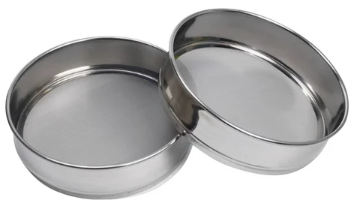
For Laboratory Sieves Suppliers includes manufacturers such as Labsieve and Endecotts. Different manufacturers focus on different aspects of their equipment, some prioritizing materials, while others offer advantages in accessories.

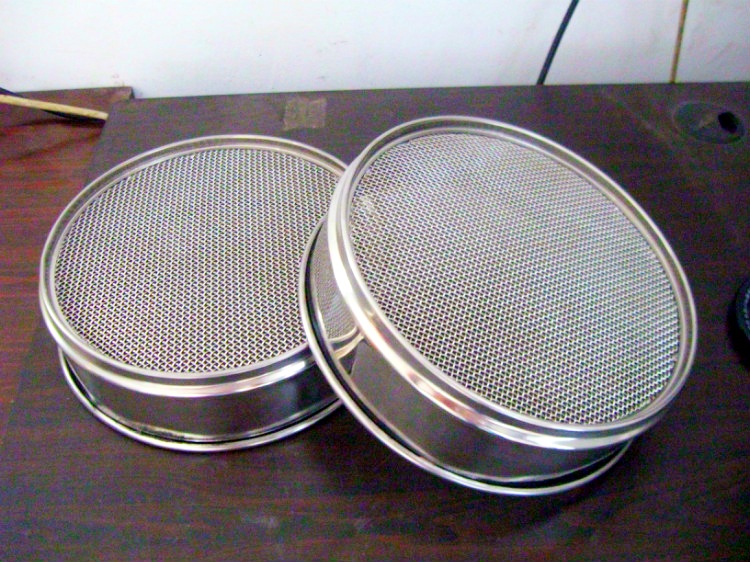
The sieve frame diameters of the equipment manufactured by the manufacturer range from 100mm (3 inches), 200mm (8 inches), and 300mm (12 inches). Types include perforated plate sieves, microplate sieves, wet-washed sieves, diamond sieves, and woven wire mesh sieves. The equipment complies with ASTM E11 or ISO 3310-1 standards.
For Laboratory Sieves Suppliers produces sieves in a variety of materials, including wire mesh, non-metallic mesh, and specialty mesh, meeting the material requirements for both corrosive and non-corrosive materials.
Wire Mesh
Stainless Steel: Corrosion-resistant, wear-resistant, high-strength, and reusable. Type 316 is more resistant to chloride corrosion than Type 304.
Brass: Low cost, average corrosion resistance, easily oxidized, used for dry, lightly abrasive materials.
High-carbon steel: Hard and wear-resistant, but prone to rust. Often treated with rust-proofing. Used in applications subject to severe wear and where iron contamination is a concern.

Non-metallic mesh
Polyamide (Nylon): Corrosion-resistant and flexible, but not resistant to strong acids and lacking the wear resistance of stainless steel.
Polyester (PET): Low hygroscopicity and dimensionally stable. Used for materials requiring high hygiene or where metal contamination is a concern.

Specialty screens
Electropolished stainless steel: Features smooth pore edges, precise apertures, and resistance to clogging. Used for high-precision screening.
Electroformed screens: Non-woven, precise pore shape, smooth walls, high precision, but fragile and expensive. Used primarily for extremely fine powders below 20μm.

| Standard Metal Testing Sieves ASTM Specification E-11 | ||||||
| Nominal Dimensions, Permissible Variations for Wire Cloth of Metal Standard Test Sieves Series | ||||||
| Sieve Designation |
Norminal Sieve Opening inch (c) |
Permissible Variation of Average Opening from the Standard Sieve Designation | Opening Dimension Exceeded by not more than 5% of the openings | Maximum Individual Opening |
Nominal Diameter mm (a) |
|
| Standard(b) | Alternative | |||||
| 125mm | 5" | 5 | ±3.70mm | 130.0mm | 130.9mm | 8 |
| 106mm | 4.24" | 4.24 | ±3.20mm | 110.2mm | 111.1mm | 6.3 |
| 100mm (d) | 4" | 4 | ±3.00mm | 104.0mm | 104.8mm | 6.3 |
| 90mm | 3.5" | 3.5 | ±2.70mm | 93.6mm | 94.4mm | 6.3 |
| 75mm | 3" | 3 | ±2.20mm | 78.1mm | 78.7mm | 6.3 |
| 63mm | 2.5" | 2.5 | ±1.90mm | 65.6mm | 66.2mm | 5.6 |
| 53mm | 2.5" | 2.12 | ±1.60mm | 55.2mm | 55.7mm | 5 |
| 50mm (d) | 2" | 2 | ±1.50mm | 52.1mm | 52.6mm | 5 |
| 45mm | 1.75" | 1.75 | ±1.40mm | 46.9mm | 47.4mm | 4.5 |
| 37.5mm | 1.5" | 1.5 | ±1.10mm | 39.1mm | 39.5mm | 4.5 |
| 31.5mm | 1.25" | 1.25 | ±1.00mm | 32.9mm | 33.2mm | 4 |
| 26.5mm | 1.06" | 1.06 | ±0.800mm | 27.7mm | 28.0mm | 3.55 |
| 25.0mm | 1.00" | 1 | ±0.800mm | 26.1mm | 26.4mm | 3.55 |
| 22.4mm | 0.875" | 0.875 | ±0.700mm | 23.4mm | 23.7mm | 3.55 |
| 19.0mm | 0.75" | 0.75 | ±0.600mm | 19.9mm | 20.1mm | 3.15 |
| 16.0mm | 0.625" | 0.625 | ±0.500mm | 16.7mm | 17.0mm | 3.15 |
| 13.2mm | 0.530" | 0.53 | ±0.410mm | 13.83mm | 14.05mm | 2.8 |
| 12.5mm (d) | 0.5" | 0.5 | ±0.390mm | 13.10mm | 13.31mm | 2.5 |
| 11.2mm | 7.0625" | 0.438 | ±0.350mm | 11.75mm | 11.94mm | 2.5 |
| 9.5mm | 0.375" | 0.375 | ±0.300mm | 9.97mm | 10.16mm | 2.24 |
| 8.0mm | 0.3125" | 0.312 | ±0.250mm | 8.41mm | 8.58mm | 2 |
| 6.7mm | 0.265" | 0.265 | ±0.210mm | 7.05mm | 7.20mm | 1.8 |
| 6.3mm (d) | 0.25" | 0.25 | ±0.200mm | 6.64mm | 6.78mm | 1.8 |
| 5.6mm | No. 3.5 (e) | 0.223 | ±0.180mm | 5.90mm | 6.04mm | 1.6 |
| 4.75mm | No. 4 | 0.187 | ±0.150mm | 5.02mm | 5.146mm | 1.6 |
| 4.0mm | No. 5 | 0.157 | ±0.130mm | 4.23mm | 4.35mm | 1.4 |
| 3.35mm | No. 6 | 0.132 | ±0.110mm | 3.55mm | 3.66mm | 1.25 |
| 2.8mm | No. 7 | 0.11 | ±0.095mm | 2.975mm | 3.070mm | 1.12 |
| 2.36mm | No. 8 | 0.0937 | ±0.080mm | 2.515mm | 2.600mm | 1 |
| 2.0mm | No. 10 | 0.0787 | ±0.070mm | 2.135mm | 2.215mm | 0.9 |
| 1.7mm | No. 12 | 0.0661 | ±0.060mm | 1.820mm | 1.890mm | 0.8 |
| 1.4mm | No. 14 | 0.0555 | ±0.050mm | 1.505mm | 1.565mm | 0.71 |
| 1.18mm | No. 16 | 0.0469 | ±0.045mm | 1.270mm | 1.330mm | 0.63 |
| 1.0mm | No. 18 | 0.0394 | ±0040mm | 1.083mm | 1.135mm | 0.56 |
| 850µm (d) | No. 20 | 0.0331 | ±35µm | 925µm | 970µm | 0.5 |
| 710µm | No. 25 | 0.0278 | ±30µm | 775µm | 815µm | 0.45 |
| 600µm | No. 30 | 0.0234 | ±25µm | 660µm | 695µm | 0.4 |
| 500µm | No. 35 | 0.0197 | ±20µm | 550µm | 585µm | 0.315 |
| 425µm | No. 40 | 0.0165 | ±19µm | 471µm | 502µm | 0.28 |
| 355µm | No. 45 | 0.0139 | ±16µm | 396µm | 425µm | 0.224 |
| 300µm | No. 50 | 0.0117 | ±14µm | 337µm | 363µm | 0.2 |
| 250µm | No. 60 | 0.0098 | ±12µm | 283µm | 306µm | 0.16 |
| 212µm | No. 70 | 0.0083 | ±10µm | 242µm | 263µm | 0.14 |
| 180µm | No. 80 | 0.007 | ±9µm | 207µm | 227µm | 0.125 |
| 150µm | No. 100 | 0.0059 | ±8µm | 174µm | 192µm | 0.1 |
| 125µm | No. 120 | 0.0049 | ±7µm | 147µm | 163µm | 0.09 |
| 106µm | No. 140 | 0.0041 | ±6µm | 126µm | 141µm | 0.071 |
| 90µm | No. 170 | 0.0035 | ±5µm | 108µm | 122µm | 0.063 |
| 75µm | No. 200 | 0.0029 | ±5µm | 91µm | 103µm | 0.05 |
| 63µm | No. 230 | 0.0025 | ±4µm | 77µm | 89µm | 0.045 |
| 53µm | No. 270 | 0.0021 | ±4µm | 66µm | 76µm | 0.036 |
| 45µm | No. 325 | 0.0017 | ±3µm | 57µm | 66µm | 0.032 |
| 38µm | No. 400 | 0.0015 | ±3µm | 48µm | 57µm | 0.030 |
| 32µm | No. 450 | 0.0012 | ±3µm | 42µm | 50µm | 0.028 |
| 25µm (d) | No. 500 | 0.001 | ±3µm | 34µm | 41µm | 0.025 |
| 20µm (d) | No. 635 | 0.0008 | ±3µm | 29µm | 35µm | 0.02 |
The choice of screen frame material depends primarily on the characteristics of the material being screened (such as corrosiveness, humidity, temperature, hardness, etc.), production process requirements, and cost considerations. Carbon steel is the most common screen frame material, offering low cost and high strength. It is suitable for screening most non-corrosive materials.
Stainless steel resists corrosion from water, steam, and common acids and alkalis, is easy to clean, and has a smooth, non-porous surface, making it suitable for corrosive and hygienic industries.
Plastics (polypropylene, nylon, etc.): Non-metallic materials used for specialized applications. They offer excellent resistance to strong acids and alkalis. Their light weight makes them easy to install and transport, making them suitable for highly corrosive chemicals, materials sensitive to metal ions, and applications requiring anti-static treatment.

| Application | Recommended Type | Mesh Material | Sieving Method | Features |
| Particle Size Analysis | Standard Test Sieve | Stainless Steel 304/316 | Dry / Wet | High accuracy, ISO/ASTM compliant |
| Sample Grading | Grading Sieve | Stainless Steel / Brass | Mechanical Vibration | Can be stacked, easy to operate |
| Impurity Checking | Rapid Sieve | Stainless Steel | Manual / Electric | Fast screening, easy to clean |
| Powder Materials | Fine Mesh Sieve | Stainless Steel / Nylon | Dry | Anti-static, prevents clogging |
| Liquids or Slurries | Wet Analysis Sieve | Stainless Steel / Nylon | Wet | Excellent corrosion resistance, good filtration |
| Corrosive Samples | Corrosion-Resistant Sieve | Stainless Steel 316 / Special Alloy | Dry / Wet | High durability, long service life |
| Precision Powders | Electroformed Sieve | Nickel Mesh | Dry | Extremely high precision and repeatability |
The price of equipment manufactured by For Laboratory Sieves Suppliers depends on factors such as material, aperture, dimensions, accuracy level, and whether it is a complete set. The following is a reference price; please contact the supplier for details. A standard 8-inch single woven wire mesh costs between $20 and $50. A small basic sieve set with 3-5 sieves costs between $100 and $300. A standard sieve set with 6-8 sieves costs between $300 and $600.

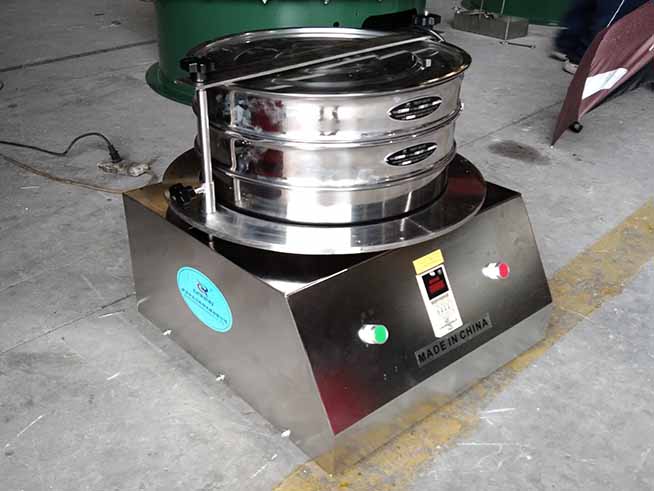
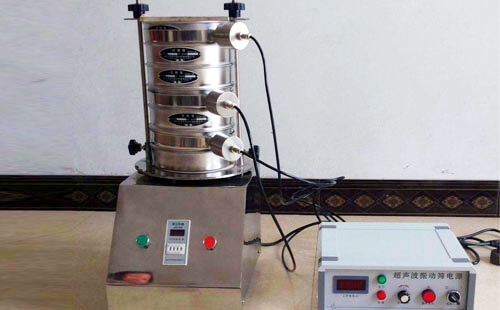
Our factory has many years of experience in manufacturing screening equipment and can customize sieves of various sizes, including 20cm test sieves, 75mm test sieves, 3-inch test sieves, and fine aggregate sieves. We also offer matching test sieve machines. As a source manufacturer, our equipment offers competitive prices and is designed and manufactured by professional engineers, providing one-stop service for Laboratory Sieves.
Oct 22, 2025
For Laboratory Sieves Suppliers
For Laboratory Sieves Suppliers manufactures sieve frames in 3-inch, 8-inch, and 12-inch diameter siz...
Oct 20, 2025
size sieve for soil is made of stainless steel and can sieve out dust and soil. The fine sieve sizes ...
Oct 17, 2025
Standard Test Method for Particle-Size Analysis of Soils
Standard Test Method for Particle-Size Analysis of Soils is used to determine the weight proportions ...
Oct 16, 2025
Agricultural soil testing sieve
Agricultural soil testing sieve uses a 2mm sieve to separate the fine particles in the soil in order ...

Then we look forward to hearing from you