
WhatsApp:+86 15236742901

Email:sale@xxdahan.com


WhatsApp:+86 15236742901
Email:sale@xxdahan.com
Thursday November-27 2025 12:01:47
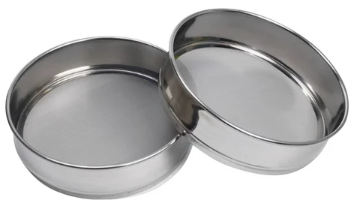
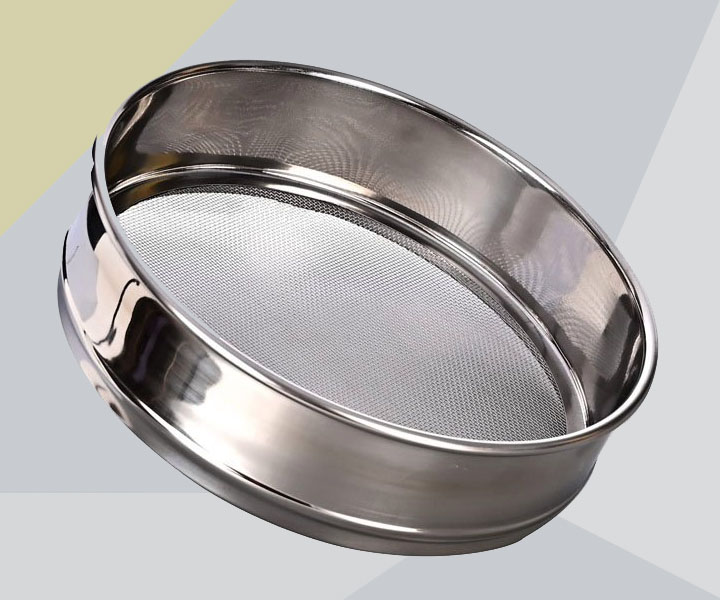
Laboratory Sieve for Calcining Clay is a precision sieving device used for processing clay and its calcined products. It is used in the raw material pretreatment stage and for particle size analysis of the calcined powder. The sieve mesh is made of materials such as stainless steel, possessing corrosion resistance, high strength, and the ability to withstand temperatures ≤300℃ to accommodate residual heat and potential corrosiveness of the calcined material.
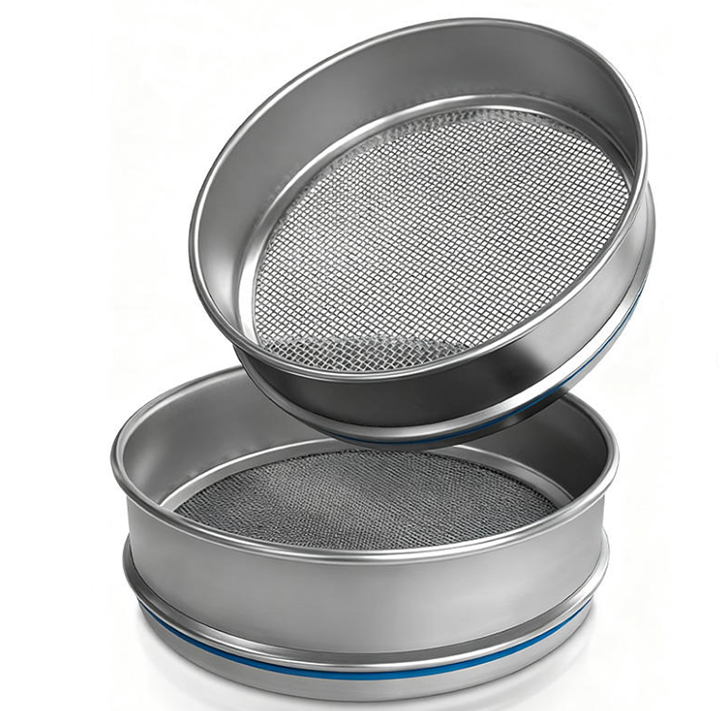
Calcined clay is characterized by high hardness, increased particle brittleness, fine powder, and a tendency to generate fine dust. Therefore, the sieve mesh must be wear-resistant and have a strict particle size distribution. For fine powders, ultrasonic equipment can be used to clear blockages. The sieving particle size range is 20–500 μm, corresponding to a mesh size of 40–635. The most common sieve frame diameters are φ200 mm and φ300 mm, conforming to laboratory operating standards.
Laboratory Sieve for Calcining Clay come in two main categories: standard laboratory sieves and ultrasonic laboratory sieves. Both dry and wet sieving methods can be used to obtain better particle size data.
Standard Laboratory Sieves: These sieves classify particles by mechanical vibration or tapping. They are suitable for sieving medium to coarse particles and general fine clay powder before and after calcination. Suitable mesh sizes are 10-200 mesh. For finer calcined clay particles, the sieve may clog during sieving, requiring cleaning with a soft brush.
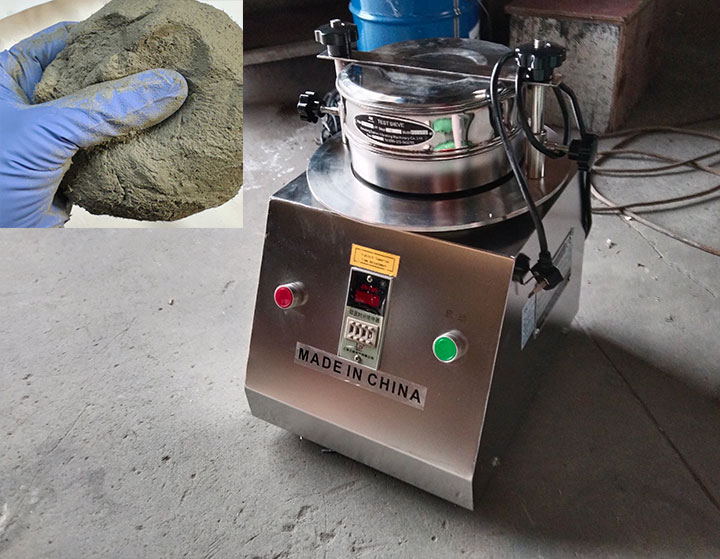
Ultrasonic Laboratory Sieves: These sieves incorporate the principle of ultrasonic cleaning, generating high-frequency, low-amplitude ultrasonic vibrations. This vibration effectively breaks up agglomerates of calcined clay particles, releasing trapped fine powder and preventing particle adhesion or clogging of the mesh. Suitable for processing easily agglomerated, highly static, lightweight, or sticky calcined clay materials of 200-600 mesh.
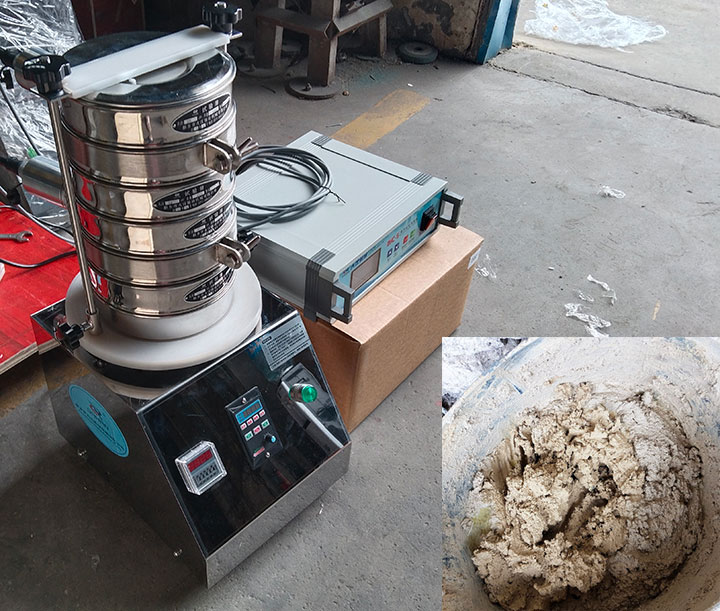
Sieving Methods
Laboratory Sieve for Calcining Clay can employ both dry and wet sieving methods. Dry sieving is suitable for calcined clay with coarser particles and lower moisture content. Its advantages include speed and no alteration of particle structure; however, high dust levels or statically charged particles can reduce sieving efficiency. Wet sieving is more effective for extremely fine powders and easily agglomerated calcined clays. Water or dispersants are used to reduce surface tension, making it easier for particles to pass through the sieve openings. It is suitable for detecting the content of medium to extremely fine powders, but subsequent drying and weighing are required to calculate the distribution.
| Sieve size (US Sieve #) | Sieve aperture size (mm) | Sieve aperture size (μm) | Mesh (approximately equivalent) |
| 4 | 4.75 mm | 4750 μm | 4 mesh |
| 8 | 2.36 mm | 2360 μm | 8 mesh |
| 10 | 2.00 mm | 2000 μm | 10 mesh |
| 16 | 1.18 mm | 1180 μm | 16 mesh |
| 20 | 0.850 mm | 850 μm | 20 mesh |
| 30 | 0.600 mm | 600 μm | 30 mesh |
| 40 | 0.425 mm | 425 μm | 40 mesh |
| 50 | 0.300 mm | 300 μm | 50 mesh |
| 60 | 0.250 mm | 250 μm | 60 mesh |
| 70 | 0.212 mm | 212 μm | 70 mesh |
| 100 | 0.150 mm | 150 μm | 100 mesh |
| 140 | 0.106 mm | 106 μm | 140 mesh |
| 200 | 0.075 mm | 75 μm | 200 mesh |
| 230 | 0.063 mm | 63 μm | 230 mesh |
| 325 | 0.045 mm | 45 μm | 325 mesh |
| 400 | 0.038 mm | 38 μm | 400 mesh |
Laboratory sieves play a role at different stages of the calcining clay process. Before forging, they classify and sieve the clay; after forging, they allow for particle size analysis.
Pre-calcination: Used for particle size control and classification of raw clay. Sieving ensures that the clay raw material entering the calcining kiln has a uniform initial particle size that meets process requirements. This helps optimize heat and mass transfer during the calcination process, ensuring the uniformity of the calcination reaction and avoiding over- or under-calcination due to excessive particle size differences.
After calcination: Used for particle size analysis of the calcined clay clinker. Precise sieving determines whether the particle size distribution of the product meets the standard requirements for different applications such as coatings, fillers, and refractory materials. Sieving data serves as the basis for evaluating calcination effectiveness, adjusting parameters such as calcination temperature or time, and for product quality control and grading.
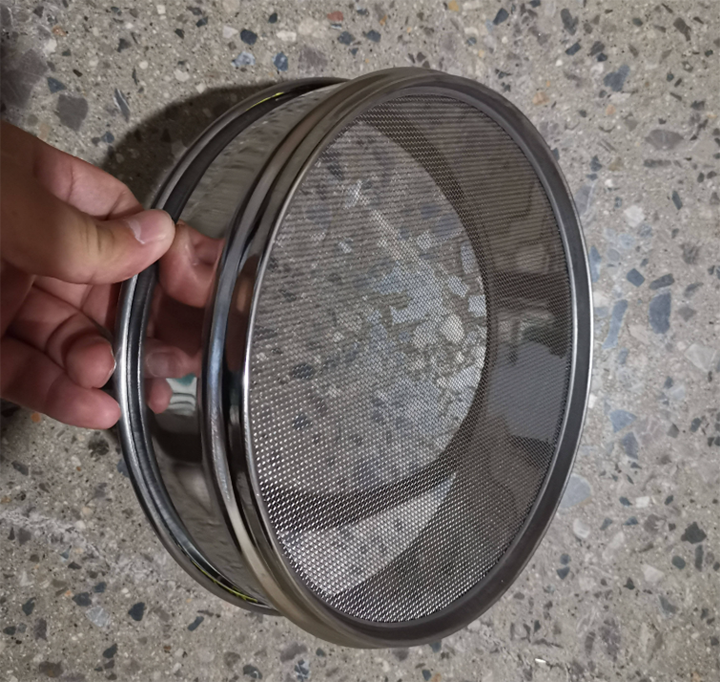
The clay calcination process includes:Natural air drying or mechanical drying of mined clay;Crushing of large clay pieces using a crusher and initial particle size control via sieving;Heat treatment at a specific temperature profile in a rotary kiln, tunnel kiln, or shuttle kiln to remove crystal water and organic matter, initiating phase transitions and altering the clay's physicochemical properties;Cooling of the calcined clinker under controlled conditions;Crushing or grinding of the cooled clinker, followed by sieving using a Laboratory Sieve for Calcining Clay to obtain the target particle size and final products of different specifications; and finally, packaging and storage.
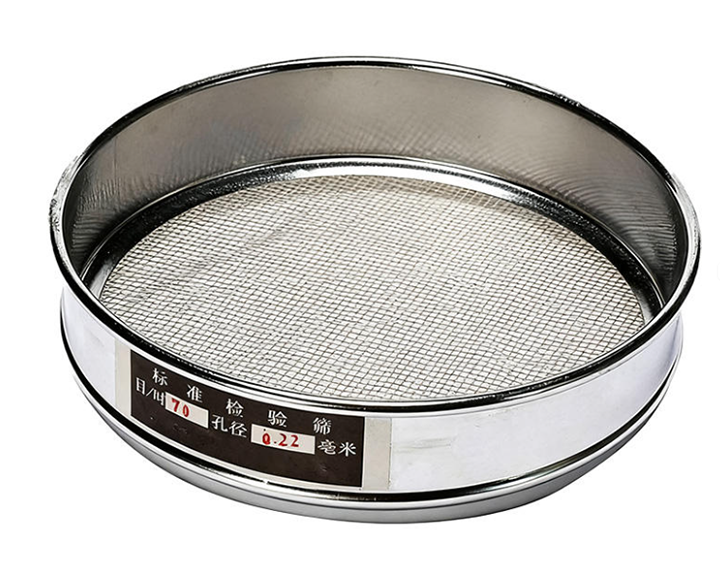
The Laboratory Sieve for Calcining Clay is an indispensable tool for particle size control in the research and production of calcined clay. Its sieves are typically made of high-temperature resistant stainless steel, meeting the requirements of high hardness, high fine powder content, and easy clogging of calcined clay. Standard laboratory sieves are suitable for conventional sieving, while ultrasonic laboratory sieves are more suitable for high-precision, ultrafine powder testing. By selecting different screening methods such as dry screening and wet screening, and by controlling dust and implementing anti-clogging measures, the stability and consistency of calcined clay products can be improved, providing a reliable and precise raw material base for industries such as ceramics and refractory materials.
Nov 27, 2025
Laboratory Sieve for Calcining Clay
Laboratory Sieve for Calcining Clay has a sieve particle size ranging from 63 μm to 250 μm and can ...
Nov 26, 2025
Lab test sieves with materials include brass, stainless steel, or brass frames with stainless steel m...
Nov 25, 2025
Wet sieving concrete is a sample pretreatment procedure that removes coarse aggregate from fresh conc...
Nov 24, 2025
Mechanical Sieve Shaker for Particle Analysis
Mechanical Sieve Shaker for Particle Analysis automatically stirs and separates particles. This devic...

Then we look forward to hearing from you