
WhatsApp:+86 15236742901

Email:sale@xxdahan.com


WhatsApp:+86 15236742901
Email:sale@xxdahan.com
Tuesday February-24 2026 15:16:41
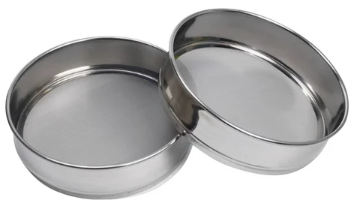
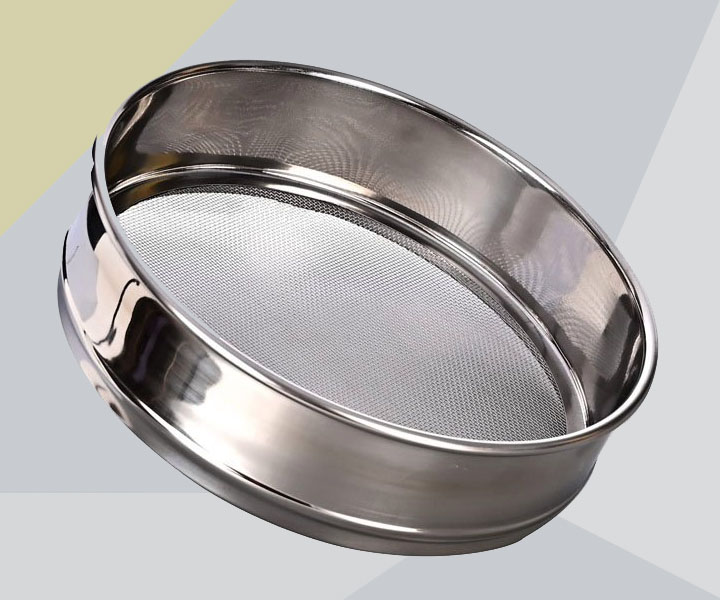
Stainless Steel Laboratory Test Sieve is a sieving tool used in laboratories to analyze particle size. It separates materials according to particle size, detects particle size distribution, and assesses sample quality. It can sieve particles ranging from 5 micrometers to 125 millimeters in diameter, grading coarse, medium, and fine powders. The main body and mesh of this test sieve are mostly made of 304 or 316 stainless steel, featuring a robust structure with good strength and toughness, and is not easily deformed or damaged over time. Stainless steel is resistant to acids, alkalis, salts, and other chemical reagents, and will not rust or contaminate samples in humid laboratory environments. The sieve mesh is precisely woven with uniform mesh size, ensuring stable sieving.
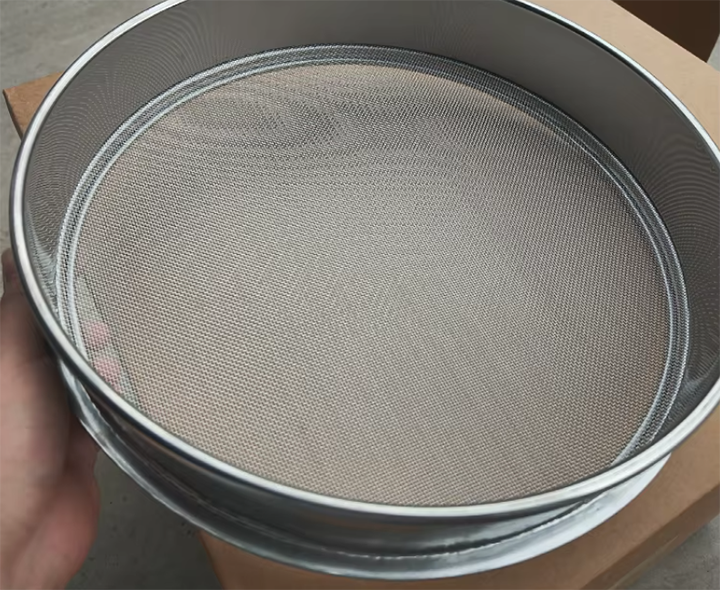
The stainless steel laboratory test sieve is entirely made of stainless steel, making it corrosion-resistant and durable. It can be used stably in humid or corrosive environments such as chemical plants and food testing facilities. 316 stainless steel is more corrosion-resistant than ordinary 304, resulting in a longer overall lifespan for the sieve. In the laboratory, this sieve ensures the accuracy and repeatability of tests. The sieve frame is meticulously crafted, minimizing sample leakage when multiple sieves are stacked. The rounded corners at the joints between the sieve mesh and frame ensure a tight seal, preventing material from getting stuck and allowing for cleaner sample recovery. Each qualified test sieve has a unique serial number, allowing traceability from production to use, meeting the stringent requirements of industries like pharmaceuticals and aerospace.
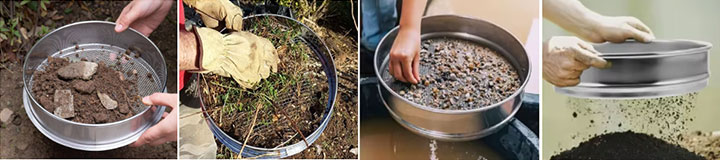
Common sieve frame diameters for Stainless Steel Laboratory Test Sieves are 75 mm, 200 mm, 250 mm, and 300 mm. 200 mm is a commonly used size in laboratories, allowing for multi-layer stacking and use with vibrating sieve equipment. Mesh sizes are manufactured according to international standards such as ASTM E11 and ISO 3310, ranging from coarse to fine. Larger mesh sizes are suitable for sieving ores and aggregates with larger particles, while finer mesh sizes are suitable for powders such as pharmaceuticals, pigments, and coatings. Different sizes of laboratory test sieves are interchangeable and can be freely combined to meet various particle size analysis needs.
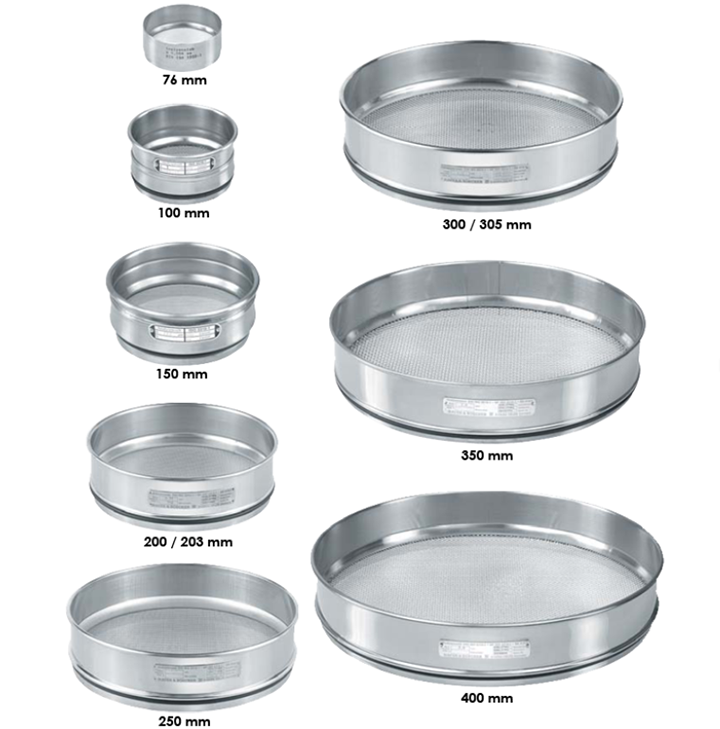
| Diameter Specification | Common Applications |
| 75 mm | Small sample experiments |
| 100 mm | Fine powder |
| 150 mm | Laboratory routine |
| 200 mm | Most commonly used standard specification |
| 300 mm | Large batch samples |
| Sieve Aperture (mm) | Sieve Aperture (μm) | Reference Mesh |
| 4.75 mm | 4750 μm | 4 |
| 4.00 mm | 4000 μm | 5 |
| 3.35 mm | 3350 μm | 6 |
| 2.80 mm | 2800 μm | 7 |
| 2.36 mm | 2360 μm | 8 |
| 2.00 mm | 2000 μm | 10 |
| 1.70 mm | 1700 μm | 12 |
| 1.40 mm | 1400 μm | 14 |
| 1.18 mm | 1180 μm | 16 |
| 1.00 mm | 1000 μm | 18 |
| 850 μm | 0.850 mm | 20 |
| 710 μm | 0.710 mm | 25 |
| 600 μm | 0.600 mm | 30 |
| 500 μm | 0.500 mm | 35 |
| 425 μm | 0.425 mm | 40 |
| 355 μm | 0.355 mm | 45 |
| 300 μm | 0.300 mm | 50 |
| 250 μm | 0.250 mm | 60 |
| 212 μm | 0.212 mm | 70 |
| 180 μm | 0.180 mm | 80 |
| 150 μm | 0.150 mm | 100 |
| 125 μm | 0.125 mm | 120 |
| 106 μm | 0.106 mm | 140 |
| 90 μm | 0.090 mm | 170 |
| 75 μm | 0.075 mm | 200 |
| 63 μm | 0.063 mm | 230 |
| 53 μm | 0.053 mm | 270 |
The price of a stainless steel laboratory test sieve varies depending on the material, size, and manufacturing standards. A standard 200mm diameter 304 stainless steel sieve costs between $15 and $40. A 316 stainless steel sieve, with stronger corrosion resistance, costs between $35 and $80. Models with finer mesh and higher manufacturing requirements will increase the price further, ranging from $80 to $150 per sieve. Bulk purchases, custom sizes, or products with calibration certificates will result in higher prices.
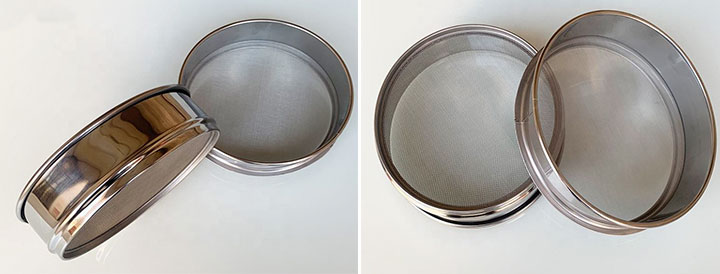
Stainless steel laboratory test sieves can handle a wide range of particles and offer stable material properties, making them a common tool for particle size analysis in laboratories. Sieves made of 304 and 316 stainless steel are not easily corroded, are easy to clean, and have a long service life, making them suitable for various experimental and testing scenarios. Their standardized dimensions make them ideal for material testing and quality control in industries such as chemical, pharmaceutical, food, building materials, and mining. Verifying the material and calibrating the mesh size before use ensures more reliable sieving results, providing stable particle size analysis conditions in scientific research, production management, and product development.
Feb 24, 2026
Stainless Steel Laboratory Test Sieve
Stainless Steel Laboratory Test Sieve is a sieving tool used to analyze particle size. It can separat...
Feb 11, 2026
Test sieves for laboratory use can cover sieving needs from ultrafine powders to coarse particles, an...
Feb 11, 2026
Precise test sieves are precision screening instruments used for particle size detection, grading, an...
Feb 10, 2026
test sieve for metal powder is a sieving instrument used for particle size detection and classificati...

Then we look forward to hearing from you