
WhatsApp:+86 15236742901

Email:sale@xxdahan.com


WhatsApp:+86 15236742901
Email:sale@xxdahan.com
Wednesday February-11 2026 17:57:08
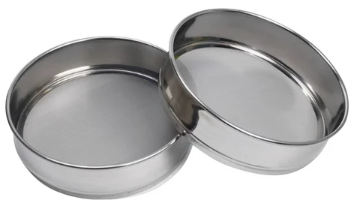
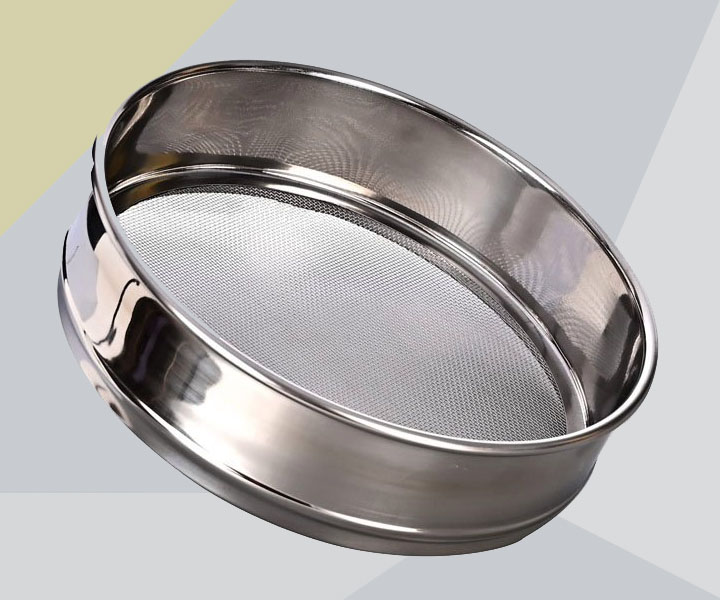
Test sieves for laboratory use are widely adopted in scientific research and quality control because they cover sieving needs ranging from ultrafine powders to coarse particles, and different sieve materials can adapt to various experimental environments. Common sieve apertures range from 20μm to 125mm, allowing for the analysis of particle sizes in various materials. The sieves are generally made of 304 or 316 stainless steel, which is corrosion-resistant, wear-resistant, and not easily deformed. For applications requiring high precision, brass is used, which maintains mesh stability over long-term use.
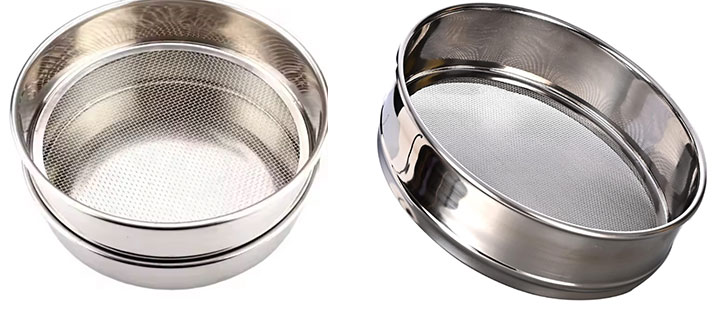
The sieve frame diameter for test sieves for laboratory use is generally φ200mm, but smaller sieves with φ100mm and industrial sieves with φ300mm are also available, facilitating stacking or transferring samples from one sieve to another. Overall, they are easy to operate and don't take up much space on the lab bench, making them very convenient for daily sieving work.
When using test sieves in the laboratory, different sieving methods exhibit varying performance. Vibrating sieves are more suitable for laboratories with large sample volumes and a need for stable data; while manual sieves are convenient for those with limited budgets or simple analyses.
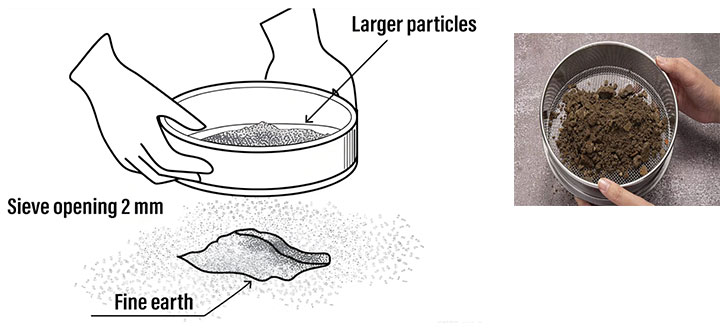
Manual sieves rely on manual shaking and are flexible in operation, suitable for small quantities of fragile or easily agglomerated samples because the force can be controlled by hand, reducing particle breakage. However, manual sieves also have limitations: the amplitude and frequency of shaking are not easily consistent, making the results susceptible to human influence, resulting in significant data discrepancies in repeated experiments. Furthermore, prolonged shaking can be tiring and inefficient.
Electromagnetic vibrating sieves maintain a fixed frequency and force during sieving, allowing particles to pass through the sieve more smoothly and resulting in more consistent data. They can also install 1-8 sieve layers simultaneously, classifying and sieving materials before measuring particle size. Although vibrating sieves have a higher initial cost, their robust mechanical design minimizes impact on the sieve frame and extends their lifespan.
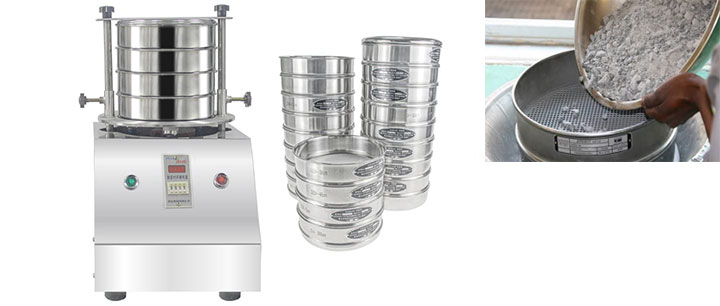
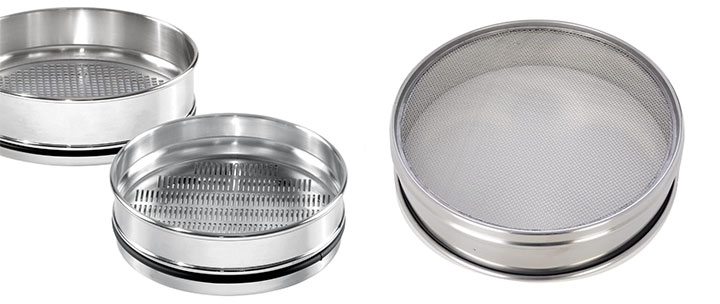
Using test sieves in the laboratory offers numerous benefits for Test Sieves for Laboratory and the overall operation. The sieve frame and mesh fit tightly together, ensuring smooth integration with the sieving machine. If the sieve frame deforms or the gaps are too large, material may leak out or the sieve mesh may loosen, affecting sieving efficiency and safety. Laboratory environments frequently experience temperature and humidity fluctuations or contact with chemical reagents, so sieves need to be strong in tensile strength, waterproof, rustproof, and resistant to damage from high temperatures or acidic/alkaline liquids. For example, in wet sieving, the mesh surface must withstand moisture and agitation, while the sieve frame must not rust. Laboratory sieves meet metrological certification standards, meaning minimal aperture variation, wire diameter, and mesh surface flatness meet specified requirements, ensuring relatively consistent data in repeated experiments.
Test sieves for laboratory applications demonstrate their practicality in many scenarios. In the pharmaceutical industry, the particle size of active pharmaceutical ingredients (APIs) affects drug dissolution and absorption. Technicians use a set of sieves with decreasing aperture sizes, combined with an ultrasonic vibrating sieve, to separate the active pharmaceutical ingredients into layers. They then analyze the residual amount in each layer and plot particle size distribution curves to help control the consistency of each batch of drugs. In geological research, researchers use manual or vibrating sieves to separate soil into gravel, sand, silt, and clay particles before analyzing soil permeability and mechanical properties. In this case, the wear resistance of the sieve mesh is crucial because soil samples often contain hard minerals. Another example is 3D printing metal powder; in the laboratory, airflow sieving is used to remove powders that are too coarse or too fine, maintaining them within the 15-45 micrometer range to ensure the density and quality of the printed product.
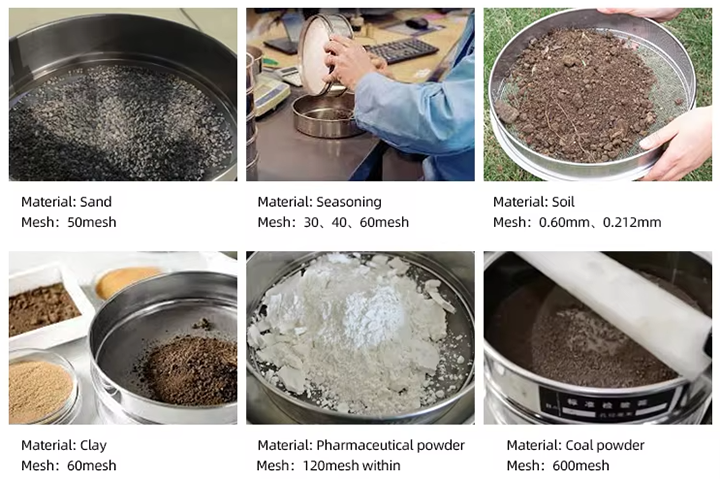
Test sieves for laboratory use have become commonly used tools in particle analysis due to their wide pore size range, material stability, and uniform dimensions. Manual sieves are suitable for small sample sizes or rough testing, offering flexibility and low cost, but with low repeatability. Vibrating sieves are suitable for large sample volumes and situations requiring consistent data, offering fast sieving speed and more stable results. The accompanying equipment needs to consider the fit between the sieve frame and mesh, wear resistance, corrosion resistance, and safety to prevent material leakage during sieving and ensure safer experiments. In industries such as building materials, pharmaceuticals, food, mining, and chemicals, test sieves help laboratories understand the particle distribution, particle size variation, and quality of raw materials, making them an indispensable basic tool in particle analysis.
Feb 11, 2026
Test sieves for laboratory use can cover sieving needs from ultrafine powders to coarse particles, an...
Feb 11, 2026
Precise test sieves are precision screening instruments used for particle size detection, grading, an...
Feb 10, 2026
test sieve for metal powder is a sieving instrument used for particle size detection and classificati...
Feb 10, 2026
Quartz Sand Test Sieve is a laboratory sieve used to detect and classify the particle size of quartz ...

Then we look forward to hearing from you