
WhatsApp:+86 15236742901

Email:sale@xxdahan.com


WhatsApp:+86 15236742901
Email:sale@xxdahan.com
![[field:title/]](/uploads/260407/1-26040GIQE91.jpg)
Ultrasonic Sieves are precision sieving devices that use high-frequency vibration to prevent mesh clogging and are used for the rapid separation of easily clogged fine powders.
Frequency: 36kHz or 40kHz
Power: 50W-200W
Screen area: 100mm-600mm
Mesh count: 100 to 635 mesh
Power supply voltage: AC 220V±10%
Cleanup interval: 1 - 60 seconds
Settable working mode: Pulse/Continuous (adjustable)
Applicable screen diameter: Φ200mm
Ultrasonic Sieves improve the throughput and sieving accuracy of fine powder materials by using ultrasonic vibrations on the screen. The ultrasonic power is typically between 30–100 W, with a frequency range of 20–40 kHz. It solves problems such as screen clogging, agglomeration, and adhesion of micro-powder materials. Common models include ultrasonic rotary vibrating screens and ultrasonic test sieves. Sieving mesh sizes range from 10–635 mesh, and screen sizes typically range from φ200 mm, 300 mm to 600–2000 mm, suitable for industrial screens.
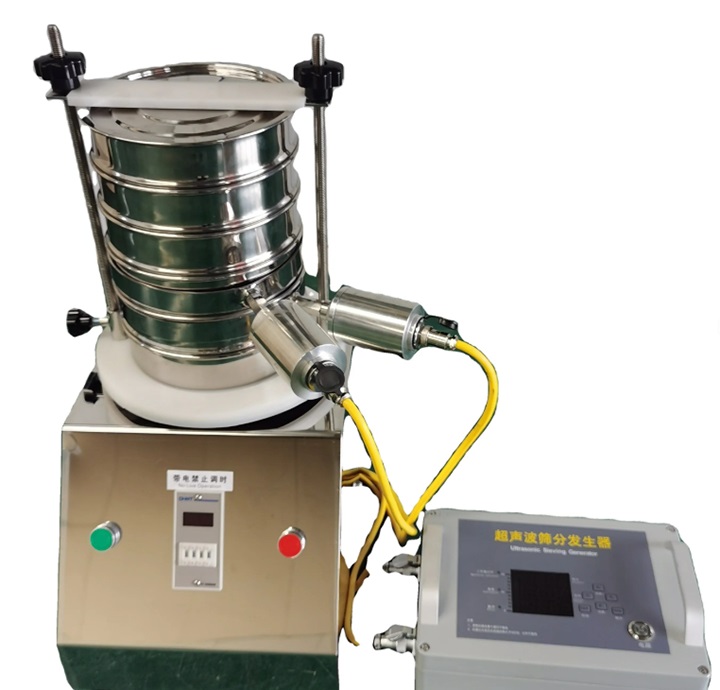
The ultrasonic power supply generates a high-frequency electrical signal, which is transmitted via a coaxial cable to an ultrasonic transducer mounted on the screen frame. The transducer, acting as an energy converter, utilizes the inverse piezoelectric effect of piezoelectric ceramics to convert the input high-frequency electrical energy into high-frequency mechanical vibrations of the same frequency—ultrasonic waves. The vibration is then transmitted evenly across the entire screen surface via a resonator, causing the screen itself to generate a high-frequency, low-amplitude micro-vibration of 35,000 to 41,000 times per second, thus completing the screening process.
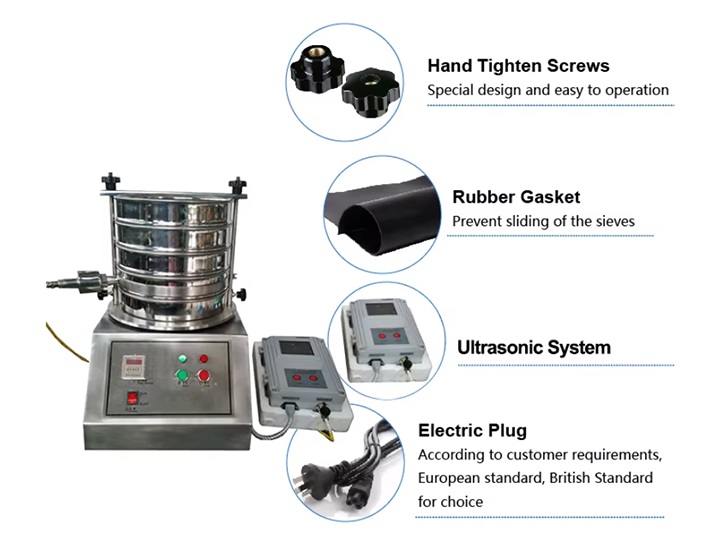
Ultrasonic sieves prevent fine powder from adhering, agglomerating, and clogging the mesh, thus ensuring uninterrupted sieving. Because the sieve remains constantly clean, the effective sieving area is constant, guaranteeing high accuracy in material classification and avoiding mis-sieving and mixing caused by clogging. Clean sieves mean higher throughput, increasing output by 1 to 10 times compared to traditional methods, especially for difficult-to-handle fine powders. Low amplitude vibrations avoid the violent throwing motion of traditional vibrating screens, preventing impact wear on the fine sieve and preventing fragile particles from being crushed, while extending the sieve's lifespan. They can easily handle special materials that traditional equipment struggles with, such as highly absorbent, electrostatically charged, high-density, and low-specific-gravity materials. Traditional sieves often fail above 325 mesh, while ultrasonic sieves can operate stably up to 635 mesh.
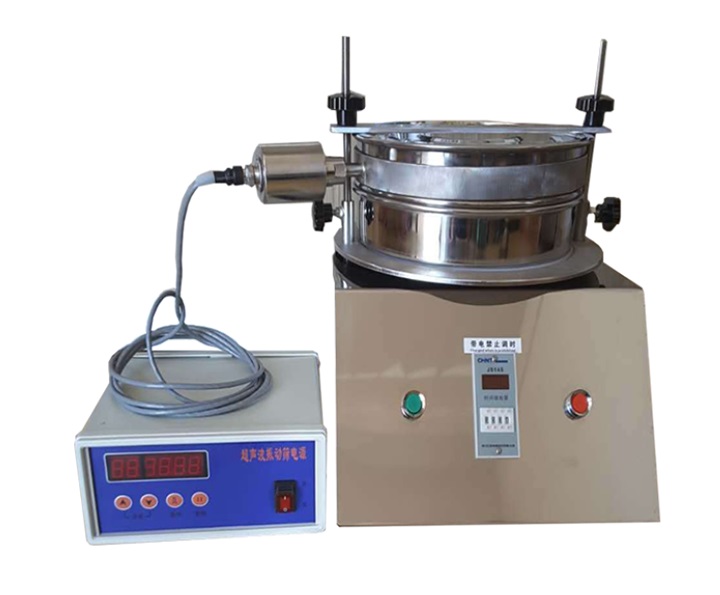
Ultrasonic sieves are available in two models based on their processing capacity: ultrasonic rotary vibrating sieves and ultrasonic test sieves. Ultrasonic vibrating sieves have a large footprint and a large sieving capacity, while ultrasonic test sieves have a smaller footprint, are easier to move, and have a smaller sieving capacity.
Ultrasonic vibrating sieves have a high processing capacity because the screen diameter can be selected from 600–2000 mm, with a typical processing capacity of 1–20 t/h. Single or multi-layer screens can be configured depending on the material being sieved, achieving 2–6 particle size classifications. They can also be integrated with automatic feeding devices, dust removal systems, and conveying equipment to form an automated production line.
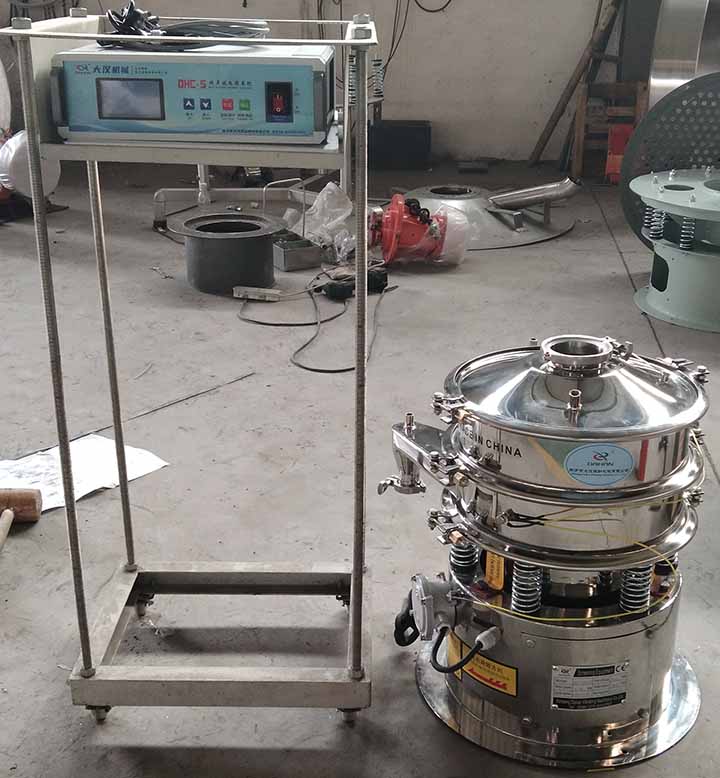
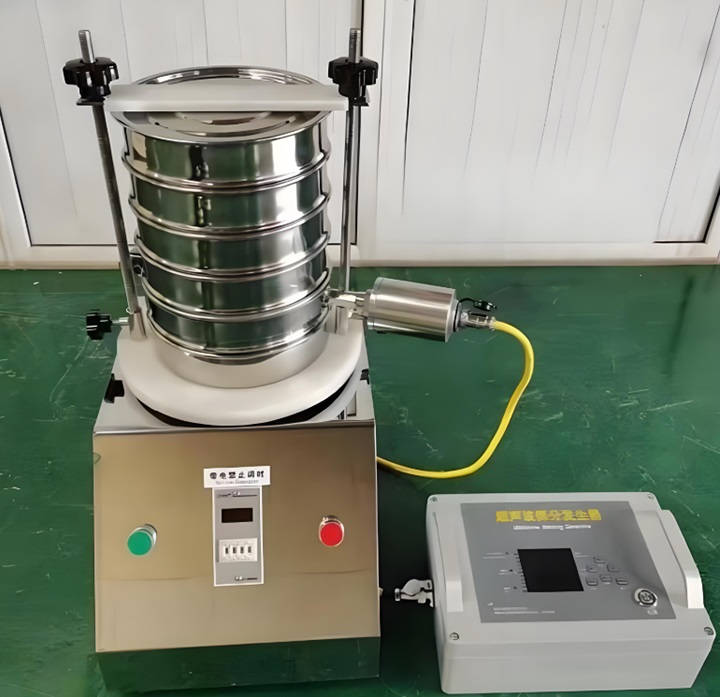
Ultrasonic test sieves are used in laboratories, research institutions, and quality testing. The standard screen size is φ200 or φ300 mm, suitable for sieving small quantities of samples. The equipment is compact and can be placed on a table or in other compact settings to perform particle size testing, composition analysis, or sieving behavior studies on trace powders and particles. The ultrasonic system makes the analysis results more accurate and repeatable.
| Parameter Category | Parameter Name | Common Range |
| Basic Parameters | Screener Type | Circular Vibrating Screen / Test Sieve |
| Sieving Method | Ultrasonic + Vibratory Sieving | |
| Applicable Materials | Powders, Granules (e.g. Metal Powder, Chemical Powder, Food Powder) | |
| Sieving Accuracy | Up to 1 - 500 μm | |
| Screen Layers | 1 - 5 Layers | |
| Processing Capacity | 1 - 500 kg/h (Depends on Model) | |
| Ultrasonic System Parameters | Ultrasonic Frequency | 20 - 40 kHz (Commonly 28 kHz) |
| Ultrasonic Power | 50 - 200 W | |
| Power Input | AC 220V / 50Hz or 110V / 60Hz | |
| Control Method | Digital Adjustment / Automatic Frequency Tracking | |
| Transducer Mode | External or Built-in Transducer | |
| Screen Mesh Parameters | Screen Mesh Material | Stainless Steel (304 / 316L) |
| Screen Mesh Count | 20 - 635 Mesh | |
| Screen Mesh Diameter | 100 mm - 1200 mm | |
| Screen Frame Structure | Adhesive Type / Binding Type / Bolt Type | |
| Vibration System Parameters | Vibration Motor Power | 0.12 - 2.2 kW |
| Vibration Frequency | 1400 - 3000 rpm | |
| Amplitude | 1 - 5 mm Adjustable | |
| Excitation Force | Adjustable (Eccentric Block Adjustment) | |
| Structure & Material | Equipment Material | Carbon Steel / Stainless Steel (304 / 316) |
| Sealing Method | Silicone Seal Ring / Dust-proof Design | |
| Overall Dimensions | Customized by Model | |
| Weight | 50 - 150 kg |
Ultrasonic Sieves solve problems such as clogging, static electricity and adhesion, floating of lightweight powders, and difficulties in fine classification. Powder agglomerates or fibrous materials easily clog sieve openings; ultrasonic waves, with their high frequency of 36kHz and low amplitude between 1 μm and 10 μm, effectively eliminate this clogging. Resin powders and metal powders tend to adhere to the sieve surface; ultrasonic waves can quickly detach them. Lighter powders tend to float on traditional sieves and fail to fall; ultrasonic waves enhance the falling speed through rapid vibration. Traditional sieves struggle to accurately classify high-mesh materials; ultrasonic waves significantly improve classification capabilities.
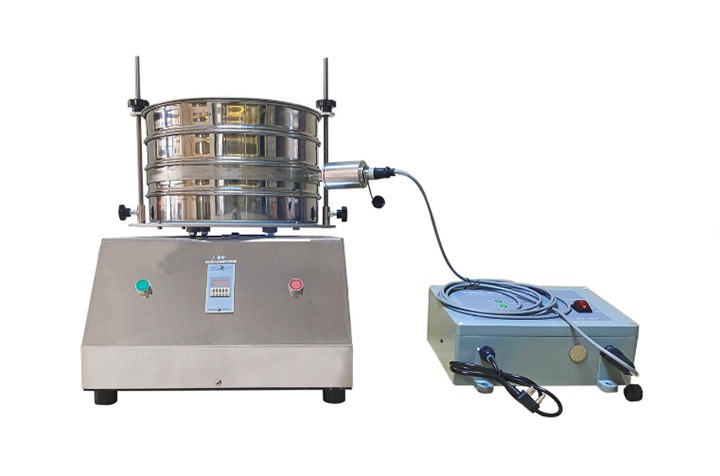
Ultrasonic Sieves can screen graphene, lithium cobalt oxide, alloy powders, perlite, resin powders, pesticides, pollen, tungsten powder, nickel powder, aluminum powder, activated carbon, catalysts, milk powder, food additives, pharmaceutical powder screening, pharmaceutical intermediate filtration, alumina, zirconium oxide, positive and negative electrode powders, lithium carbonate, and other materials.
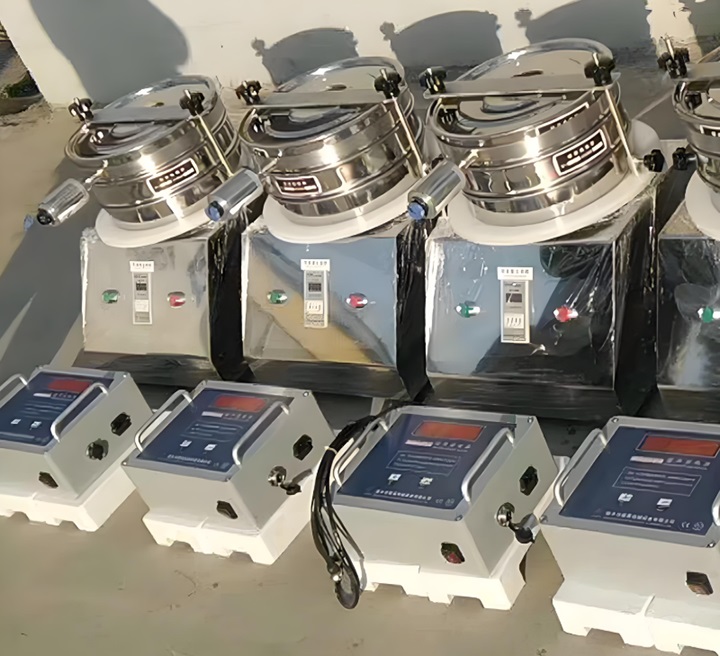
Ultrasonic Sieves optimize traditional screening processes by introducing ultrasonic cleaning technology. Dahan Machinery, a supplier, provides stable and reliable ultrasonic transducers and power supplies, and can design suitable models based on material characteristics, mesh size requirements, and production volume. With years of industry application experience, we can provide the most suitable equipment selection and customized solutions based on customers' specific materials and operating conditions. We offer models ranging from test sieves for small-batch inspection to ultrasonic vibrating sieves for high-volume screening.
Standard Test Method for Particle-Size Analysis of Soils
Standard Test Method for Particle-Size Analysis of Soils (ASTM D422)aims to accurately determine the size distribution of soil particles...
Soil sieve analysis is a soil particle size determination method based on the principle of mechanical separation...
Are you interested?

Then we look forward to hearing from you