
WhatsApp:+86 15236742901

Email:sale@xxdahan.com


WhatsApp:+86 15236742901
Email:sale@xxdahan.com
Friday February-06 2026 15:14:09
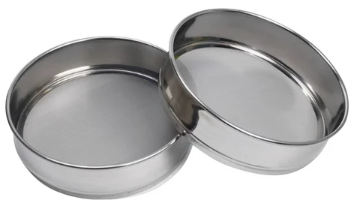
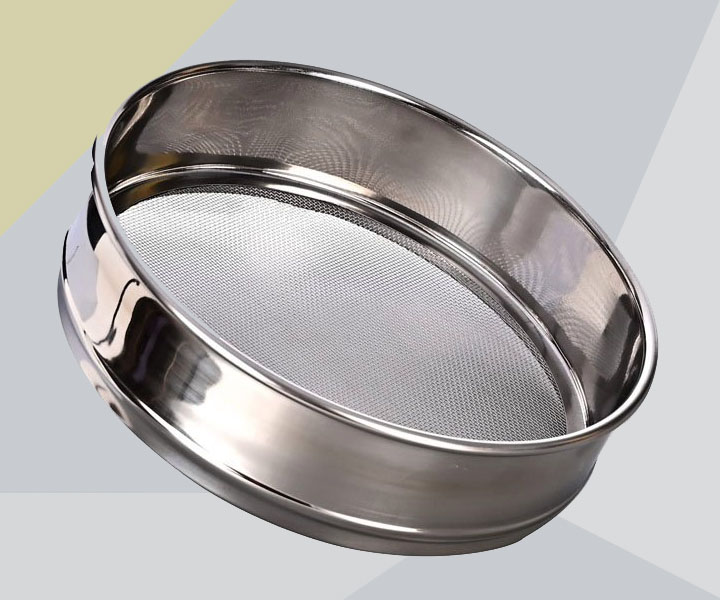
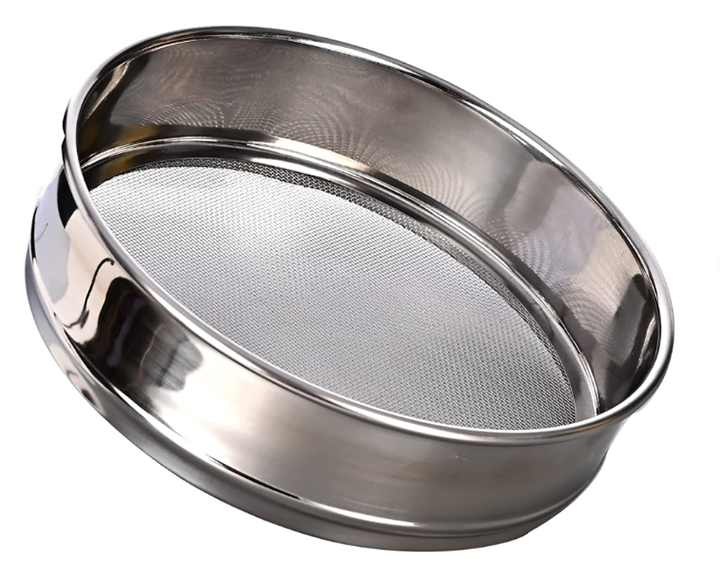
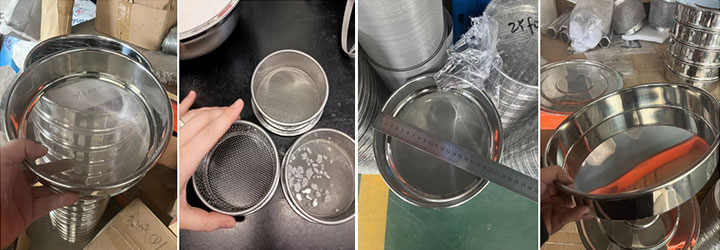
cement fineness test sieve is a commonly used sieving tool in cement physical property testing, used to check the coarseness of cement particles. Common sieve mesh sizes are 0.080mm and 0.045mm, used to distinguish the fineness grade of the sieve. The sieve frame is generally circular, with an outer diameter of approximately φ150mm, an inner diameter of φ125mm, and a height of 25mm, with relatively uniform dimensions. The sieve mesh is mostly made of brass or stainless steel, offering good wear resistance and uniform mesh distribution; the sieve frame is generally made of stainless steel, with a robust structure that is not easily deformed during use. During testing, it can be used in conjunction with equipment such as negative pressure sieves and electric vibrating sieves. Depending on the testing conditions, a negative pressure sieve, a wet sieve, or a manual sieve can be selected. In practical analysis, it is often considered in conjunction with the FM (Fineness Measurement) index to determine whether the cement grinding level meets the specifications based on the sieve residue.
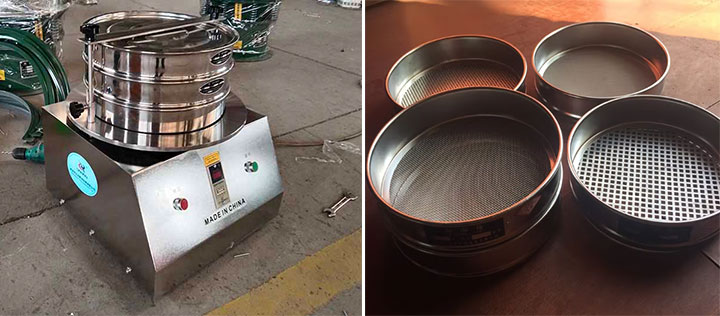
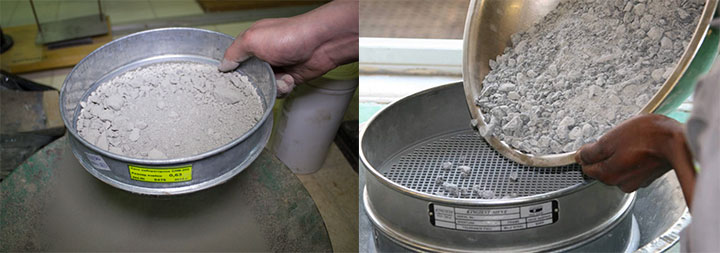
When performing cement fineness testing, the cement fineness test sieve must be used according to the specified procedures. Different sieving methods have some operational differences. When using the negative pressure sieving method, first fix the test sieve on the negative pressure sieve apparatus, connect the power, adjust the negative pressure to between 4000Pa and 6000Pa, then weigh 25 grams of cement sample and pour it into the sieve. Start the equipment and vibrate for 2 minutes. If powder is found adhering to the sieve wall, it can be gently cleaned with a soft brush. The water sieving method involves mounting the test sieve on a water sieve rack and continuously rinsing it with clean water at 0.05MPa to 0.1MPa for about 3 minutes. Afterward, remove the residue and place it in an oven to dry until the quality no longer changes. The manual sieving method is mostly used when no equipment is available. Place the sample in the sieve and shake it in a circular motion by hand for at least 10 minutes. After completion, weigh the residue and calculate the proportion to determine if the cement fineness meets the requirements.
Using the Cement Fineness Test Sieve for cement fineness testing has many advantages. It helps control cement quality. The particle size of cement affects hydration rate, strength gain, and subsequent shrinkage. Coarse particles result in insufficient reaction and insufficient strength; excessively fine particles increase water consumption and cause volume changes. Fineness test sieves allow for continuous monitoring of the grinding process during production, enabling timely adjustments to ensure the cement meets specifications. This testing method is straightforward, easy to learn, and provides intuitive results. It requires only weighing and sieving, eliminating the need for complex analysis, reducing daily testing workload, and making costs easier to control. Standardized sieve specifications and consistent operating procedures facilitate data comparison between different laboratories and batches, aiding in construction acceptance and quality assessment, and contributing to project management and quality judgment.
| Sieve No./Aperture Diameter (mm) | Particle Size Range (μm) | Common Cumulative Residue (%) | Application/Function |
| 0.15 mm | 150 μm | 0-10 | Largest particles, affect the initial reaction and hydration uniformity of cement and aggregates; excessive amount will reduce cement performance |
| 0.125 mm | 125 μm | 0-15 | Coarse particles, affect the initial setting time and bleeding of cement, ensuring appropriate early strength |
| 0.09 mm | 90 μm | 0-25 | Medium-coarse particles, have a certain impact on cement pumpability and workability |
| 0.075 mm | 75 μm | 5-40 | Fine particles, the key of conventional fineness control, affect cement hydration rate and early strength |
| 0.06 mm | 60 μm | 15-55 | Relatively fine particles, increase cement specific surface area, enhance early hydration reaction and improve strength development |
| 0.045 mm | 45 μm | 20-70 | Fine particles, determine the final setting time and long-term strength of cement, a mandatory index for ground cement |
| 0.038 mm | 38 μm | 30-85 | Ultra-fine particles, improve cement activity, enhance early strength and fluidity |
| 0.025 mm | 25 μm | 50-95 | Extremely fine particles, increase cement specific surface area and hydration efficiency, promote the preparation of high-performance concrete |
| 0.02 mm | 20 μm | 70-99 | Ultra-fine powder particles, mainly used for special cement |
The dimensions of the cement fineness test sieve reflect standardized specifications, generally consisting of two parts: the sieve frame size and the sieve mesh size. The sieve frame is typically circular, with fixed requirements for diameter and height. According to GB/T 6003.1 and GB/T 1345, the common diameter is 200 mm, and the height is available in 50 mm and 25 mm. Negative pressure sieves are often equipped with 50 mm high sieve frames, providing ample space for use and facilitating installation on screening equipment. The sieve size refers to the nominal aperture diameter, which determines the fineness grading range. Common specifications are 0.080 mm and 0.045 mm; the former is suitable for routine cement testing, while the latter is used for varieties requiring finer particle sizes. These two types of sieves undergo meticulous weaving and calibration during manufacturing, resulting in a uniform aperture distribution and sieving results that more closely reflect the actual particle size distribution of cement.
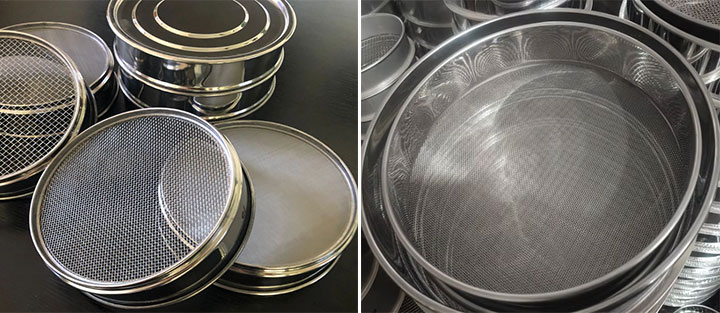
In cement production enterprises, the cement fineness test sieve is commonly used to check the particle size distribution of raw meal, clinker, and finished cement. The sieving results allow for timely adjustments to grinding parameters, preventing fineness deviations from affecting subsequent performance. In building materials testing institutions, these types of test sieves are routine testing tools used to compare and test cements from different manufacturers and varieties, generating test data that serves as a basis for quality judgment. At construction sites, some simple fineness test sieves can be used for random checks of incoming cement, allowing for early detection and handling of anomalies and reducing construction risks. Furthermore, in testing and research, cement fineness test sieves can be used in conjunction with strength and setting time tests to help analyze the impact of particle size variations on cement performance.
Cement fineness test sieves are a common and fundamental tool in cement fineness testing. They help solve practical problems such as which sieve to use for fineness testing, how to determine cement particle size, and how to select sieve specifications. They can also be used in conjunction with the FM index in sieve analysis, making the judgment of cement fineness more comprehensive and intuitive. These test sieves have standardized dimensional requirements and clear usage procedures, are not complicated to operate, and the results are easy to interpret. From cement production and factory inspection to on-site use, they play a vital role in quality control. As a frequently used instrument in the testing process, the workmanship and proper use of test sieves directly affect the stability of fineness data, thus influencing the judgment of cement performance and even the safety of construction projects. In practical use, standard-compliant test sieves should be selected, and operations and regular calibrations should be performed according to requirements to ensure reliable test results and provide a more reliable basis for cement quality control.
Feb 06, 2026
cement fineness test sieve is a screening tool used in the physical property testing of cement to che...
Feb 04, 2026
Test sieve for silica sand can be used for silica sand particle size analysis. By separating differen...
Feb 03, 2026
Aggregate Testing Equipment for Construction Materials
Aggregate Testing Equipment for Construction Materials is equipment used to perform performance testi...
Feb 02, 2026
International Standard Laboratory Stainless Steel Test Sieve
International Standard Laboratory Stainless Steel Test Sieve is a screening tool used to analyze the ...

Then we look forward to hearing from you