
WhatsApp:+86 15236742901

Email:sale@xxdahan.com


WhatsApp:+86 15236742901
Email:sale@xxdahan.com
Saturday November-29 2025 15:18:31
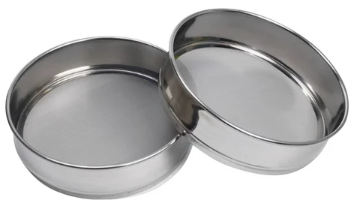
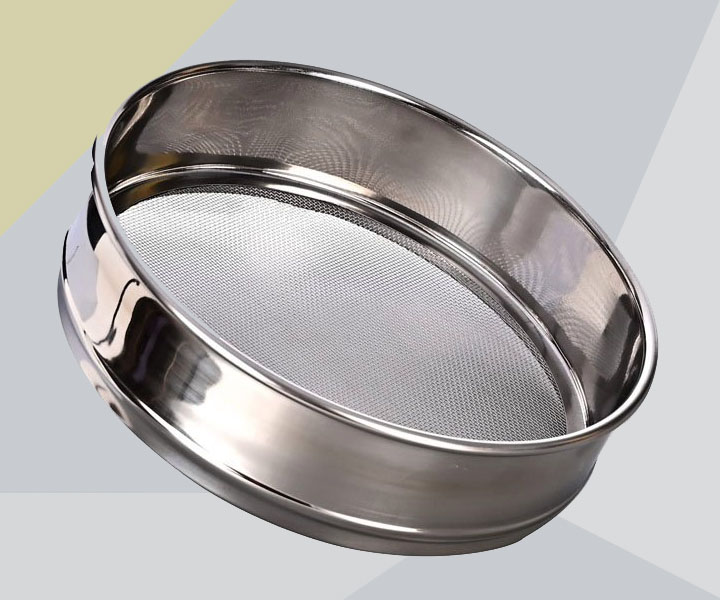
material particle size test sieve is a tool used to determine the particle size distribution of solid materials. The aperture of its component, the sieve, is rigorously calibrated to meet standards ISO 3310 and ASTM E11, ensuring accurate test results with minimal possibility of error.
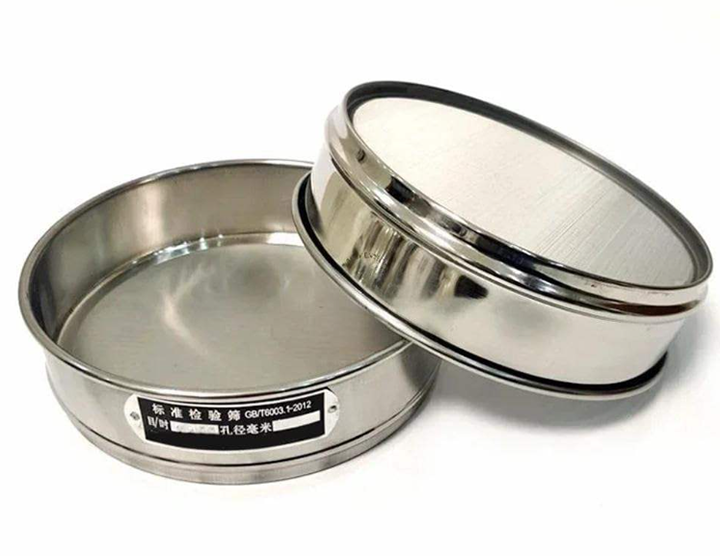
The sieve material is primarily metal wire mesh, commonly made of wear-resistant stainless steel or brass. Standard sieve frame diameters are typically 200mm, 300mm, or 75mm, and include a base and cover. The test sieve has an accuracy error of less than ±5%, suitable for measuring particle sizes typically ranging from coarse particles of 125mm to fine powders of 20microns. By stacking sieves of different mesh sizes to form a sieve suite, multi-stage sieving of samples can be achieved.
In particle size analysis, dry sieving and wet sieving are two common sieving methods. Dry sieving is used for particles that are not easily adhered, do not agglomerate, and have low moisture content. Particles are graded on screens with different apertures through mechanical vibration or manual shaking. During sieving, the sieve must be kept dry, the force applied evenly, and particle breakage due to impact must be avoided. When the sample is hygroscopic, easily agglomerated, or contains a large amount of fine particles, wet sieving is required. This involves dispersing the sample with water and rinsing it on the sieve surface to fully break down agglomerated particles, allowing them to pass through the lower sieve with the water flow. Finally, the residue on each sieve layer is dried and weighed. After dry or wet sieving, the mass of material on each sieve tray and the bottom tray must be weighed and recorded. Finally, the particle size distribution is calculated and a report is completed. Throughout the process, controlling sample humidity, preventing particle breakage, and ensuring the standardization of sieving operations are the core points for ensuring data accuracy.
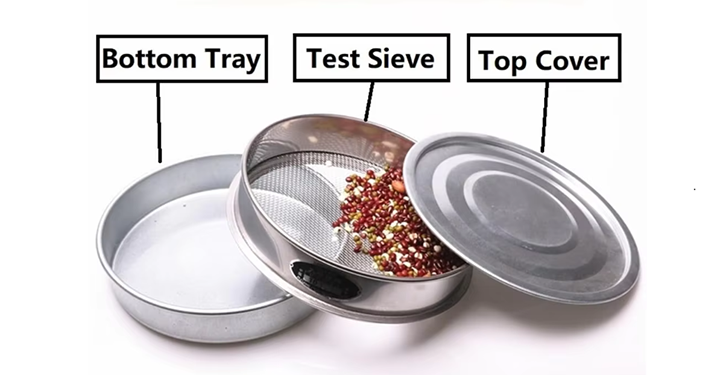
The material particle size test sieve consists of a sieve frame, sieve mesh, sieve cover, receiving tray, and a vibrating sieve machine. The sieve frame is circular, typically made of stainless steel or brass, while the sieve mesh can be stainless steel wire mesh, nylon, etc. The particle size analyzer's aperture diameter usually ranges from 20 μm to 125 mm, with common standard apertures including 75 μm, 150 μm, 500 μm, 1 mm, 2 mm, 4.75 mm, and 10 mm. Sieving is used for classification, obtaining particle size distribution and cumulative distribution, for quality control, formulation optimization, evaluation of grinding and filtration processes, and assessment of product uniformity, flowability, and surface reaction potential. It can also be used in conjunction with a vibrating sieve to improve result repeatability and recordability.
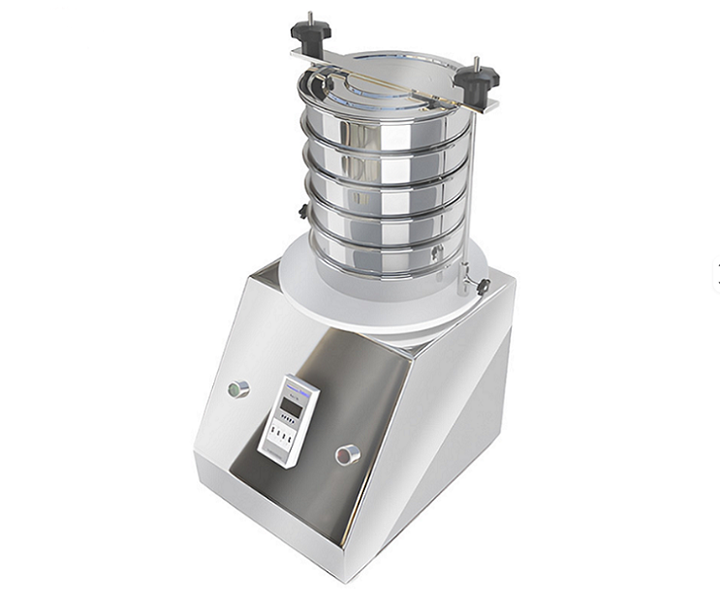
The material particle size test sieve is used for solid granular materials, powders, or mineral materials containing moisture. A 200-mesh sieve is used to control fineness in cement powder. Excessive residue on sieves reduces cement strength, while excessive undersize material affects water demand; both are crucial indicators for ensuring cement activity. Quartz sand undergoes particle size distribution analysis using a series of sieves. The results determine its applicability in casting, water treatment, or glass manufacturing, ensuring stable product performance. Plastic granules are sieved with 10-20 mesh sieves before injection molding to remove fine powder and lumps generated during transportation, preventing clogging of the injection molding machine nozzles and ensuring smooth production and product quality.
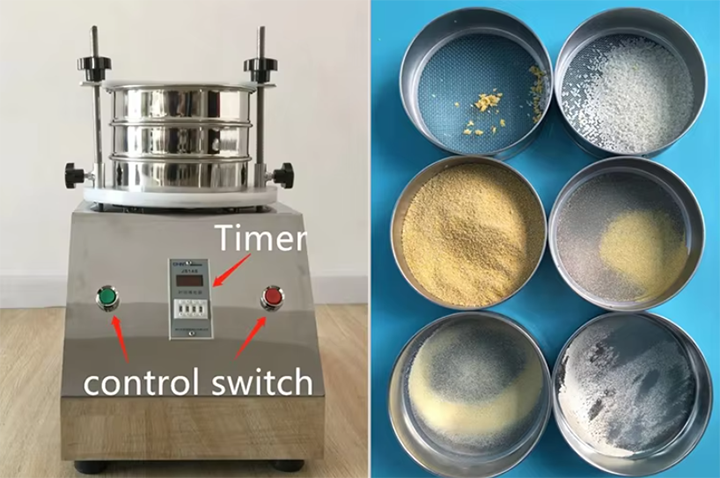
In analyzing particle size distribution using a material particle size test sieve, the total mass of the sample is first weighed. Then, the sieves are vibrated sequentially, and the mass of residue on each sieve is weighed. The percentage on a single sieve is then calculated, followed by the cumulative percentage on and undersize. The particle size composition of the material can be determined based on the calculation results, and a particle size distribution curve can be plotted.
Note:
Percentage on a single sieve = Mass on a specific sieve ÷ Total mass × 100%
Cumulative percentage on a sieve = Sum of masses on a specific sieve and sieves with larger particle sizes ÷ Total mass × 100%
Cumulative percentage undersize = 100% - Cumulative percentage on a sieve
Nov 29, 2025
material particle size test sieve
material particle size test sieve helps generate a reliable material particle size distribution throu...
Nov 27, 2025
Laboratory Sieve for Calcining Clay
Laboratory Sieve for Calcining Clay has a sieve particle size ranging from 63 μm to 250 μm and can ...
Nov 26, 2025
Lab test sieves with materials include brass, stainless steel, or brass frames with stainless steel m...
Nov 25, 2025
Wet sieving concrete is a sample pretreatment procedure that removes coarse aggregate from fresh conc...

Then we look forward to hearing from you