
WhatsApp:+86 15236742901

Email:sale@xxdahan.com


WhatsApp:+86 15236742901
Email:sale@xxdahan.com
Monday February-02 2026 17:35:14
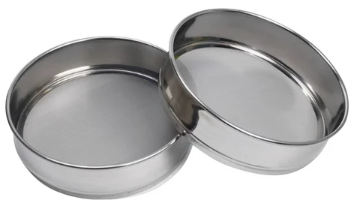
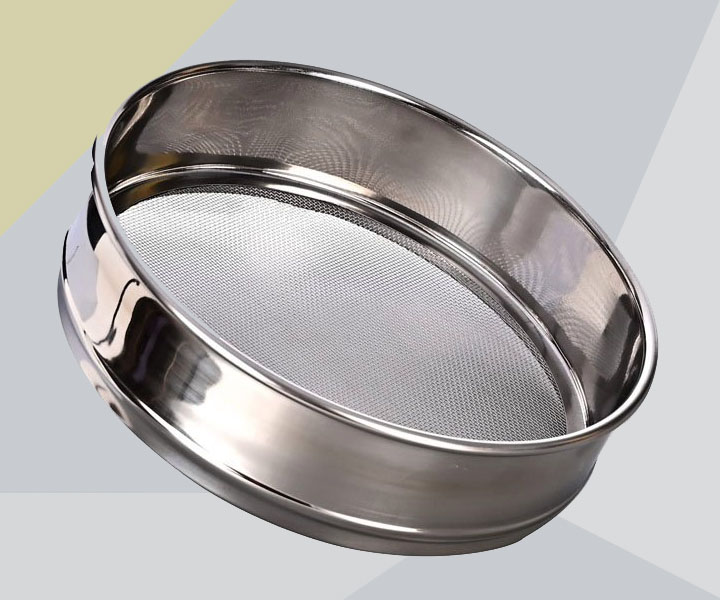
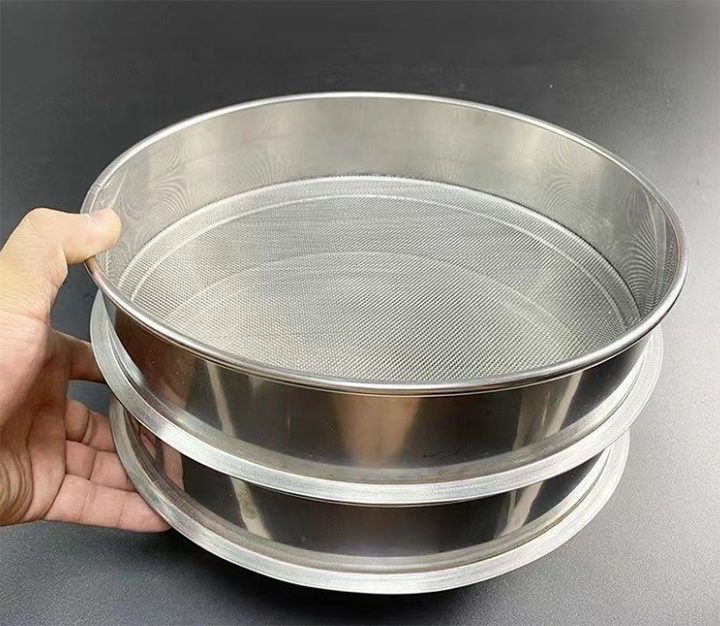
International Standard Laboratory Stainless Steel Test Sieve is a sieving tool used to analyze the particle size distribution and perform particle size classification of particulate materials. It consists of a robust stainless steel sieve frame and a precision-woven mesh. The mesh is firmly fixed to the frame using a professional and precise process, ensuring stable sieve aperture size even after repeated mechanical or manual sieving, without deformation or loosening, thus guaranteeing sieving accuracy.
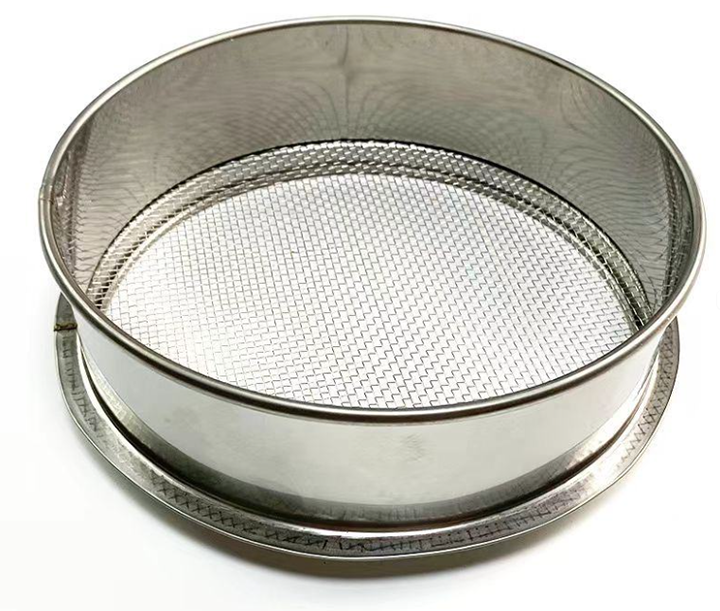
The core of this sieve is made of 304 or 316L stainless steel, which is acid and alkali resistant, corrosion resistant, and has a particularly robust structure, making it a fundamental instrument for particle size analysis in laboratories. A wide range of sizes are available, including standard diameters of 75mm and 100mm, as well as 8-inch and 12-inch imperial models. Matching heights are available to diameters of 25mm, 50mm, and 75mm to meet the sieving needs of different sample volumes. Apertures cover from 0.02mm (micrometers) to 3mm (millimeters), and mesh sizes range from 2 to 1000 mesh, suitable for various particle sizes. It adheres to the ISO 3310-1 international standard and complies with ASTM E11, GB/T6003.1, and other specifications, ensuring the universality and accuracy of test results.
The International Standard Laboratory Stainless Steel Test Sieve can accurately classify materials. Used with sieves of different aperture sizes, it can separate mixed particles and powders according to particle size, separating 2 to 7 different particle sizes in one pass, quickly clarifying the particle size composition and distribution of the material. Furthermore, it provides more consistent test data. When used with a timed vibrating sieve, a fixed sieving time can be set, avoiding errors caused by manual operation and allowing for repeatable verification of test results for the same batch of materials. In addition, it can also measure impurity content and solids, both removing impurity particles from materials and determining the solid content in liquids, meeting the testing needs of various samples. This precise particle size data also supports product development and production quality control, helping R&D personnel adjust formulas and enabling quality control departments to better monitor whether the particle size of the product meets standards.
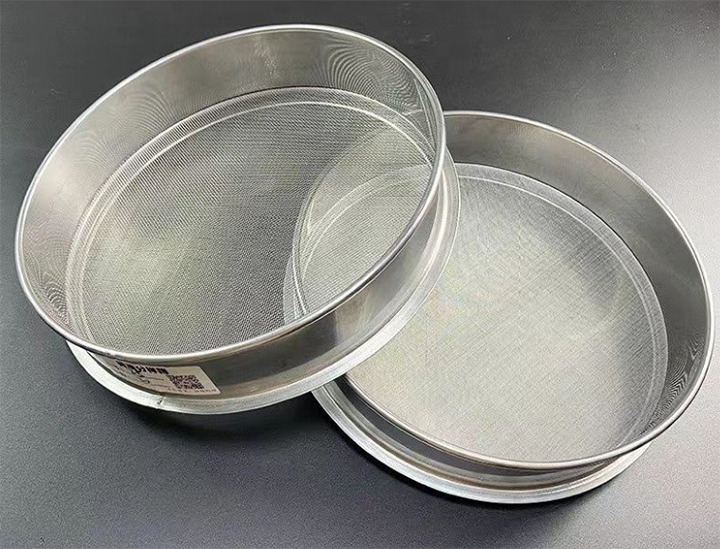
| Item | Specification |
| Product Name | Laboratory Stainless Steel Standard Test Sieve |
| Execution Standard | ISO 3310-1 / ASTM E11 |
| Material | SUS304 or SUS316 Stainless Steel |
| Sieve Frame Diameter | 200 mm / 300 mm / 8 inch / 12 inch |
| Sieve Frame Height | Full Height 50 mm / Half Height 25 mm |
| Sieve Mesh Type | Metal Wire Cloth / Perforated Plate |
| Aperture Size | 20 μm ~ 125 mm |
| Mesh | 635 Mesh ~ 1 Mesh |
| Aperture Tolerance | Compliant with ISO / ASTM Standard Tolerance |
| Sieve Frame Thickness | 0.6 - 0.8 mm |
| Sieve Mesh Fixing Method | Welding / Crimping |
| Surface Treatment | Polished, Burr-free |
| Application Range | Powders, Granules, Chemical Industry, Food, Pharmaceutical, Mining |
| Supporting Equipment | Test Sieve Shaker / Hand Sieve |
| Marking | Aperture Size, Standard Number, Material Marking |
The price of the International Standard Laboratory Stainless Steel Test Sieve varies depending on specifications, materials, and configurations. Basic small sieves offer high cost-effectiveness; single-layer 304 stainless steel sieves with diameters of 5cm to 10cm cost between $0.9 and $7 per piece, suitable for simple sieving operations of small-volume samples. The commonly used laboratory sieves are 200mm and 300mm diameter double-layer punched frame sieves, costing between $2 and $18 per piece. These are the mainstream choice for research and routine quality inspection; the higher the mesh size, the higher the price. High-precision specialized sieves are more expensive due to their higher manufacturing requirements. For example, 325-mesh and 400-mesh ultrafine sieves cost $11-48 each, and acid-resistant sieves made of 316L stainless steel are about 30% more expensive than ordinary 304 sieves. The accompanying sieving equipment is even more expensive; basic electric vibrating sieves cost $186-335, while high-precision fully automatic sieves cost $500-921. These are well-suited for high-frequency, high-volume laboratory testing needs.
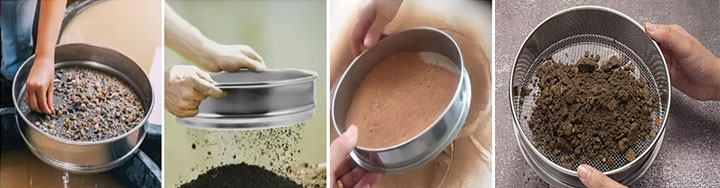
The International Standard Laboratory Stainless Steel Test Sieve is used in scientific research, industry, food, and pharmaceutical fields. For example, materials, chemical, and geological laboratories in universities and research institutes often use it for particle size analysis of new material powders, detection of soil particle composition, and grading of mineral samples, providing accurate data support for various research projects. It is also commonly used in quality control in industrial production. In the building materials industry, it measures the particle size of sand, gravel, cement, and asphalt aggregates; in the metallurgical and mining industry, it is used for grading and inspecting ores and metal powders; and in the chemical industry, it is used to screen catalysts, pigments, and resin particles, all to control particle size and ensure products meet production standards. The food and pharmaceutical industries have even stricter requirements. The food industry uses it to sieve flour, sugar powder, and grain particles to ensure the raw materials are fine and uniform; the pharmaceutical industry uses sieves that meet pharmacopoeia standards to screen raw materials and powders, meeting the hygiene and precision requirements of pharmaceutical production.
As a standardized testing tool, the International Standard Laboratory Stainless Steel Test Sieve, with its comprehensive specifications, high precision, and durable materials, has become a common sieving device for material analysis. It offers a wide range of diameters, heights, and apertures to adapt to different types and dosages of samples, and conforms to internationally recognized standards. In terms of price, this sieve comes in high, medium and low price ranges to suit the budgets and usage needs of various laboratories. It has a wide range of applications and serves as an important bridge between scientific research and industrial production, providing precise granular data support for product quality control, new material development and industry standard setting.
Feb 02, 2026
International Standard Laboratory Stainless Steel Test Sieve
International Standard Laboratory Stainless Steel Test Sieve is a screening tool used to analyze the ...
Jan 27, 2026
vibratory test sieve with sample loading
vibratory test sieve with sample loading involves loading the sample to be sieved into a vibrating si...
Jan 20, 2026
When testing samples, a sample test sieve machine is usually used to sieve the samples. By sieving, i...
Jan 14, 2026
test sieve for particle analysis material
test sieve for particle analysis material can be used for sieving and particle size analysis of granu...

Then we look forward to hearing from you