
WhatsApp:+86 15236742901

Email:sale@xxdahan.com


WhatsApp:+86 15236742901
Email:sale@xxdahan.com
Wednesday February-11 2026 16:23:34
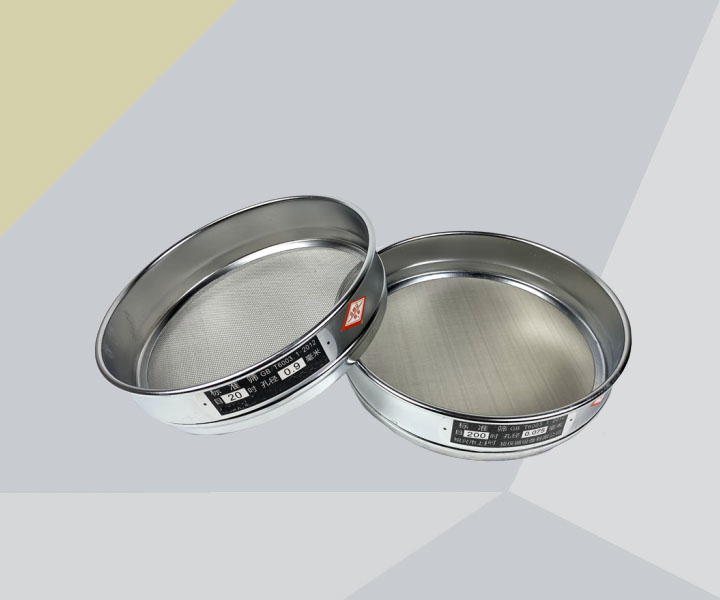
Precise test sieves, also known as standard sieves, inspection sieves, particle size analysis sieves, or sample sieves, are precision sieving instruments used in laboratories and industrial production for particle size detection, grading, and purity testing of materials. Their function is to perform particle size analysis, impurity separation, and gradation determination on powders and granular materials, providing reference data for product quality control, raw material acceptance, and process optimization.
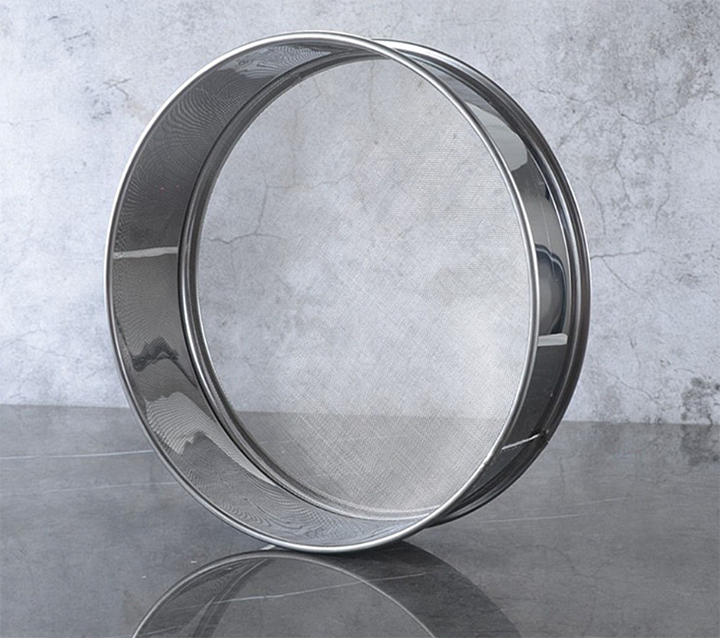
The sieve aperture sizes of precise test sieves conform to international and national standards such as ISO, ASTM, and GB, covering a detection range from 5μm to 125 mm. The sieve frame is primarily circular, with common diameters of 75mm, 100mm, 150mm, 200mm, and 300mm. Sieve materials include 304 and 316L stainless steel, brass, galvanized iron, and high-polymer engineering plastics. Stainless steel is the preferred choice due to its corrosion resistance, ease of cleaning, and non-magnetic properties. Common sieving methods include dry vibrating sieving, wet sieving, manual tapping sieving, and vibrating sieving, which can be selected based on the material's flowability, moisture content, and adhesiveness.
Precise test sieves are typically categorized by material and weaving method. The appropriate precision sieve can be selected based on the corrosiveness, particle size, and other characteristics of the material.
Stainless steel sieves are sturdy and durable, resistant to acids and alkalis, and can withstand high temperatures, making them commonly used in environments requiring cleanliness. Brass sieves are less prone to static electricity, making them suitable for measuring non-ferrous metal powders or easily oxidized materials. Galvanized sieves are affordable and commonly used in screening operations in ordinary factories or construction materials. Plastic sieves are soft to the touch, non-conductive, and corrosion-resistant, making them suitable for electronic powders or some highly corrosive materials.
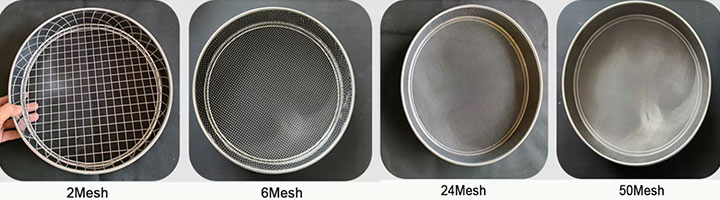
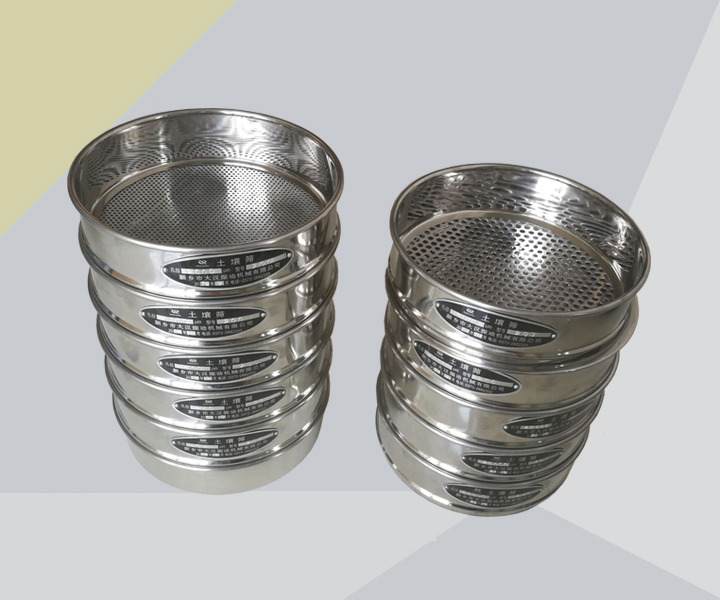
In terms of weaving method, plain weave sieves have uniform mesh openings, resulting in more consistent particle size, and are therefore frequently used in laboratories. Twill weave sieves have thicker threads, offering better load-bearing capacity, and are suitable for materials with slightly larger particles or higher friction. Perforated plate sieves are perforated using laser or stamping, resulting in regular and robust holes, often used for screening large, hard particles or for coarse screening and grading.
The advantage of using precise test sieves lies in their precision. The sieve apertures are manufactured according to standards, with minimal error, enabling the separation of minute differences between particles. This is particularly useful for materials requiring fine particle size separation in laboratories or production processes. Their robust structure and tight fit between the sieve frame and mesh prevent deformation or leakage even with prolonged and repeated use, resulting in highly repeatable sieving results. This precision and stability make laboratory comparative testing and product traceability more intuitive and reliable. These sieves are suitable for dry, wet, or vibrating sieving methods and can handle some sticky, lightweight, or ultrafine materials without easily clogging due to material characteristics. They are typically made of stainless steel with standardized weaving processes, resulting in a long service life and easy cleaning and sterilization. Furthermore, they adhere to unified international standards, and their sizes and mesh specifications allow for cross-company and cross-regional use, facilitating the comparison of different experimental or production data and making process management and product particle size control more intuitive and clear.
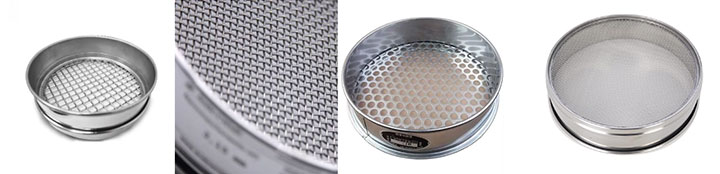
| Aperture Diameter (mm) | Aperture Diameter (µm) | British Standard Mesh |
| 4.75 | 4750 | 4 |
| 2.36 | 2360 | 8 |
| 1.18 | 1180 | 16 |
| 0.600 | 600 | 30 |
| 0.425 | 425 | 40 |
| 0.250 | 250 | 60 |
| 0.150 | 150 | 100 |
| 0.106 | 106 | 140 |
| 0.075 | 75 | 200 |
| 0.053 | 53 | 270 |
| 0.038 | 38 | 400 |
| 0.025 | 25 | 600 |
| 0.020 | 20 | 700 |
| 0.015 | 15 | 1000 |
| 0.010 | 10 | 1400 |
| 0.005 | 5 | 3000 |
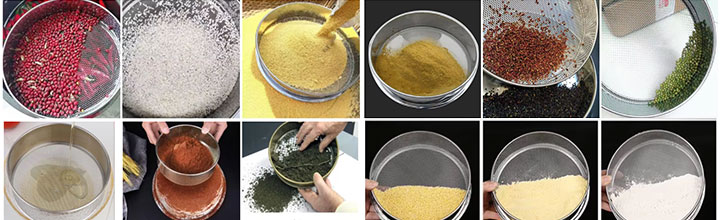
Precise test sieves are used in many applications of particle size analysis. In geology and mining, they are used to analyze the particle size distribution of soil, ore, and coal, helping to determine resource distribution and mineral processing techniques. The construction industry uses them to test raw materials such as cement, sand, and aggregates to ensure proper concrete mix design and stronger, safer buildings. In the chemical and pharmaceutical fields, they are used to screen catalysts, powders, and granules, as particle size affects chemical reaction rates and drug release. In the food industry, flour, powdered sugar, coffee powder, or dairy products are also screened for a finer, more uniform texture. They are also used in some wastewater treatment plants or soil testing laboratories to help analyze the particle size distribution of sludge or contaminants.
The precision and reliability of precise test sieves in particle size analysis is due to the rigorous manufacturing processes of precise test sieves manufacturers. Dahan Machinery Manufacturer possesses complete processing equipment and precision testing instruments, and its manufactured equipment conforms to ISO 3310 or ASTM E11 standards. In addition to standard sizes and materials, the manufacturer can also customize sieves according to customer needs, such as changing materials, aperture shapes, or sizes, to suit different materials and application scenarios. The manufacturer not only sells products but also teaches how to use them and helps solve minor problems encountered during sieving, ensuring accurate data in laboratory testing or production processes.
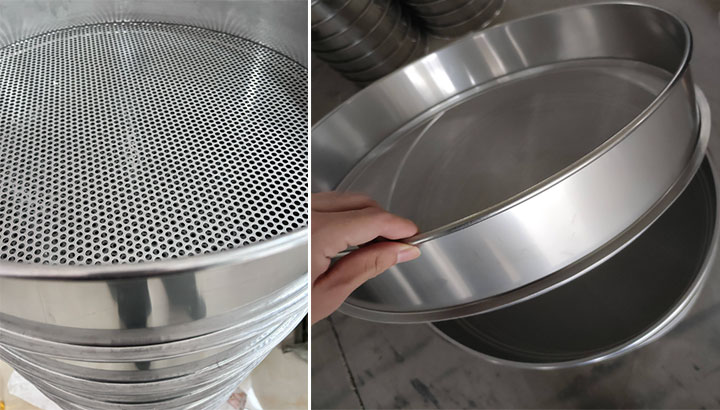
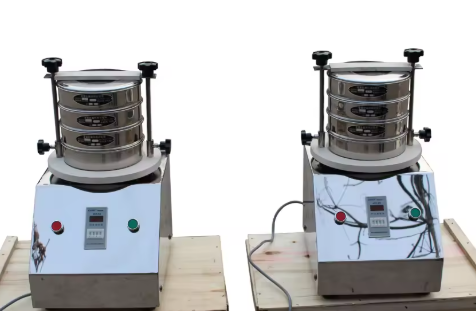
Precise test sieves can be used individually or in conjunction with a vibrating sieve machine, offering greater convenience than manual sieving. The vibrating sieve machine provides continuous and stable vibration to the sieve, avoiding deviations caused by human operation and improving the repeatability of sieving results. Besides the vibrating sieve machine, there is also an ultrasonic sieve cleaning device. When processing ultrafine powders or materials prone to clogging, the ultrasonic transducer causes slight vibration of the sieve wires, shaking off particles clogging the apertures without affecting the sieving process. Sample reducers, balances, and timers are also commonly used in laboratories. By combining these devices with the sieves, a complete particle size analysis workflow can be established.
Feb 11, 2026
Precise test sieves are precision screening instruments used for particle size detection, grading, an...
Feb 10, 2026
test sieve for metal powder is a sieving instrument used for particle size detection and classificati...
Feb 10, 2026
Quartz Sand Test Sieve is a laboratory sieve used to detect and classify the particle size of quartz ...
Feb 09, 2026
pharmaceutical powder test sieve
pharmaceutical powder test sieve is a tool used to test pharmaceutical powders. Its manufacturing pro...

Then we look forward to hearing from you