
WhatsApp:+86 15236742901

Email:sale@xxdahan.com


WhatsApp:+86 15236742901
Email:sale@xxdahan.com
![[field:title/]](/uploads/221029/1-22102911333S06.jpg)
Sieve Analysis Test is mainly used for grading the particle size composition of various powder materials, accurate screening of granular materials and particle size detection, sieve mesh: 0.063mm-13mm
Screen frame direct: 75mm, 100mm, 200mm, 300mm, 400mm
Materials: Materials: flour, cocoa, coffee, condiments, additives, traditional Chinese medicine, etc.
Sieve Analysis Test is mainly used to classify the particle size composition of various powder materials, and is widely used in scientific research and production, laboratories and quality inspection rooms in metallurgy, powder, chemical, pharmaceutical, building materials, geology, national defense and other departments. The categories are divided into: conventional standard sample sieve, chemical special sieve, soil special sieve, stone special sieve, sand special sieve, cement special sample sieve, asphalt special sieve, coal sample special sieve, metallurgical ore inspection sieve, etc.
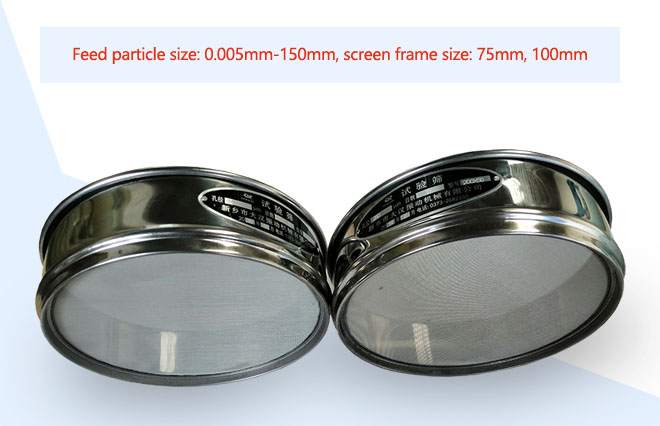
A set of 37 Sieve Analysis Tests, including 12 wire mesh sieves, mesh size 200μm-300μm, in line with international standard ISO3310-1:1990 and national standard GB/T60031-1997 standard R40/3 series of precision electroforming sieves25 Only, the mesh size is 455μm-41μm, the allowable deviation of the mesh size is ≥139μm±3μm, ≤127μm±2μm, check the sieve frame, sieve cover and sieve bottom, which are made of stainless steel.
The Sieve Analysis Test is used in the laboratory for particle size sizing and classification of materials sampled after production.
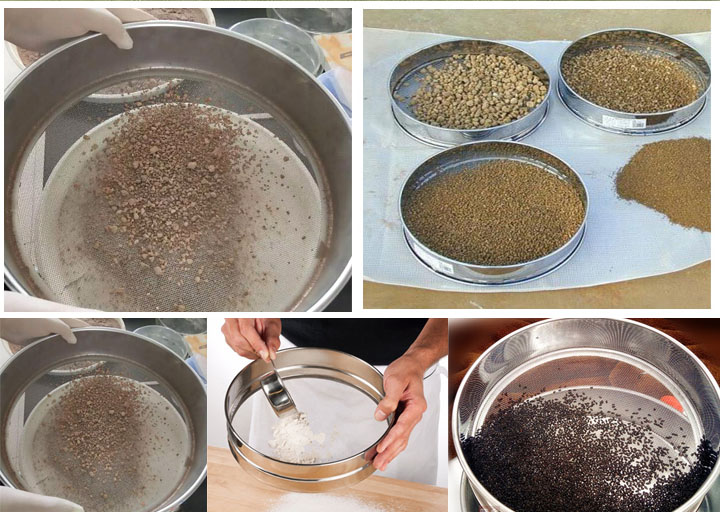
Food industry: flour, cocoa, coffee, condiments, additives, corn, sesame, etc.
Pharmaceutical industry: Chinese and Western raw materials, Western medicine, Chinese medicine, etc.
Chemical industry: resins, plastics, rubber additives, dyes, fillers, phosphors, etc.
Metallurgical industry: lead, zinc, copper, iron, nickel, alloys, magnetic materials and other metal powders.
Abrasive industry: glass beads, alumina, corundum, chlorine carbon, emery, quartz sand, etc.
Stainless steel wire mesh, galvanized wire mesh, cotton wire mesh, chrome-plated sheet, stainless steel sheet, galvanized sheet, copper sheet, plastic sheet, etc.
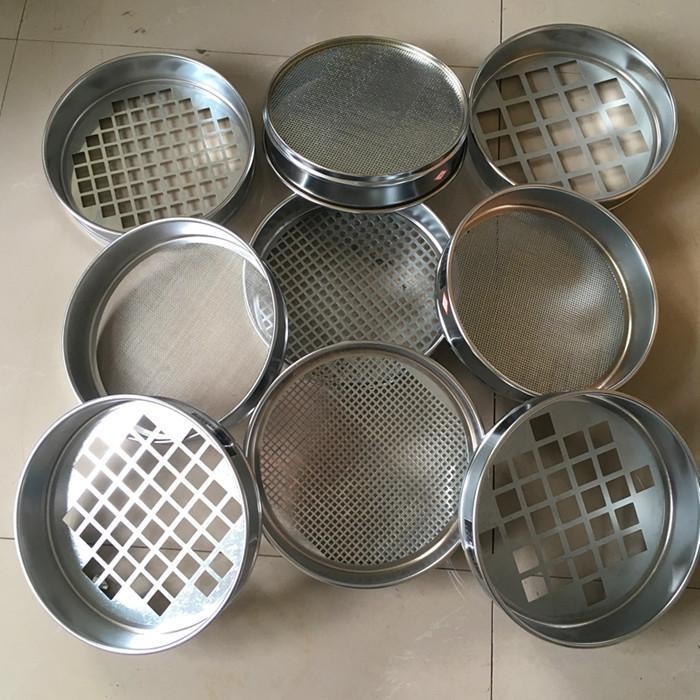
Sieve Analysis Test screen frame: stainless steel plate, mild steel plate, wooden frame.
Standard sieve, detection sieve: diameter 5cm, 6cm, 8cm, 10cm, 20X5cm, 30X5cm.
Sample sieve, traditional Chinese medicine sieve, grain sieve: diameter 10X5cm, 15X5cm, 20X5cm, 25X5cm, 30X6cm, 40X7cm, 45X7cm, 50X9cm, 60X10cm.
Cement screen: 15cm, 13cm, 17X5cm, 20X5cm.
The mesh types of the sample screen are: woven mesh, punched plate (round hole, square hole, long hole), electroforming, etc.
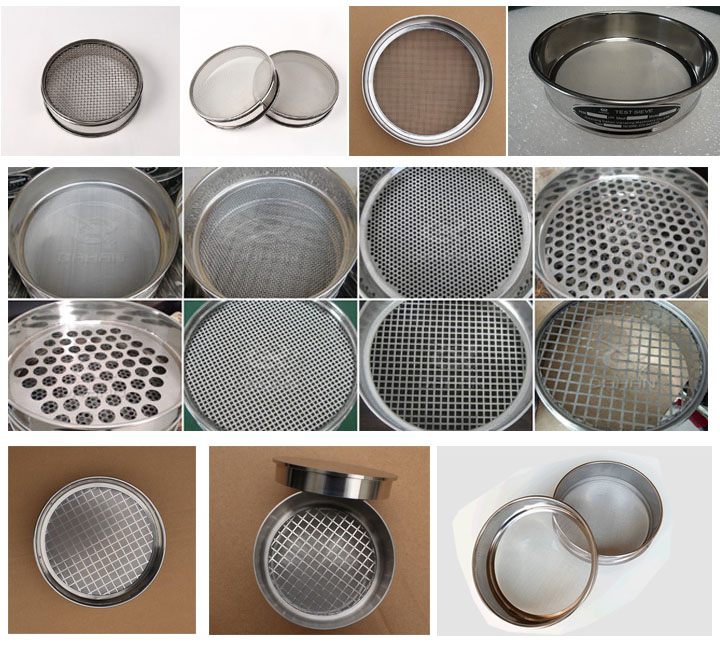
Circular sample sieve: diameter 75mm, diameter 100mm, diameter 200mm, diameter 203mm (8 inches), diameter 300mm, diameter 400mm, diameter 500mm, diameter 600mm, diameter 960mm, etc.
Square sample sieve: 500×750, 500×500, 650×450, etc.
1. Made of 304 stainless steel, wear-resistant and high-temperature resistant;
2. The screen is produced in strict accordance with the GB6003.1-1997 standard and selected by the tool microscope, and the screening is more accurate;
3. The wall thickness is 0.6 mm, and the overall molding is sturdy and durable;
4. The screen mesh and the screen frame are fixed by soldering and will not loosen.
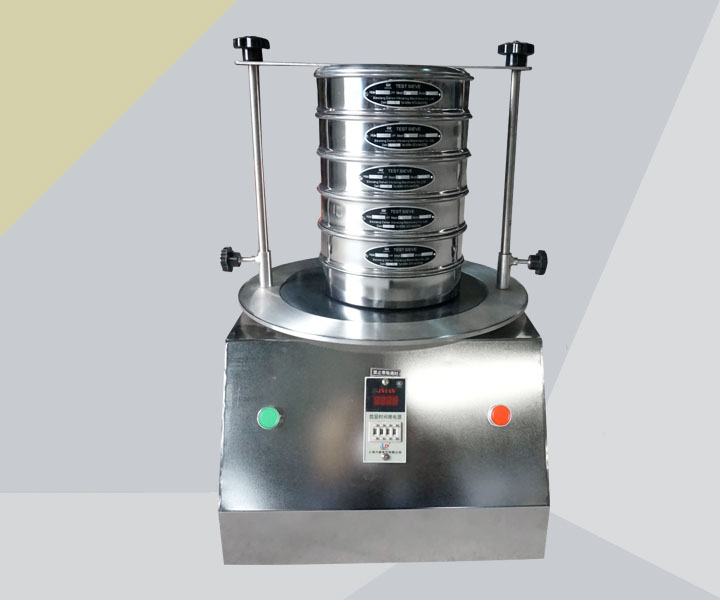
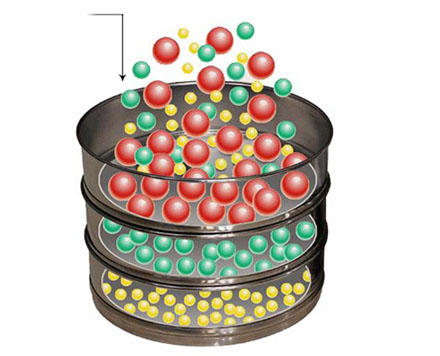
Sieve Analysis Test uses a vertical vibration motor as the vibration source of the whole machine. The vibration motor drives the upper vibrating disc to vibrate, and then transmits it to the upper screen frame of the vibrating disc through the vibration disc. The materials with the aperture of the screen mesh are sieved to the lower sieve frame, so that only the materials of the same particle size are left in each layer of the test sieve, so as to achieve the separation of different materials and determine the particle size composition of the materials.
1. Weigh the sample according to the regulations.
2. Sieve the samples according to the size of the sieve holes.
3. When the thickness of the sieve layer on each sieve is greater than the maximum particle size value of the sample, the sieve residue on the sieve should be divided into two parts, and sieved again until the throughput of each sieve per minute is no longer. More than 0.1% of the total sample.
4. When the particle size of the sieved particles is larger than 20.0mm, during the sieving process, it is allowed to move the particles with fingers.
5. Weigh the weight of each sieve, accurate to 0.1% of the total weight of the sample.
6. Compared with the total amount of samples measured before sieving, the difference between the sum of all the sieve remainders on the sieve and the remainder at the bottom of the sieve shall not exceed 1%.
1. Divide the sieve residue on each sieve by the total amount of samples to calculate the fractional sieve residue percentage of the sieve (accurate to 0.1%);
2. The percentage of sieve residue calculated by each sieve is added to the percentage of sieve residue of each sieve larger than the sieve size, and the cumulative percentage of sieve residue is calculated (accurate to 1%);
3. According to the cumulative sieve percentage of each sieve, evaluate the particle gradation of the sample.
Are you interested?

Then we look forward to hearing from you