
WhatsApp:+86 15236742901

Email:sale@xxdahan.com


WhatsApp:+86 15236742901
Email:sale@xxdahan.com
Friday May-22 2026 16:41:19
Test sieves for cement fineness testing are essential laboratory screening tools used in cement production, quality control, and civil engineering construction. The particle size distribution of cement directly influences key performance indicators such as the hydration rate, compressive strength development, setting time, and overall workability. Therefore, precise particle size analysis is a critical standard for evaluating cement quality.
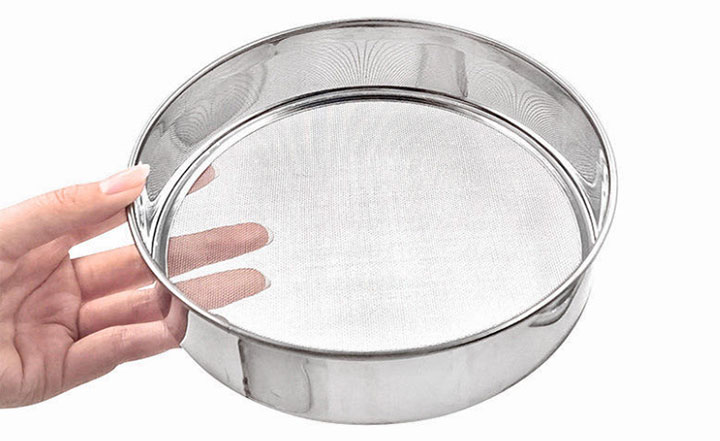
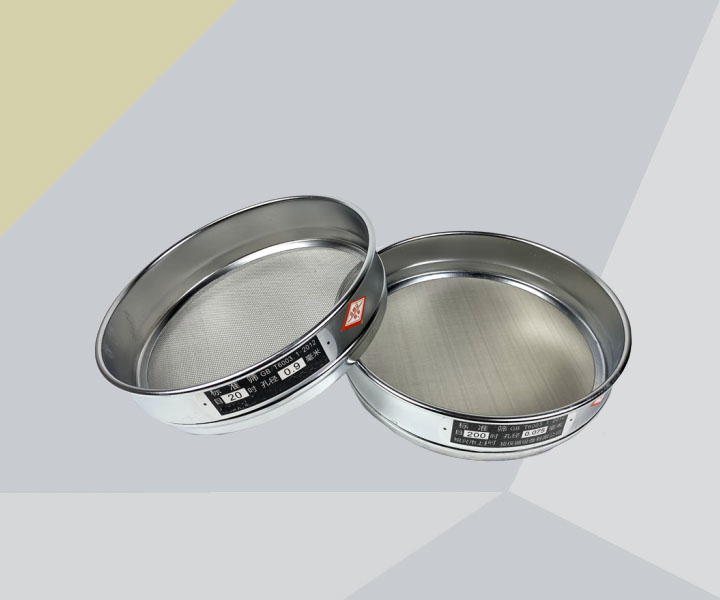
Cement fineness testing sieves typically use stainless steel or brass for the sieve frame and mesh, ensuring corrosion resistance and minimal deformation. The products undergo dimensional calibration and precision testing to ensure uniform sieve openings and a flat sieve surface. According to standards such as GB/T 1345 and ASTM C430, standard square-aperture test sieves can be used to test cement fineness. Commonly used sieve sizes are 0.080mm and 0.045mm. For finer testing, 0.032mm sieves are also used. 80μm sieves are mostly used for routine testing, while 45μm sieves are suitable for high-performance cement and engineering quality control.
Sieve analysis determines cement fineness by measuring the residue percentage left on a standard-aperture mesh. The three primary laboratory methods include negative pressure (vacuum) sieving, wet sieving (water flushing), and manual dry sieving.
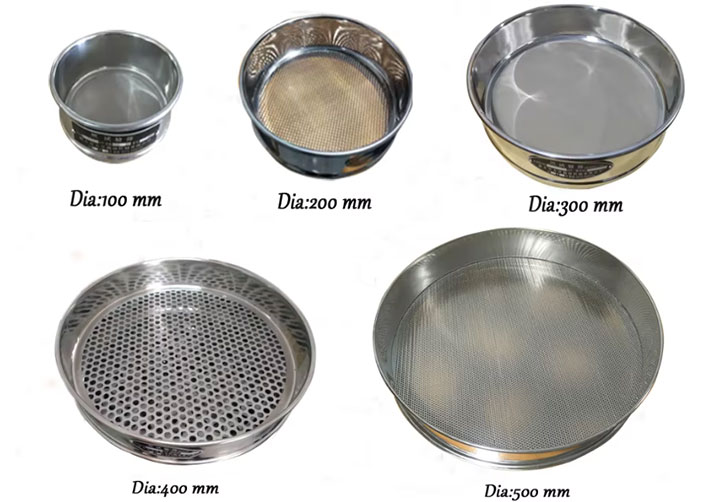
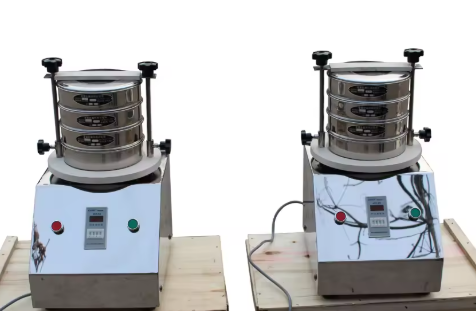
For vacuum sieving—which delivers the highest repeatability—the test sieve is securely docked onto an automatic sieve shaker. Typically, a 25g sample is used for 80μm mesh testing, while a 10g or 25g sample is weighed for 45μm mesh tests (depending on whether ASTM C430 or GB/T 1345 is followed). After the automated vacuum cycle, fine particles pass into the collector while oversized particles remain. The remaining residue is weighed to calculate the fineness percentage.
Depending on the application environment, Test Sieve for Cement Fineness Testing can be categorized into three common types: vacuum sieves, wet-washed sieves, and manually shaken sieves.
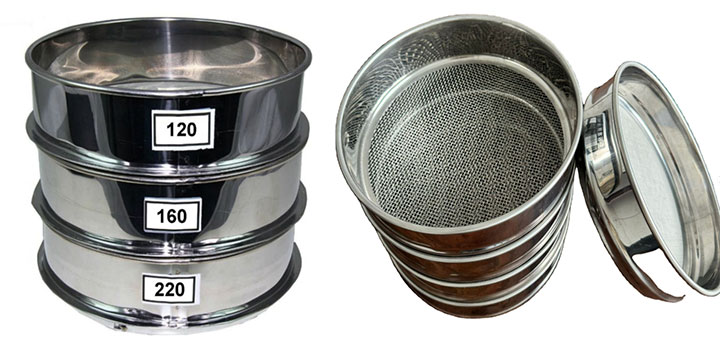
The negative pressure sieves used in certain standard counters employ 150 mm diameter sieve frames, while international laboratory standard test sieves typically use 200 mm (8-inch) or 300 mm (12-inch) sieve frames conforming to ISO 3310-1 and ASTM E11 standards. The sieve frames and mesh are primarily made of high-quality stainless steel (SUS304/SUS316) or high-quality brass to ensure good corrosion resistance, reduce wear, and maintain long-term aperture accuracy.
| Standard Code | Standard Sieve Size (Aperture) | Mesh Equivalent | Testing Method Type | Target Material |
| GB/T 1345 | 80 μm / 45 μm | 200 Mesh / 325 Mesh | Negative Pressure / Vacuum | Ordinary Portland Cement |
| ASTM C430 / C184 | 45 μm | 325 Mesh | Water Flushing / Wet Sieve | Hydraulic Cement |
| ISO 9597 | 90 μm | 170 Mesh | Air Jet Sieving | Fly Ash & Slag Powder |
Cement fineness testing sieves are more than just tools for sieving cement powder; they play a crucial role in cement quality control. They measure the amount of cement residue on the sieve, as well as the fineness and strength grade of the cement, thus determining the usability of a batch. Manufacturers can also adjust the operation of grinding equipment based on the sieving results, controlling the particle size distribution of cement particles and improving production efficiency. Besides ordinary Portland cement, these sieves can also be used to test the fineness of commonly used building powders such as slag cement, pozzolanic cement, and fly ash, facilitating comparisons of the particle states of different materials and providing a basis for subsequent construction and material matching.
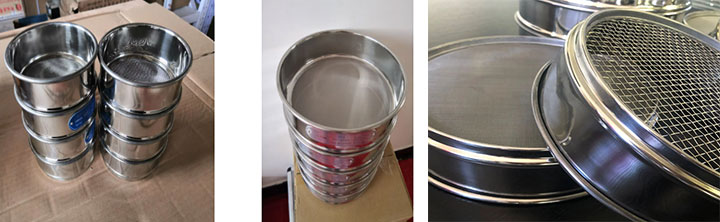
The price of Test Sieve for Cement Fineness Testing varies depending on the material, sieve mesh size, dimensions, and brand. A common 80μm stainless steel test sieve costs between $25 and $45 per sieve. A 45μm sieve is more difficult and expensive to manufacture, costing between $35 and $60 per sieve. A complete set with calibration certificates, including both 80μm and 45μm sieves, costs between $70 and $120. Sealed sieves used with negative pressure sieve analyzers offer a more complete structure and cost between $40 and $75 per sieve.
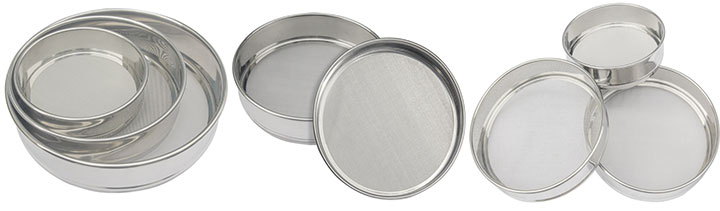
Test Sieve for Cement Fineness Testing has many practical applications in the cement production and construction industries. Some large-scale cement companies use 80μm and 45μm test sieves in their production processes to test the fineness of different batches of cement. Based on the results, they adjust the operation of their production equipment to ensure stable fineness of the cement leaving the factory. Building materials testing institutions use these sieves for testing, and the data obtained can be used in project acceptance to reduce potential concrete quality problems caused by cement fineness issues. Universities and research institutions also use them for related research, analyzing cement particle size distribution and adjusting material ratios to improve the durability of concrete during use.
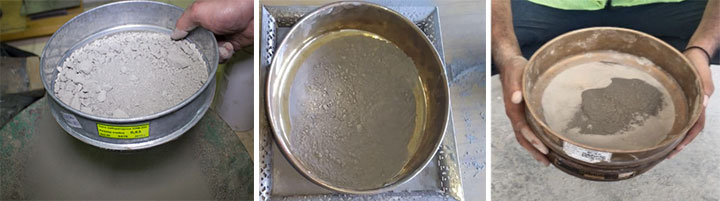
Test Sieve for Cement Fineness Testing uses 80μm or 45μm square-hole sieves to sieve cement particles, thereby determining the fineness of the cement. These test sieves come in different forms, such as negative pressure sieves and water sieves, to adapt to different testing scenarios and operating conditions. From the sieve material and manufacturing process to the calculation of subsequent correction factors, every step affects the final test results. It is used in cement production, construction site testing, scientific research experiments, and quality supervision, providing support for the structure and use of building projects based on stable test results.
The 45-micron sieve determines the proportion of ultrafine particles in cement. Particles smaller than 45 microns hydrate quickly, contributing to improved early strength, while larger particles may not hydrate completely, thus reducing cement utilization.
Calibration should be performed using a standard reference material (e.g., NIST SRM 114). Test using a reference sample, compare the residual percentage to the certified value, and calculate the sieve correction factor (C).
May 22, 2026
Test Sieve For Cement Fineness Testing
Test Sieve for Cement Fineness Testing is a screening tool used in cement production, quality inspect...
May 21, 2026
Precise test sieves conform to ASTM E11 and ISO 3310-1 standards. Sizes range from 75mm to 300mm, and...
May 20, 2026
Clay Powder Test Sieve covers stainless steel laboratory sieves (20μm-2000μm) complying with ASTM E...
May 16, 2026
pharmaceutical powder test sieve
pharmaceutical powder test sieve is a tool used to test pharmaceutical powders. Its manufacturing pro...

Then we look forward to hearing from you