
WhatsApp:+86 15236742901

Email:sale@xxdahan.com


WhatsApp:+86 15236742901
Email:sale@xxdahan.com
Saturday March-07 2026 16:01:29
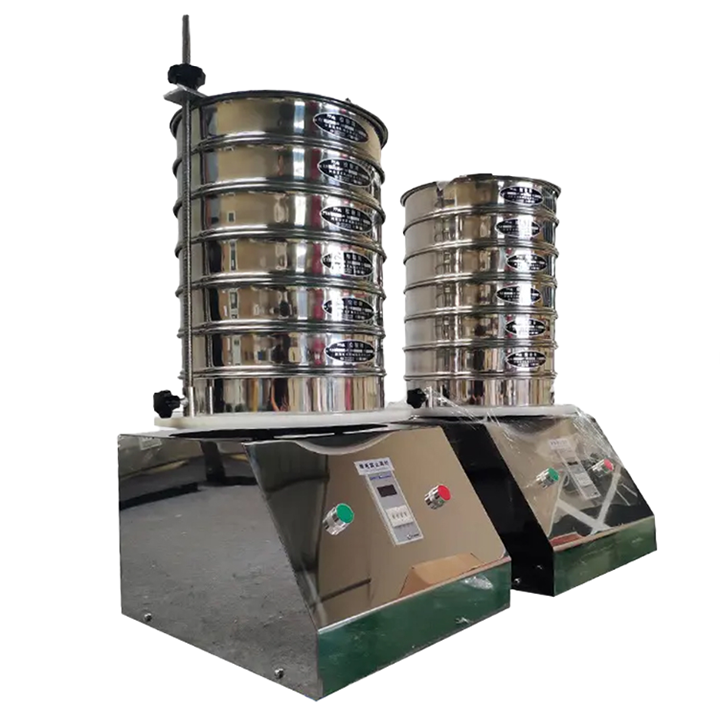
Stainless Steel Test Sieve For Pharmaceutical Powder can be used to detect the particle size of pharmaceutical powders and separate powders of different coarseness. Made of stainless steel, it maintains the original state of the powder during use, reducing contamination and preventing impact on efficacy. It can sieve particle sizes from 75 microns to 2000 microns, with sieve #1 corresponding to 2000 microns and sieve #9 to 75 microns, meeting the needs of routine testing and grading.
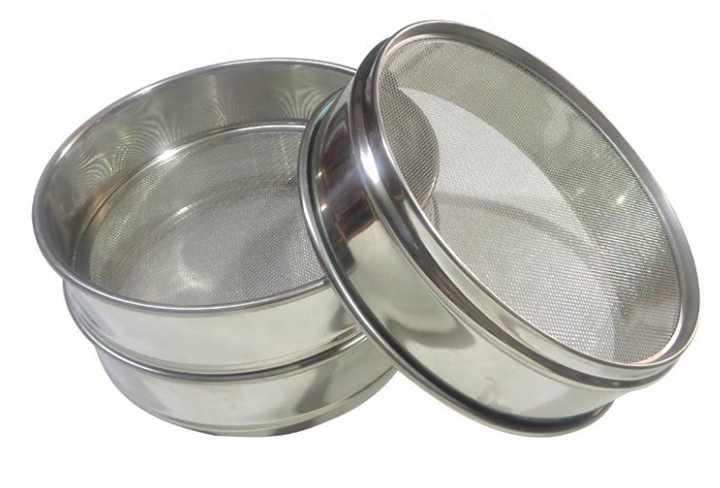
The Stainless Steel Test Sieve for Pharmaceutical Powder is generally made of a single piece of 304 or 316L stainless steel, with the sieve frame and mesh fabric made of the same material. Stainless steel is less likely to react with pharmaceutical powders, is easy to clean, and can withstand the corrosion of cleaning agents. It conforms to ISO 3310-1 or ASTM E11 international standards, which specify the tolerance range for the sieve aperture, ensuring stable data obtained from its testing.
Pharmaceutical powders vary greatly in morphology, some with coarse particles, others with very fine ones, and they tend to clump together, making processing challenging. Stainless Steel Test Sieve for Pharmaceutical Powder helps stabilize pharmaceutical powders.
Pharmaceutical powders contain therapeutic ingredients as well as excipients such as lactose, microcrystalline cellulose, and magnesium stearate. If the particle size varies too much and the distribution is uneven, the tablet dissolution rate will be unstable, affecting efficacy and potentially causing safety issues. After sieving, the excipients mix more evenly with the raw materials, reducing the likelihood of uneven content during tableting and resulting in more consistent finished product quality.
Sieving also helps remove impurities, excessively large particles, and clumps introduced during production. Quality control uses test sieves to inspect each batch, removing out-of-size particles and potential foreign matter, better meeting pharmaceutical quality requirements.
| Mesh | Aperture (μm) | Aperture (mm) | Typical Use |
| 20 mesh | 841 μm | 0.841 mm | Coarse particle sieving |
| 30 mesh | 595 μm | 0.595 mm | Raw material rough screening |
| 40 mesh | 400 μm | 0.400 mm | Coarse powder |
| 50 mesh | 297 μm | 0.297 mm | Pharmaceutical powder fine screening |
| 60 mesh | 250 μm | 0.250 mm | Medium particles |
| 80 mesh | 177 μm | 0.177 mm | Medium-fine powder |
| 100 mesh | 149 μm | 0.149 mm | Common pharmaceutical powder sieve |
| 120 mesh | 125 μm | 0.125 mm | Fine powder |
| 140 mesh | 105 μm | 0.105 mm | Medium-fine powder for pharmaceuticals |
| 170 mesh | 88 μm | 0.088 mm | Very fine powder |
| 200 mesh | 74 μm | 0.074 mm | Commonly used in pharmacopoeia |
| 230 mesh | 63 μm | 0.063 mm | Fine powder |
| 270 mesh | 53 μm | 0.053 mm | High-precision sieve |
| 325 mesh | 44 μm | 0.044 mm | Ultrafine powder |
| 400 mesh | 37 μm | 0.037 mm | Extra-fine powder |
When selecting a Stainless Steel Test Sieve for Pharmaceutical Powder, consider the following factors for comparison:
First, consider the sieve aperture. The mesh size must match the particle size requirements of your powder. For coarse to medium-fine powders, sieves with apertures of 150 to 2000 microns are generally used for grading. For fine powders after micronization, sieves with apertures of 45 microns (325 mesh) are often used, and some even use smaller apertures like 25 microns (500 mesh).
Next, consider the sieve diameter and height. Pharmaceutical manufacturers commonly use 200 mm and 300 mm sieves. Standard height sieves are suitable for routine particle size analysis, while semi-high sieves can be stacked for multi-stage particle size distribution testing with a vibrating sieve machine.
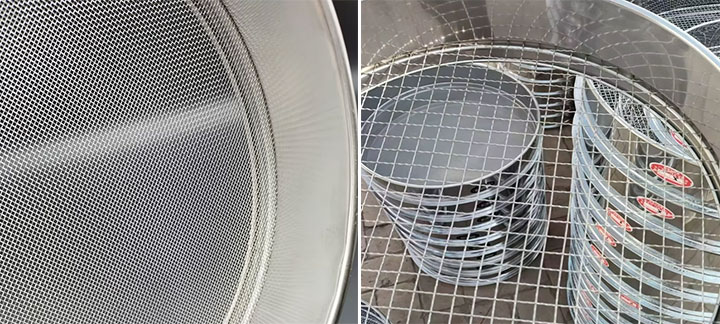
The structure and surface finish are also important. The sieve should be made of stainless steel with a welded or one-piece design to minimize powder accumulation in gaps. When used in a cleanroom, pay attention to the polishing level of the sieve frame surface to reduce the possibility of bacterial adhesion.
If the powder is very fine and easily sticks to the mesh, consider whether the sieve can be paired with an ultrasonic device. This device transmits high-frequency energy to the sieve, keeping the mesh open and allowing the powder to pass through smoothly.
Stainless Steel Test Sieve For Pharmaceutical Powder is used in various stages of drug research and development and production:
Sterile APIs and Filtration: Handling sterile APIs requires controlled operating conditions. Drug powder particle sizes range from 1 to 1000 micrometers; sieving helps control the accuracy of the drug delivery system during production. In a sterile environment, the sieve structure is adapted for isolator operation.
Sieving of Pharmaceutical Excipients: Some excipients are prone to moisture absorption or static electricity problems during operation. Materials such as starch and maltitol are tested using test sieves to determine particle size distribution to confirm whether their flowability and compressibility meet pharmacopoeia standards.
Research and Development Phase: In the research and development stage, analytical-grade test sieves are used to collect basic data on the particle size distribution of new drugs, providing a reference for subsequent scale-up production and process adjustments.
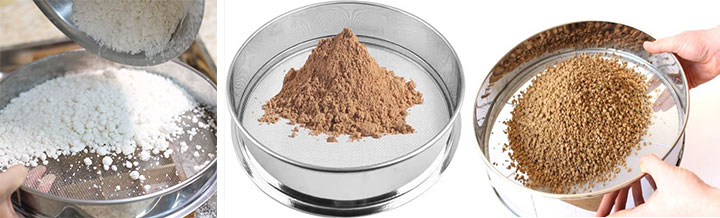
Stainless steel test sieves for pharmaceutical powders, as a sophisticated tool for sieving medical powders, not only ensure the accuracy of sieving results but also make the sieving results reliable and referable.
Mar 07, 2026
Stainless Steel Test Sieve For Pharmaceutical Powder
Stainless Steel Test Sieve For Pharmaceutical Powder can be used to test the particle size of pharmac...
Mar 03, 2026
Test Sieve for Quartz Sand typically uses a sieve size between 0.075 mm and 5 mm, which translates to...
Feb 27, 2026
Test Sieve For Soil Particle Analysis
Test Sieve For Soil Particle Analysis is a sieving instrument used to determine the particle size dis...
Feb 26, 2026
Test Sieve For Cement Fineness Testing
Test Sieve for Cement Fineness Testing is a screening tool used in cement production, quality inspect...

Then we look forward to hearing from you