
WhatsApp:+86 15236742901

Email:sale@xxdahan.com


WhatsApp:+86 15236742901
Email:sale@xxdahan.com
Tuesday March-03 2026 13:30:34
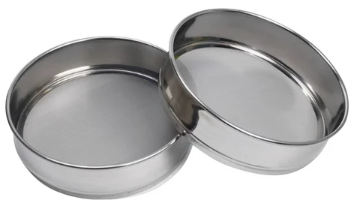
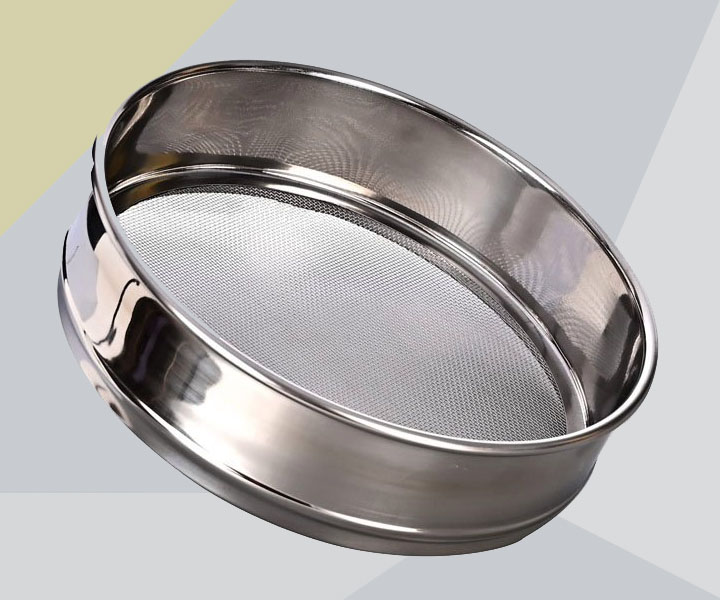
When testing the particle size of quartz sand, Test Sieve For Quartz Sand is used. In routine testing, the commonly used sieve particle sizes are generally between 0.075 mm and 5 mm, which translates to approximately 20 to 200 mesh, covering most quartz sand grading needs. Test sieves are typically 200 mm in diameter and come in two heights: a standard 50 mm and a taller 80 mm, allowing for larger loads. Most sieves are woven from 304 stainless steel wire; finer sieves may use electroformed thin sheets, which have suitable hardness and are resistant to abrasion from quartz sand particles. Under normal laboratory conditions, sieves generally last one to two years. Frequent use or sieving coarse sand will cause faster wear. Replace the sieve if you notice mesh deformation or fraying edges.
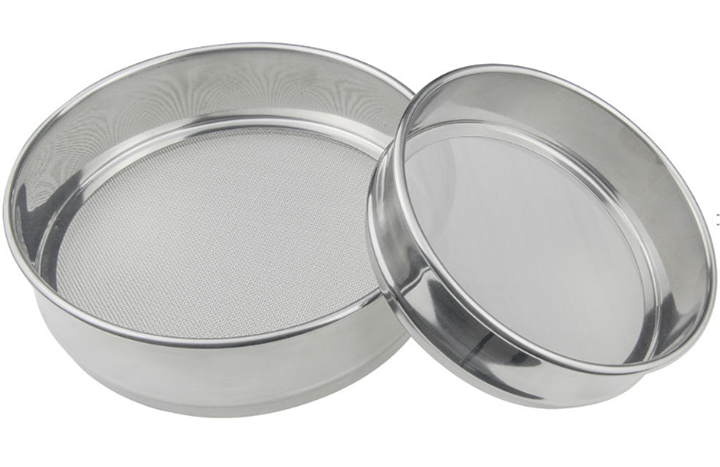
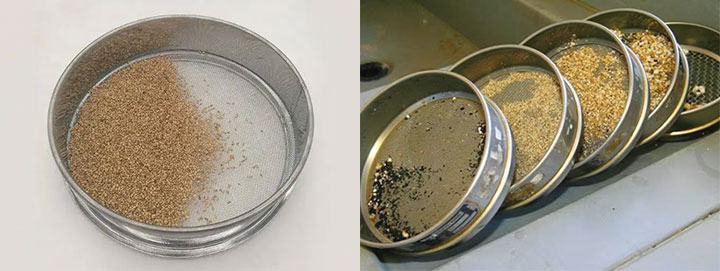
Sieving quartz sand requires more than just one Test Sieve for Quartz Sand test; several other pieces of equipment are needed. First, dry the sample in an oven at approximately 105 degrees Celsius to remove moisture before weighing, preventing damp particles from sticking together and affecting the results. Next, stack test sieves of different aperture sizes from top to bottom, with a receiving tray at the bottom and a sieve cover on top. Vibration can be done using a vibrating sieve machine or manually, typically for 10 minutes. After stopping, weigh the sand on each layer of sieves. Handle the sieves gently during operation; avoid striking the sieve frame to prevent mesh deformation. Clean with a soft brush following the mesh pattern; do not scrape with hard objects to avoid damaging the sieve surface.
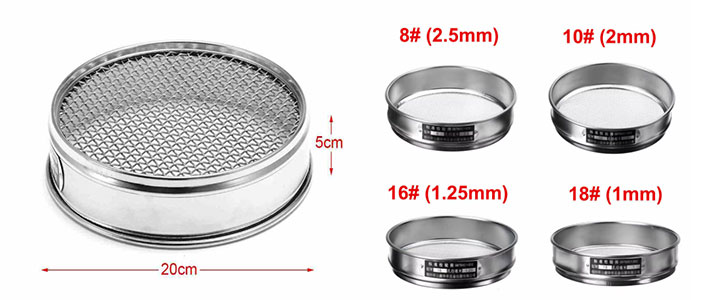
| Item | Specification |
| Sieve Type | Woven Wire Cloth |
| Applicable Materials | Quartz sand, mineral aggregates, powder particles, etc. |
| Material | Stainless Steel (commonly 304 or 316), Brass |
| Frame Material | Stainless Steel / Brass |
| Frame Diameter | 3", 8", 12" |
| Frame Height | Full Height approx. 50 mm; Half Height approx. 25 mm |
| Mesh Range | 18 mesh – 635 mesh |
| Aperture Range | 1.00 mm – 20 μm |
| Aperture Tolerance | In accordance with ASTM E11 allowable deviations |
| Wire Diameter Range | 0.020 mm – 1.00 mm |
| Weaving Type | Plain Weave |
| Marking Method | Laser engraving |
| Accuracy Grade | ASTM E11 Compliance |
| Applications | Laboratory particle size analysis, geotechnical testing, building material testing, foundry inspection |
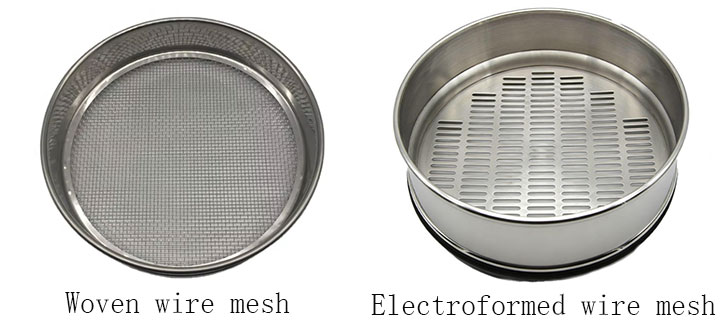
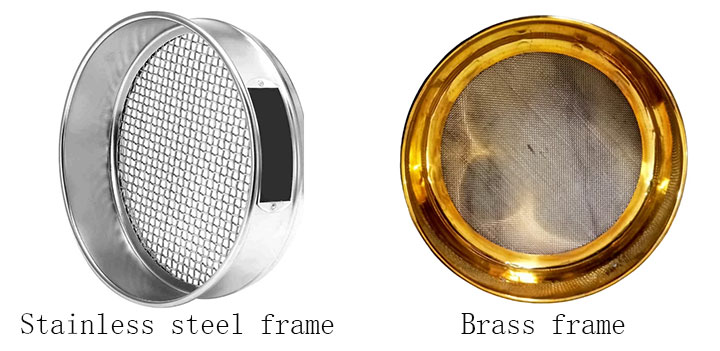
Test Sieve for Quartz Sand can be categorized into woven mesh sieves, electroformed sieves, stainless steel frame sieves, brass frame sieves, etc.
Woven Mesh Screens and Electroforming Screens: For quartz sand, woven mesh screens are made of interwoven metal wires, offering low cost and easy replacement. The wear rate is controllable for ordinary coarse and fine quartz sand. Electroforming screens are made from a single piece of metal, with uniform mesh openings and smooth edges, making them less prone to sand jamming. However, when encountering sharp-edged coarse quartz sand, they are prone to micro-cracks after impact. For daily quartz sand sieving, woven mesh screens are more resistant to impacts and friction, have lower replacement costs, and are more suitable for long-term use.
Stainless Steel Frames and Brass Frames: Stainless steel frames are high-strength, not easily deformed, and will not rust when exposed to moisture, making them suitable for humid environments or water-washing sieving. However, they are slightly heavier, making them more difficult to handle. Brass frames are relatively soft and prone to slight deformation under stress. Long-term stacking and vibration can affect mesh precision, and they can oxidize and discolor in humid environments. However, they are lightweight and more suitable for short-term, dry-environment sieving of small quantities of samples.
When using Test Sieve for Quartz Sand to sieve quartz sand, you may encounter situations where particles get stuck in the sieve openings, especially with fine sieves. In this case, you can gently brush the back with a soft brush or gently blow air through it. Do not try to force it with a needle, as this can enlarge the mesh. Some fine sand may clump together and stick to the sieve surface, mostly due to insufficient drying or static electricity. Pre-drying the sample thoroughly and gently breaking it up before sieving will reduce this. Stacked sieve frames can wobble, causing sand to leak through the gaps. Before use, check that the sealing rings are flat, and after stacking, gently press them into place to ensure each layer is aligned. Over time, the sieve mesh will wear and thin. Regularly compare your results with a standard sieve, and replace it promptly if any discrepancies are found to avoid affecting the results.
Choosing Test Sieve for Quartz Sand allows you to determine the sieve size, material, and compatible equipment based on the quartz sand particle size. Commonly used particle sizes, sieve frame diameters, and heights are available in standard specifications. Stainless steel screens are suitable for a wide range of applications and their lifespan is sufficient for daily testing. When using them, they can be paired with equipment such as drying ovens and vibrating screens, following a drying, weighing, sieving, and re-weighing process for more stable test data. Woven mesh screens are more suitable for quartz sand than electroformed screens, and stainless steel frames are more durable and adaptable to various scenarios than brass frames. During operation, issues such as clogging, material sticking, and leakage may occur; these can be addressed using appropriate methods. With proper maintenance and periodic inspections, the test sieves can effectively classify quartz sand particle sizes, meeting the needs of production and testing.
Mar 03, 2026
Test Sieve for Quartz Sand typically uses a sieve size between 0.075 mm and 5 mm, which translates to...
Feb 27, 2026
Test Sieve For Soil Particle Analysis
Test Sieve For Soil Particle Analysis is a sieving instrument used to determine the particle size dis...
Feb 26, 2026
Test Sieve For Cement Fineness Testing
Test Sieve for Cement Fineness Testing is a screening tool used in cement production, quality inspect...
Feb 24, 2026
Stainless Steel Laboratory Test Sieve
Stainless Steel Laboratory Test Sieve is a sieving tool used to analyze particle size. It can separat...

Then we look forward to hearing from you