
WhatsApp:+86 15236742901

Email:sale@xxdahan.com


WhatsApp:+86 15236742901
Email:sale@xxdahan.com
Tuesday April-07 2026 17:41:34
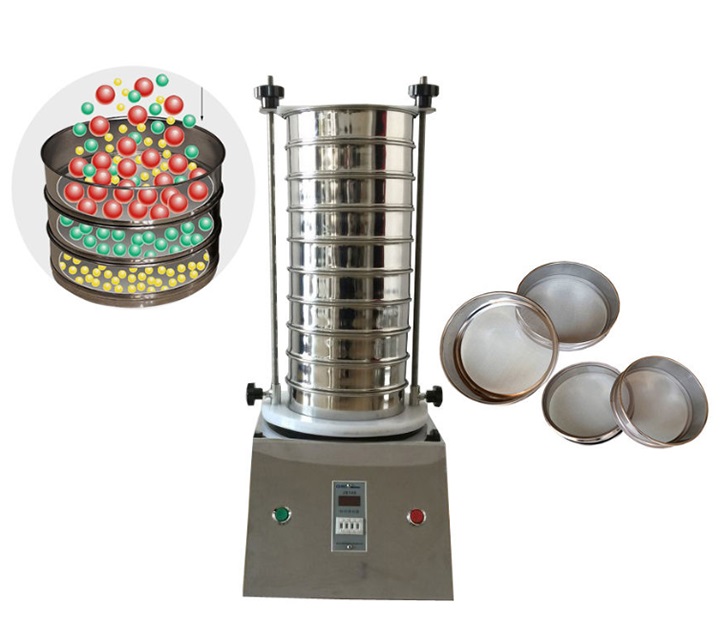
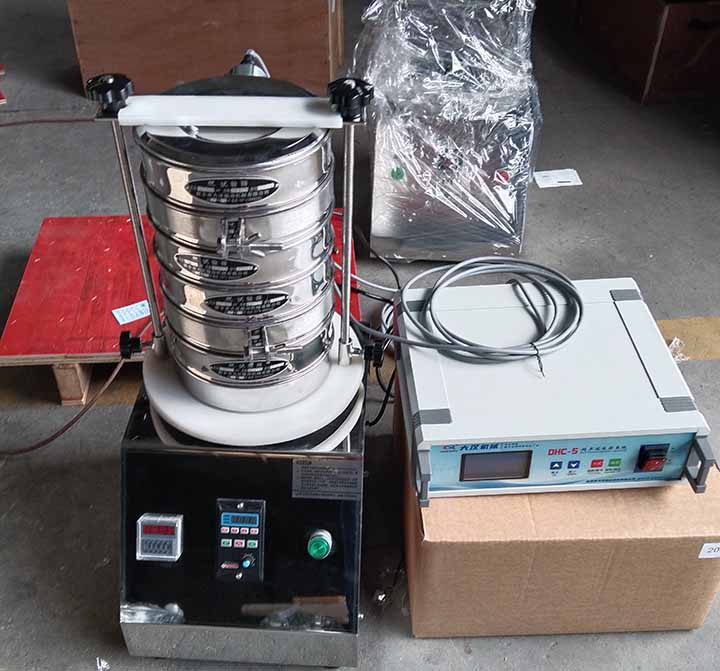
Ultrasonic Sieves for Fine Powder adds an ultrasonic system to a regular vibrating screen, enabling the sieving of fine powders that are difficult to sieve. It typically consists of the screen body, ultrasonic generator, transducer, and connecting components, and is suitable for sieving materials with particle sizes ranging from approximately 20 micrometers to 1000 micrometers.
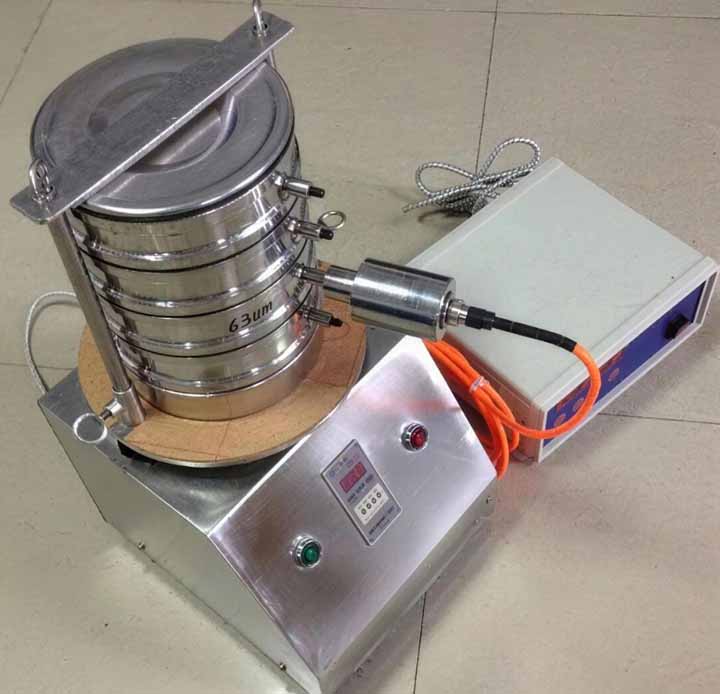
Ultrasonic Sieves for Fine Powder does not rely solely on mechanical vibration, but rather superimposed with a high-frequency vibration, typically between 20kHz and 40kHz. This vibration causes the powder on the screen to vibrate slightly, reducing friction between particles and between particles and the screen. When the powder is no longer tightly adhered to the screen, clogging is less likely. For powders that are statically charged or prone to agglomeration, such as battery materials or cosmetic powders, this method can gently disperse particles that were originally stuck together.
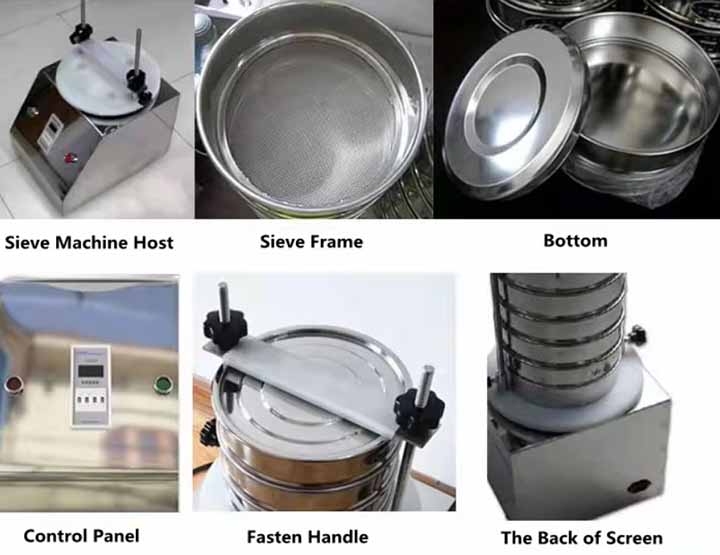
Ultrasonic Sieves for Fine Powder typically improves sieving efficiency by 1 to 3 times, depending on the material properties and screen mesh size. In fine powder sieving scenarios, screen clogging can be reduced by more than 70%, meaning a significant decrease in downtime for cleaning. Particle distribution is also more uniform; for products with particle size requirements, such as pharmaceutical powders or additives, the pass rate can be increased to close to 90% or even higher. Simultaneously, reduced waste due to decreased repeated sieving and material residue helps control costs. It can solve problems such as "incomplete sieving" and "powder accumulation on the screen surface" in production.
| Item | General Vibrating Screen | Ultrasonic Sieves for Fine Powder |
| Applicable Particle Size Range | About 100-1000 μm | About 20-1000 μm (The fine particle segment is more stable at 20-75 μm) |
| Sieving Method | Mechanical Vibration | Mechanical Vibration + High-Frequency Vibration Superposition |
| Screen Mesh Blocking Condition | Fine powder is prone to mesh plugging and adhesion | Continuous micro-movement of powder significantly reduces the probability of mesh plugging |
| Fine Powder Passing Capacity | Efficiency decreases significantly as particle size becomes finer | Maintains relatively stable passing rate for ultra-fine powder |
| Continuous Running Time | Easy to interrupt due to mesh clogging | Longer operation intervals and lower shutdown frequency |
| Yield Performance | Large fluctuations affected by materials | Smaller yield fluctuations under fine particle working conditions |
| Classification Consistency | Unstable particle size distribution | More concentrated particle size distribution with reduced fluctuation range |
| Maintenance Frequency | More mesh cleaning times | Extended cleaning cycle |
| Typical Applications | Coarse Powder and Granule Sieving | Medical Powder, Metal Powder, Lithium Materials, Chemical Ultra-fine Powder |
Different fields have different requirements for fine powder sieving, therefore ultrasonic sieves are used in multiple industries. In the pharmaceutical field, it can be used for the grading of active pharmaceutical ingredients (APIs) or excipients; in the chemical industry, it is suitable for handling powders that are easily adsorbed or carry static electricity; for metal powders used in 3D printing, the sieving process needs to maintain the integrity of the particle shape, and ultrasonic vibration can reduce the impact of mutual collisions; the sieving of food additives places more emphasis on particle size uniformity; and in battery material production, powders such as positive and negative electrodes are often fine particles and prone to agglomeration. Using equipment with an ultrasonic vibrating screen for fine powder can make the sieving process smoother and reduce manual intervention.
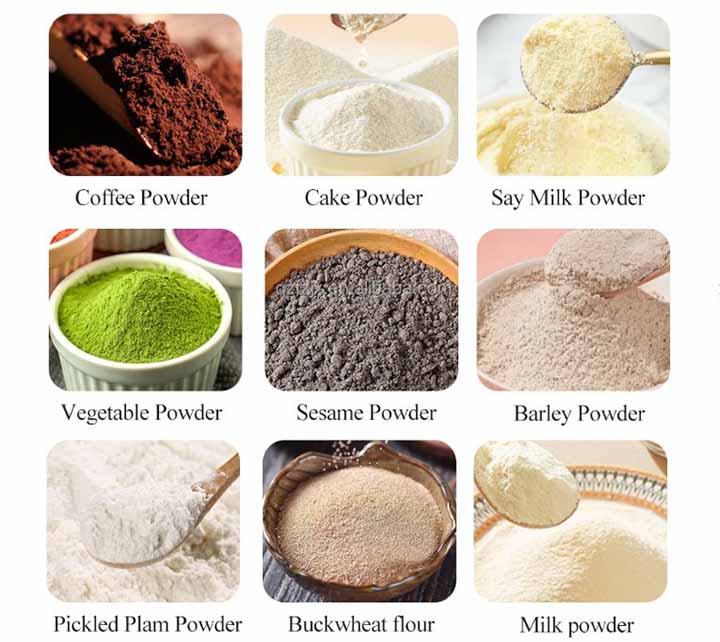
Ultrasonic Sieves for Fine Powder, as an industrial sieving machine, provides a more suitable method for fine powder sieving. When choosing, one can start with the characteristics of the material, such as particle size range, whether it is prone to agglomeration, and whether it carries static electricity, and then combine this with the production capacity requirements to select the appropriate configuration. For users unfamiliar with the equipment, understanding its working method and applicable scope is more valuable than simply looking at the parameters. This will allow the equipment to perform as expected in actual use.
Apr 07, 2026
Ultrasonic Sieves for Fine Powder
Ultrasonic Sieves for Fine Powder adds an ultrasonic system to a regular vibrating screen, enabling t...
Mar 24, 2026
Sonic Sieve Shaker for Pharmaceutical Granules
Sonic Sieve Shaker for Pharmaceutical Granules separates drug particles of different sizes through si...
Mar 24, 2026
Sonic Sieve Shaker for Pharmaceutical Granules
Sonic Sieve Shaker for Pharmaceutical Granules separates drug particles of different sizes through si...
Mar 23, 2026
Sonic Sieve Shaker for Metal Powder Testing
Sonic Sieve Shaker for Metal Powder Testing typically covers a particle size range from 5 microns to ...

Then we look forward to hearing from you