
WhatsApp:+86 15236742901

Email:sale@xxdahan.com


WhatsApp:+86 15236742901
Email:sale@xxdahan.com
Tuesday February-10 2026 15:03:12
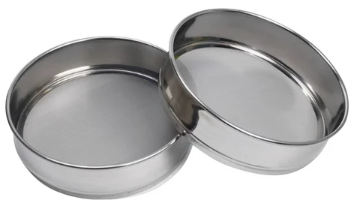
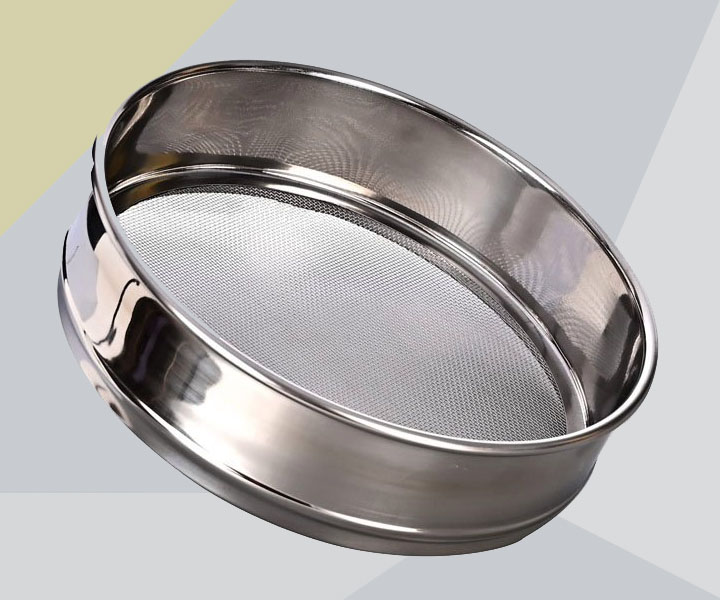
The Quartz Sand Test Sieve is a laboratory sieve used to detect and classify the particle size of quartz sand, suitable for high-precision sieving in laboratories. Quartz sand is hard and has sharp edges, which directly affects the quality of products such as glass, casting, and water treatment, so its particle size distribution needs careful measurement. Ordinary sieves have large variations in mesh size, are not wear-resistant enough, and the sieve data cannot be tracked, making them unsuitable for quality inspection and production grading. In contrast, test sieves have uniform mesh size, very small dimensional errors, are less prone to deformation, and can provide test data.
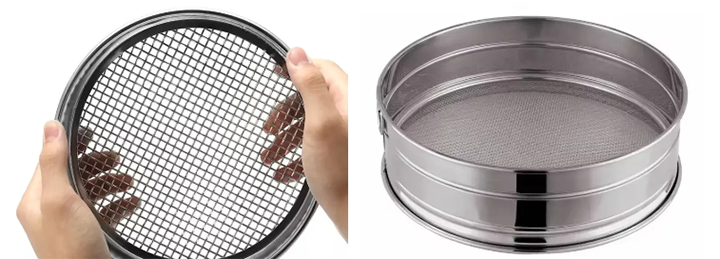
Common Quartz Sand Test Sieve frame diameters are 200mm and 300mm, with heights ranging from 50–73mm; sieve mesh sizes range from 10 mesh to 500 mesh. The quartz sand industry typically uses three sets of sieves: 20-mesh, 40-mesh, and 70-mesh for coarse grading; 70-mesh, 140-mesh, and 200-mesh for medium grading; and 200-mesh, 270-mesh, and 320-mesh for fine grading. This allows for testing from raw sand to refined sand and ultrafine sand.
The benefits of the Quartz Sand Test Sieve lie in its stability during use and ease of operation. Many test sieves are made of SUS304 or 316L stainless steel, a robust material that is not prone to rusting in humid environments or during wet sieving, and is less likely to affect the quartz sand. The sieve apertures also maintain stable condition over long-term use. Regarding particle size control, the test sieves have uniform mesh sizes that conform to ISO or ASTM standards, ensuring strong data comparison for each sieving, facilitating long-term recording and analysis in laboratories and production sites. Functionally, it can perform not only dry sieving but also wet sieving in conjunction with ultrasonic or water flow, solving the sieving difficulties caused by electrostatic adsorption or agglomeration of fine quartz sand. Standardized sieve frame dimensions allow sieves from different manufacturers and batches to be stacked and used flexibly, adapting to various testing needs. This equipment allows users to quickly detect changes in quartz sand particle size, adjust production steps promptly, reduce rework and waste, and aid in product quality control and cost management.
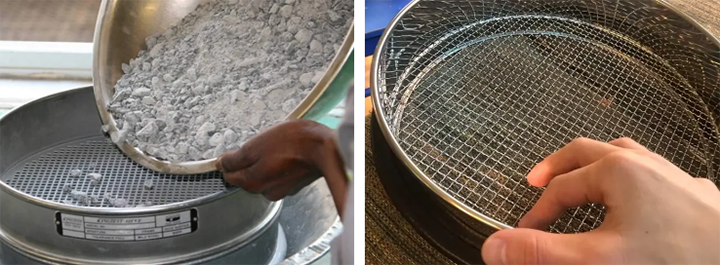
Before starting sieving, stack the sieves in descending order of mesh size, placing the sieve bottom and the sieve cover on top. Take a representative quartz sand sample, typically around 100 or 200 grams for dry sieving, and pour the sand into the top sieve. After assembling the entire sieve, fix it on the vibrating screen machine and set the time, generally 15 to 20 minutes for quartz sand sieves. This allows the particles to pass through the sieve while preventing them from breaking due to stress. The vibrating screen machine uses rotation and tapping to continuously move and classify the sand on the sieve surface. After completion, carefully remove each layer of sieves, use a brush to sweep the residual sand onto a balance pan for weighing, record the data, and then calculate the residual rate and passing rate of each layer of sieves, drawing a particle size distribution diagram. If wet sieving is performed, the sand should be washed with water until the filtrate is clear, then dried and weighed.
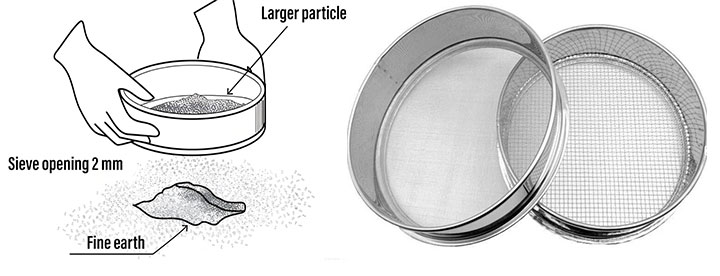
The price of a Quartz Sand Test Sieve varies depending on the mesh size, material, and size of the sieve. For example, a standard 200mm stainless steel test sieve generally costs $13–25, while a slightly larger 300mm sieve costs approximately $18–35. If a matching electric vibrating screen machine is included, the entire set will cost approximately $350–600. The higher the mesh count and the finer the wire, the higher the price. Basic models with 10-100 mesh cost $13-18, standard models with 100-300 mesh cost $18-25, and high-precision models exceeding 300 mesh cost $25-35. There are also differences in materials. 304 stainless steel mesh offers good value and is widely used in the industry; 316 stainless steel is corrosion-resistant and suitable for acidic environments, but it is more expensive than 304; chrome-plated iron frames are cheaper, around $10-18, but their wear resistance and screening accuracy are slightly inferior. When purchasing, you should consider the application and budget.
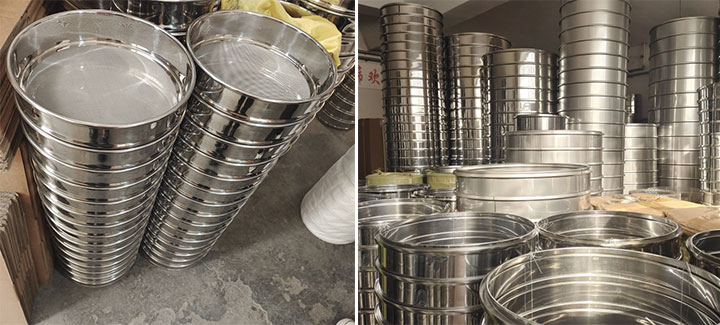
In the quartz sand mining and processing stages, the Quartz Sand Test Sieve is commonly used for screening raw sand, grading finished products, and factory inspection, facilitating the differentiation of different particle sizes. In glass manufacturing, it is used to check the uniformity of particle size distribution in the batch, helping to stabilize the quality of the finished product. In the foundry industry, sieving is used to control the particle size of molding sand, resulting in smoother casting surfaces. In water treatment, it's commonly used to test filter media gradation, facilitating assessment of filtration and backwashing performance. In building materials and ceramics production, sieving is used to stabilize the proportion of quartz sand. In oil fracturing, it's also used to select proppant particle size to meet on-site requirements.
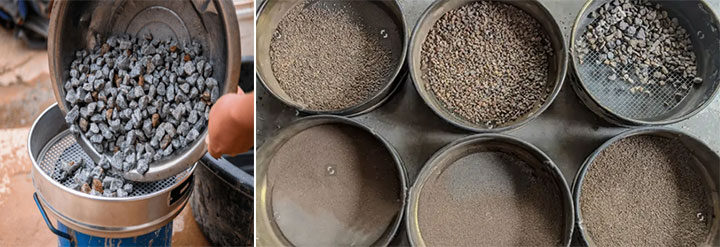
The Quartz Sand Test Sieve conforms to ISO 3310 series and ASTM E11 standards, which provide unified requirements for sieve aperture size, permissible deviations, sieve frame diameter and height, and specific sieving procedures. Test sieves manufactured according to standards facilitate easier comparison and communication of test results between different laboratories. Through standardized sieving processes, companies can clearly understand raw material particle size variations, which is useful for sorting management, production process inspection, and finished product acceptance, helping to reduce problems caused by particle size instability and minimizing quartz sand waste and rework.
Feb 10, 2026
Quartz Sand Test Sieve is a laboratory sieve used to detect and classify the particle size of quartz ...
Feb 09, 2026
pharmaceutical powder test sieve
pharmaceutical powder test sieve is a tool used to test pharmaceutical powders. Its manufacturing pro...
Feb 09, 2026
Clay Powder Test Sieve separates particles of different sizes using a physical sieving method, thus r...
Feb 07, 2026
flour particle size analysis is a method that uses detection methods and instruments to determine the...

Then we look forward to hearing from you