
WhatsApp:+86 15236742901

Email:sale@xxdahan.com


WhatsApp:+86 15236742901
Email:sale@xxdahan.com
Friday May-15 2026 16:20:58
flour particle size analysis is a method for determining the distribution and size range of flour particles, and also a method for flour quality control. Most flour particles range in size from 20 to 150 micrometers, but the specific particle size depends on the milling grade. To ensure the accuracy and international comparability of the results, testing is conducted according to the International Organization for Standardization (ISO) 3310-1 sieving standard.
00 flour is an example of ultrafine milling. Its particles are typically concentrated between 20 and 80 micrometers, with D50 approximately 45 micrometers, D10 approximately 25 micrometers, and D90 close to 75 micrometers. This narrow distribution reflects its highly uniform structure. In actual production, this consistency helps maintain stable water absorption, makes dough mixing more controllable, and results in a finer and smoother texture in the final product.
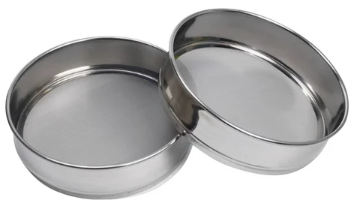
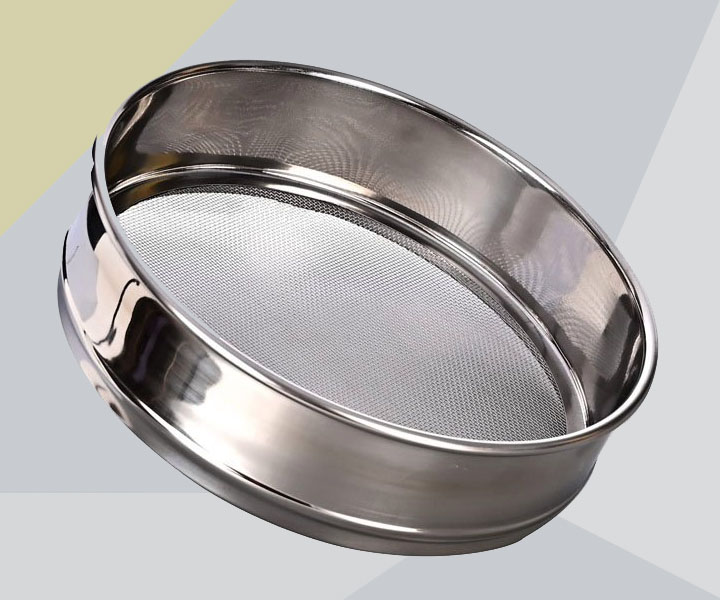
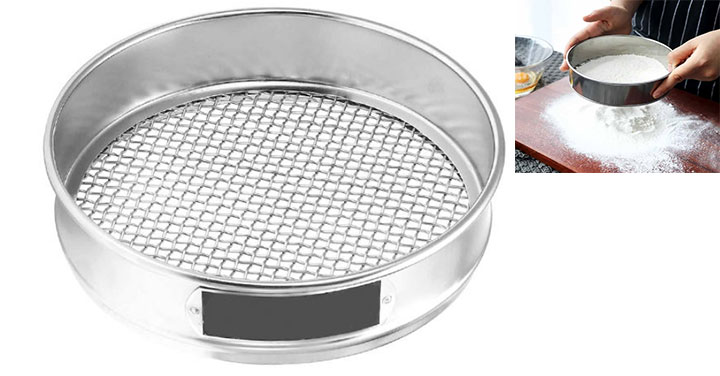
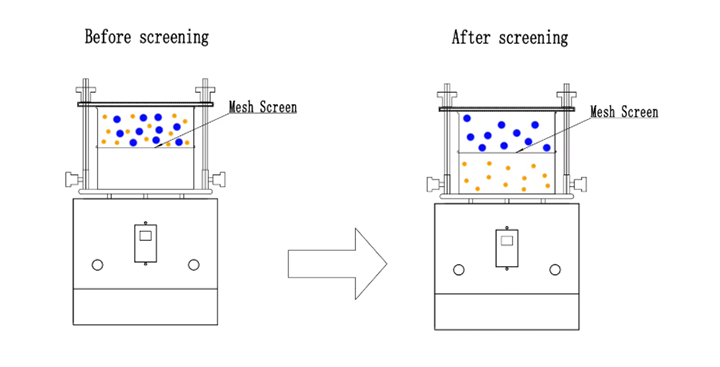
Flour particle size analysis commonly uses sieving. First, lumps and impurities in the flour are removed, and a sample of a certain amount is weighed. Next, the sieving apparatus is set up, with sieves of different aperture sizes stacked from largest to smallest. The sample is placed on the top layer, and the apparatus is then covered and fixed to a vibrating sieve machine. The vibration frequency, amplitude, and time are set, and the equipment is started, allowing the flour to vibrate and sieve. After sieving, the flour from each layer of sieves is collected and weighed, and the quantity of each particle size is recorded. The proportion is then calculated to obtain the particle size distribution of the flour. The sieves are generally made of stainless steel, which is not easily worn and does not react with the flour. Typically, 4-6 layers of sieves are stacked, with apertures decreasing from largest to smallest, covering a particle size range of 20-150 μm. During operation, it is important to ensure the sieves are flat and well-sealed, the vibrating parameters follow standard procedures, the sample is weighed accurately, and any lumps are thoroughly broken up to ensure reliable results.
| Food Category | Particle Size Range (Typical D50 Value) | Recommended Flour Type | Core Function |
| Cakes, Biscuits (Shortbread) | 40 - 60 μm | Low-gluten flour, fine and uniform particle size | Forms a porous crumb structure, ensuring a soft and crisp texture |
| Bread, Toast | 60 - 90 μm | High-gluten flour, uniform particle size | Quickly and uniformly forms a strong gluten network to support volume |
| Chinese Noodles, Dumpling Wrappers | 70 - 100 μm | Medium-high gluten flour, medium particle size | Forms moderate gluten, providing elasticity and chewiness |
| Pizza Crust | 80 - 120 μm | High-gluten flour, relatively coarse particle size | Absorbs water slowly, extends fermentation, creates a crispy outer layer and chewy inner texture |
| Whole Wheat / Whole Grain Foods | Above 100 μm | Whole wheat flour, wide particle size distribution, contains bran | Provides dietary fiber, rich flavor and unique coarse texture |
| Frying Breading | Above 150 μm | Specially coarse granular flour | Forms a three-dimensional crispy crust and reduces oil absorption |
| Pre-mixed Powder, Soup & Sauce Thickener | Below 40 μm | Ultra-fine powder | Quickly disperses and dissolves, avoids clumping, delivers a smooth texture |
Flour particle size analysis is relatively simple to operate, generally using sieves. The process is standardized, and flour mills or small laboratories can quickly learn it without complex training. The measured data is also relatively reliable. Combined with a vibrating sieve, it minimizes human error, and multiple measurements show little difference, making it useful for judging flour quality. The entire analysis process is short, taking approximately thirty minutes per sample, making it convenient to test multiple batches of flour on the production line. It is also cost-effective; the equipment is easy to maintain, consumables are easy to replace, and the sieves can be repeatedly cleaned and reused, saving considerable effort in the long run. Moreover, particle size analysis not only provides specific particle size figures but also visually shows the distribution of flour particles, providing clear results and valuable reference for production and quality management.
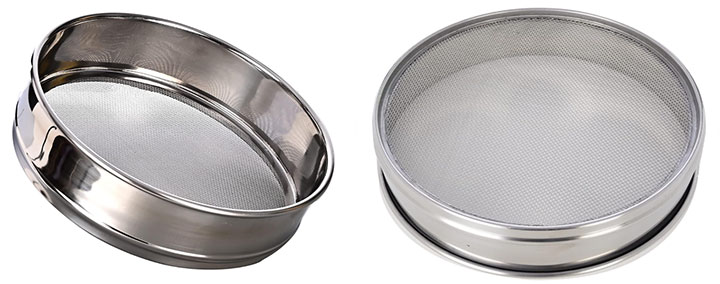
Flour particle size analysis is widely used in flour quality testing and processing. It helps us understand the size and distribution of flour particles, providing a reference for flour grading, production process adjustments, and applications in different food products. In flour processing, particle size analysis can determine the suitability of the grinding process, adjust grinding roller parameters, and ensure that different grades of flour particles meet requirements, avoiding inconsistent product texture caused by overly coarse or fine particles. In baking and food processing, particle size affects flour water absorption, gluten formation, and expansion. For example, low-gluten flour used in pastries requires finer particles for lower gluten content and a softer texture; high-gluten flour used in bread requires a suitable particle distribution for a more stable gluten network. Particle size analysis also helps check for impurities or uneven grinding in raw materials and provides data support for formula development and compound flour adjustments.
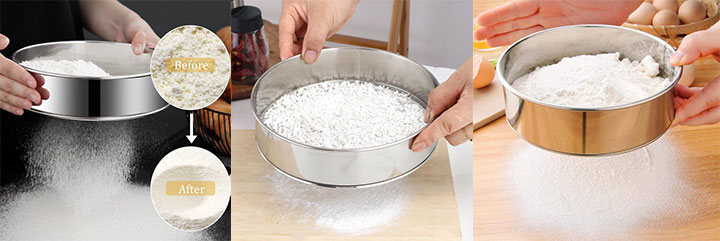
Flour particle size analysis measures the size and distribution of flour particles, representing the characteristics of flour numerically. This allows companies to better control quality during production and uses this data for flour grading and pricing. The sieving method is simple, inexpensive, and provides reliable data, making batch testing convenient in factories. In practical applications, particle size analysis is used throughout all stages of flour production, from grading to pricing, helping companies adjust grinding processes to ensure uniform flour particles and consistent texture.
May 15, 2026
flour particle size analysis evaluates granularity profiles using ISO 3310-1 standards. It ensures mi...
May 14, 2026
Mechanical Sieve Shaker Price varies depending on the model. The basic model, suitable for routine sc...
May 13, 2026
Aggregate Testing Equipment for Construction Materials
Aggregate Testing Equipment for Construction Materials simplifies lab quality control. Stop guessing ...
May 08, 2026
vibratory test sieve with sample loading
vibratory test sieve with sample loading involves loading the sample to be sieved into a vibrating si...

Then we look forward to hearing from you