
WhatsApp:+86 15236742901

Email:sale@xxdahan.com


WhatsApp:+86 15236742901
Email:sale@xxdahan.com
Monday February-09 2026 13:40:29
In the pharmaceutical industry, pharmaceutical powder test sieves are tools used to test powders. Their production and use comply with standards such as the Chinese Pharmacopoeia, the United States Pharmacopeia, and the European Pharmacopoeia. Test sieves are used to classify particle size, detect particle size distribution, and screen impurities in various drug powders during the production process, ensuring uniform particle size and stable quality in drug raw materials, intermediates, and finished products. Common materials on the market include stainless steel 304/316L and brass. Stainless steel is the most widely used choice due to its corrosion resistance and resistance to impurity precipitation; brass is suitable for the sieving needs of some special powders. The standard sieve frame size is generally Φ200mm, but Φ100mm, Φ300mm, and other sizes are also available. The sieving particle size range is from 20μm to 5000μm, which can meet the testing requirements of different powders in the pharmaceutical process.
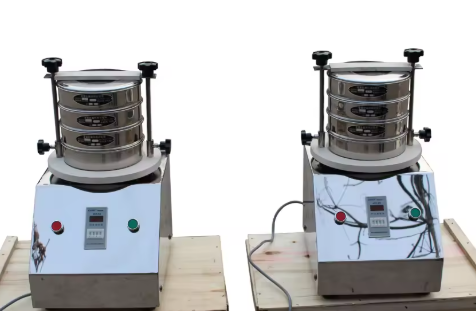
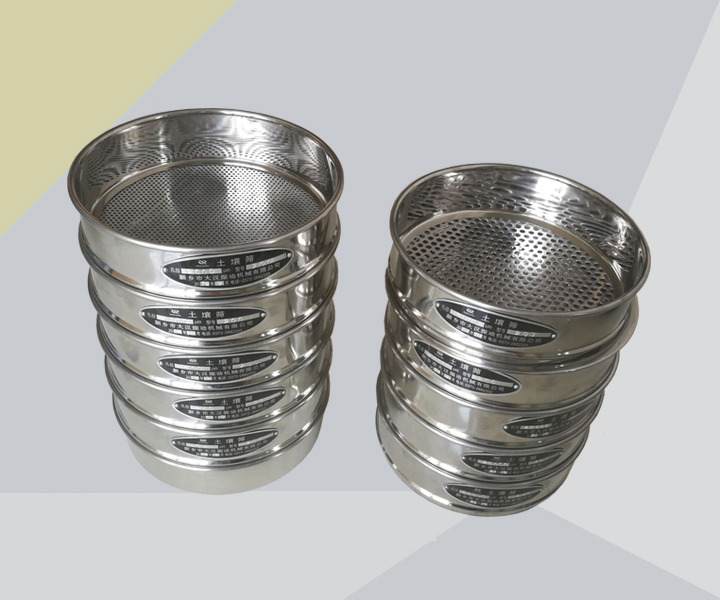
The pharmaceutical powder test sieve workflow is actually quite systematic. First, the sieve and vibrating sieve device must be properly matched. Laboratory testing typically uses electromagnetic vibrating sieves or top-impact vibrating sieves. These devices use up-and-down or three-dimensional throwing motions to allow powder particles to pass smoothly through the sieve. During use, rubber sealing rings, receiving trays, and covers are usually added to prevent powder from flying out or becoming contaminated. Because pharmaceutical powders have their own characteristics, sample preparation is crucial. For example, powders that are easily hygroscopic or statically charged need to be dispersed or treated with antistatic agents to allow particles to pass smoothly through the sieve openings without clumping. During operation, sieves of different aperture sizes are stacked from largest to smallest, placed on the vibrating sieve machine, and the time is set to start. This allows for the classification of powders from coarse to fine, ultimately providing particle size distribution information for subsequent analysis and production reference.
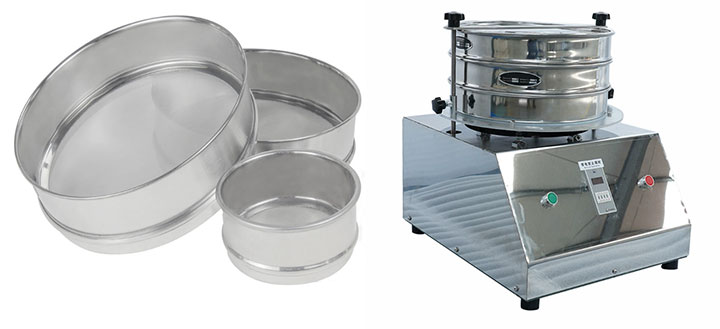
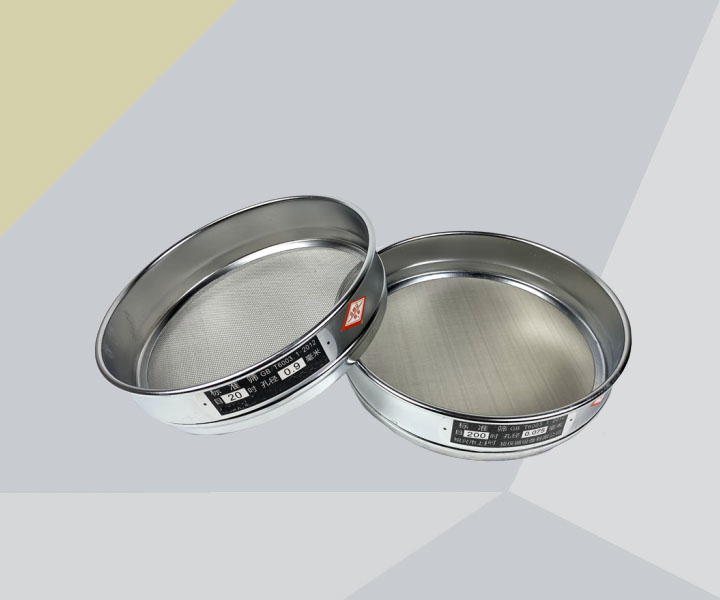
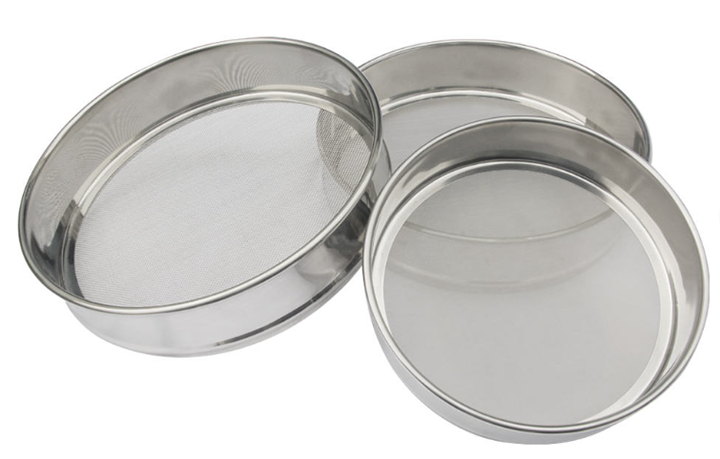
pharmaceutical powder test sieves are well-matched to powder types and testing applications, with different designs adapted to different powders. The sieve aperture size can be selected according to needs: for testing the particle size distribution of raw material powders, a combination of several sieves with different aperture sizes is used; for testing the uniformity of finished powder particles, a single aperture sieve can be used. The material of the sieve is adjusted according to the characteristics of the powder. For example, 316L stainless steel is used for easily corrosive chemical powders, while 304 stainless steel is used for ordinary plant powders or microcrystalline cellulose. Some powders that easily react with metals use non-metallic sieves such as nylon. The sieves are woven in two ways: plain weave and twill weave. Plain weave has uniform aperture and is suitable for particle detection; twill weave is stronger and more wear-resistant, suitable for coarse sieving or large particle classification. The sieve frame design considers both usability and standard requirements, with a common height of 50mm, but a thinner 25mm frame can also be customized for small sample sizes. The sieve frame and sieve mesh are connected by a welded integral process, eliminating burrs and preventing powder from adhering to the sieve walls, thus ensuring accurate sieving results for pharmaceutical powders.
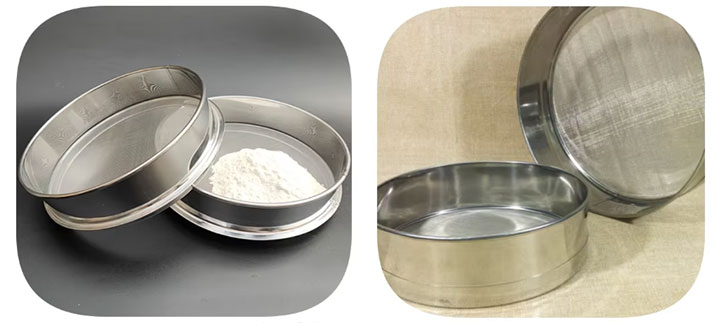
The selection of test pharmaceutical powder test sieve must closely follow the actual testing requirements, ensuring a suitable and precise selection. For routine quality inspections on pharmaceutical production lines, such as initial inspection of raw materials upon arrival and in-process inspection of intermediates, 304 stainless steel sieve frames and meshes are the preferred material choice. They offer high cost-effectiveness, resistance to wear and tear from daily use, and meet the accuracy and compliance requirements of routine inspections. Plain-weave standard-aperture sieves paired with standard Φ200mm sieve frames are suitable for the rapid testing needs of the production line. For high-requirement inspections, such as finished drug product inspections, powder characteristic studies in new drug development, and pharmacopoeia compliance certification, 316L stainless steel is required. It offers stronger corrosion resistance and higher material purity, preventing reactions between powder and sieves. PTFE-coated sieves can be selected as needed to prevent sticky powder from adhering to the sieve walls. High-precision, burr-free plain-weave sieves are required. For some ultra-high-precision inspections, electroformed sieves can be used, with aperture errors controlled within ±1μm. Custom-designed sieve frames with graduations are used to meet the requirements for accurate data recording and traceability.
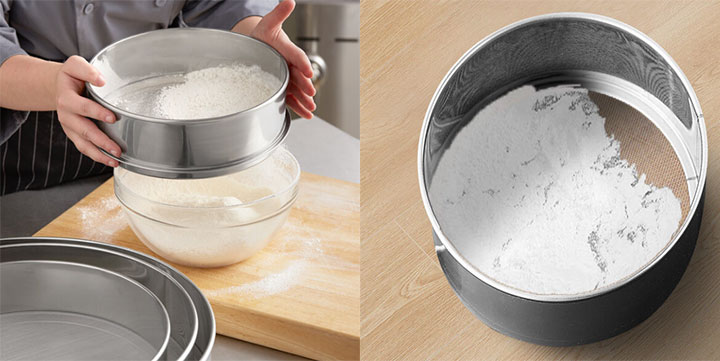
The price of a pharmaceutical powder test sieve ranges from approximately $8 to $2100. A single sieve costs around $8, while a test sieve machine costs around $2000. The appropriate sieve and machine should be selected based on the physical properties of the powder and the testing requirements. The equipment is suitable for sieving a wide variety of pharmaceutical powders, including crystalline powders, fibrous powders, extract powders, and micronized powders. In pharmaceutical quality control, test sieves are not only tools for separating particles but also link the drug manufacturing process to the final efficacy. From meeting international standards to using medical-grade stainless steel, to fine mesh weaving and a rational sieving process, the quality of pharmaceutical powders is reflected. Whether maintaining the consistency of raw materials or optimizing the formulation production process, test sieves provide support for the safety, performance, and quality stability of drugs.
Feb 09, 2026
pharmaceutical powder test sieve
pharmaceutical powder test sieve is a tool used to test pharmaceutical powders. Its manufacturing pro...
Feb 09, 2026
Clay Powder Test Sieve separates particles of different sizes using a physical sieving method, thus r...
Feb 07, 2026
flour particle size analysis is a method that uses detection methods and instruments to determine the...
Feb 06, 2026
cement fineness test sieve is a screening tool used in the physical property testing of cement to che...

Then we look forward to hearing from you