
WhatsApp:+86 15236742901

Email:sale@xxdahan.com


WhatsApp:+86 15236742901
Email:sale@xxdahan.com
![[field:title/]](/uploads/260605/1-2606051P32AE.png)
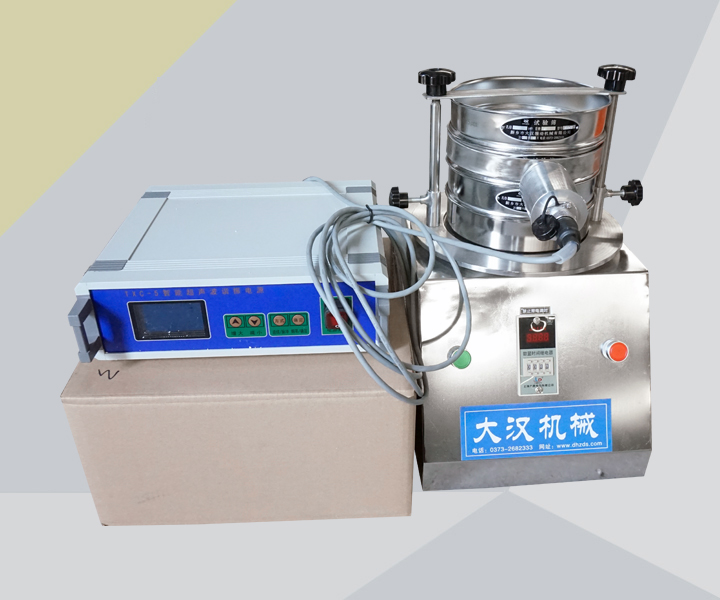
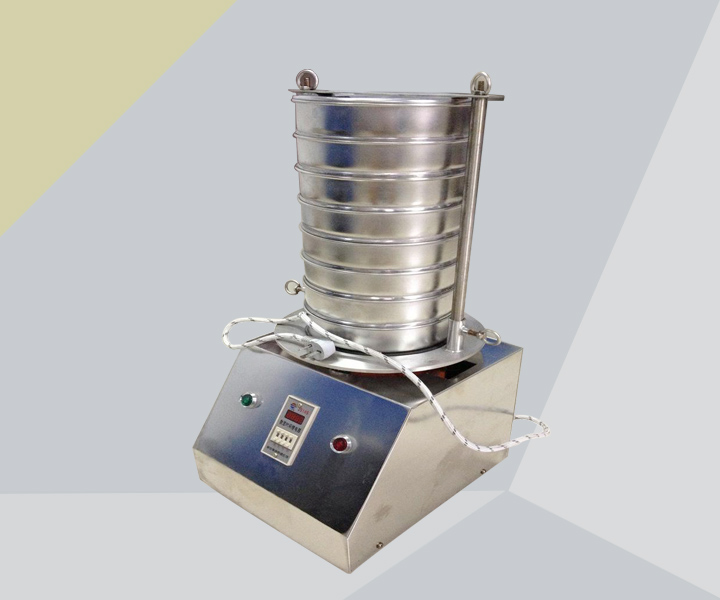
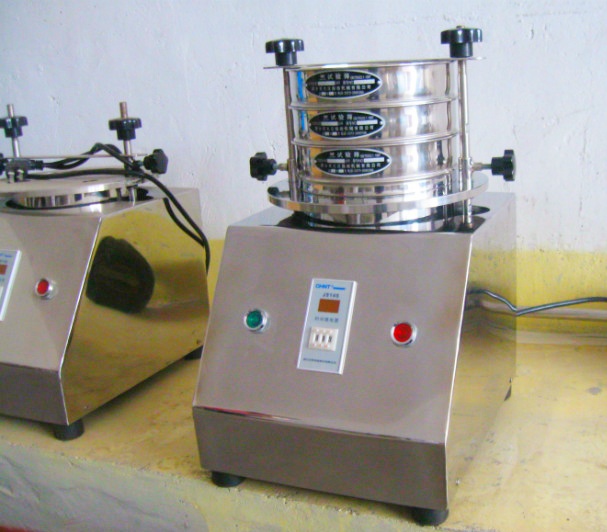
Designed for high-precision screening of fine powders in the food, pharmaceutical, chemical, and battery industries.
Anti-Mesh Blinding Technology
SUS304 & SUS316L Construction
Up to 600 Mesh Screening
Port: Any port in China (Mainland)or as you need.
|
Quantity(sets) |
1-2 |
>2 |
|
Delivery time(days) |
5 |
To be negotiated |
In the fine powder classification process, when the particle size of the material is between 20 and 300 micrometers, mesh clogging often occurs due to electrostatic adsorption, material agglomeration caused by moisture, or intermolecular forces. The Stainless Steel Ultrasonic Sieve are designed to solve this problem of adhesion and clogging. The equipment is constructed of stainless steel, possessing strong corrosion resistance and mechanical strength, and its mirror-polished surface prevents residual powder from accumulating. Its ultrasonic system outputs high-frequency micro-amplitude mechanical waves from 33kHz to 40kHz. These mechanical waves overcome the limitations of traditional methods relying solely on vibrating motors, keeping the fine powder in a micro-suspended state on the mesh surface. Through this motion mode, the equipment's sieving particle size range is extended to 600 mesh (approximately 23 micrometers), improving the screening rate of fine powder.
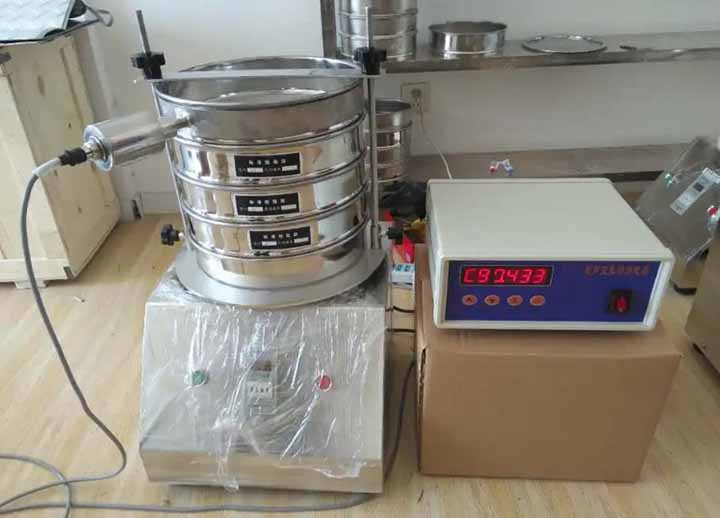
| Screening Item | Traditional Rubber Ball Vibrating Sieve | Stainless Steel Ultrasonic Vibrating Sieve |
| Screen Cleaning Method | Mechanical impact on mesh via rubber balls | 33kHz-40kHz high-frequency micro-vibration |
| Mesh Blocking Rate | Extremely high (Fine powder easily clogs mesh) | Near zero (Materials kept in micro-suspension state) |
| Production Efficiency | Declines gradually with clogging, requires shutdown for cleaning | Stable continuous running, throughput 1~10 times higher |
| Applicable Particle Size | Coarse particles or common powder below 100 mesh | Ultra-fine powder from 200 mesh to 600 mesh (≈23μm) |
| Material Protection | Friction heat generated easily, rubber abrasion produces debris contamination | No consumable parts, temperature rise<5℃, avoiding contamination |
The Stainless Steel Ultrasonic Sieves operate by converting electrical energy into mechanical energy. The Ultrasonic Sieves for Fine Powder supply box transmits conventional electrical signals to the transducer, whose internal ceramic plates are electrically stimulated and converted into tens of thousands of high-frequency micro-amplitude mechanical vibrations per second. These vibrations are then evenly transmitted to the entire stainless steel mesh surface via an amplitude transformer. To handle load variations caused by different powder accumulations, the control module uses automatic frequency tracking technology for real-time sampling and automatically matches the optimal vibration frequency to the mesh surface. This adjustment mechanism prevents the transducer from overheating, keeping amplitude attenuation below 5% even after more than 12 hours of continuous operation, ensuring the uniformity of material grading.
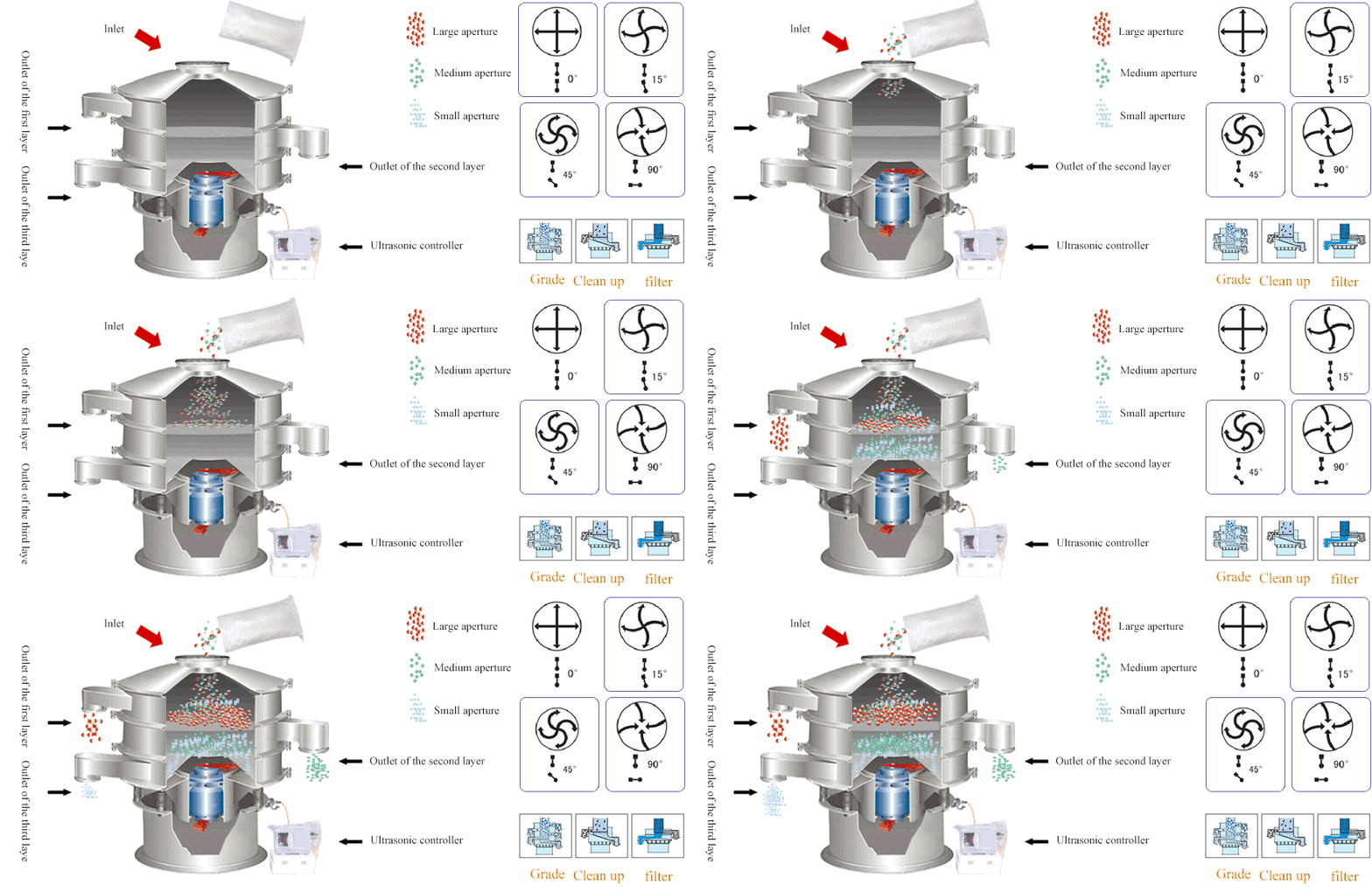
Replacing the ordinary bouncing ball cleaning method with a stainless steel ultrasonic screen system brings the following changes to the production line.
Reduced Screen Wear and Damage: Traditional vibrating screens rely on rubber or silicone balls impacting the screen for cleaning. Prolonged impact can lead to screen tension relaxation or breakage. Ultrasonic high-frequency micro-vibrations provide non-contact cleaning, extending the screen's lifespan by 2 to 3 times.
Maintaining the original physical properties of materials: Friction easily generates heat. For some low-melting-point powders, ordinary sieving can cause them to melt and agglomerate due to heat. Ultrasonic micro-vibration conduction generates very little heat; the temperature rise on the mesh surface when material passes through is typically no more than 5 degrees Celsius, protecting the structure of heat-sensitive powders.
Reduced cleaning frequency: The mesh surface is continuously in a state of micro-suspension and high-frequency vibration, making it difficult for powder to adhere to the metal wires. The frequency of screen disassembly and cleaning by operators has been extended from once per shift to once a week, reducing downtime for maintenance.
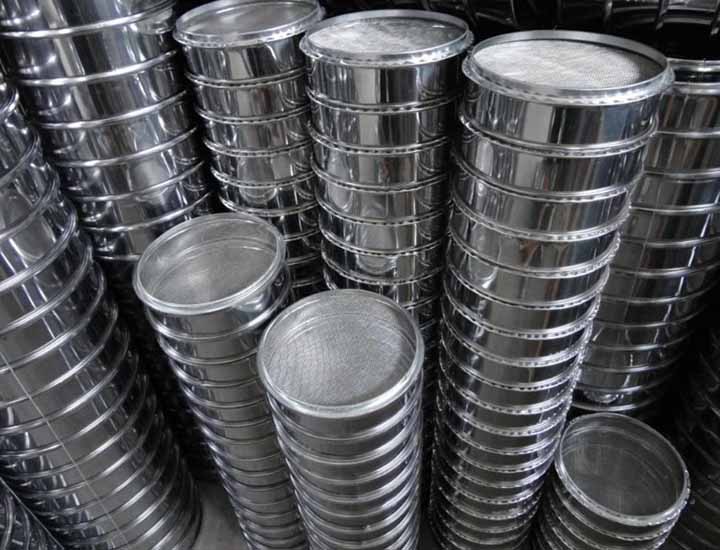
| Parameter | Specification |
| Material | SUS304 / SUS316L |
| Diameter | 200-1500mm |
| Mesh Range | 20-600 Mesh |
| Ultrasonic Frequency | 33-40kHz |
| Motor Power | 0.12-2.2kW |
| Voltage | 220V/380V |
| Layer | 1-5 |
| Feature | 304 | 316L |
| Corrosion Resistance | ★★★★ | ★★★★★ |
| Food Industry | Yes | Yes |
| Pharmaceutical | Yes | Excellent |
| Battery Material | Good | Excellent |
| Price | Lower | Higher |
Selecting a suitable stainless steel ultrasonic sieve begins with the material being processed. Fine powders with static buildup or moisture usually require an ultrasonic system with stable frequency tracking to keep the screen surface clear during operation. The sieve diameter and number of screen layers should match the required output and particle size distribution. SUS304 is suitable for common powder handling, while SUS316L is preferred when processing materials exposed to corrosive substances or chloride-containing environments. It is also important to consider mesh size, voltage, discharge configuration, and optional accessories such as sealed covers, dust collection ports, or inspection windows. Matching these specifications with production requirements helps maintain consistent screening performance and reduces unnecessary equipment modifications after installation.
The price range for a single Stainless Steel Ultrasonic Sieves is approximately between $1,600 and $8,500. The specific purchase cost is affected by the following technical parameters and configurations.
| Variable Factor | Low-cost Configuration Option | High-cost Configuration Option |
| Unit Diameter | 400mm or 600mm (Lab & small production line) | 1200mm or 1500mm (Mass production) |
| Steel Grade | SUS304 stainless steel (General corrosion resistance) | SUS316L stainless steel (For strong acid & alkali corrosive environment) |
| Screen Layers | Single-layer screen (Separates two particle sizes) | 3 or 4 layers screen (Multi-grade separation at one time) |
| Power Supply Unit | Domestic standard analog power box | Imported explosion-proof digital tracking power box |
Furthermore, customized modifications such as whether a valve needs to be installed at the discharge port or whether a sealed vacuum conveying interface needs to be configured at the feed port will also directly affect the price of the machine.
Stainless steel ultrasonic sieves have clear applications in the following powder classification and impurity removal processes.
3D Printing Metal Powders: When processing spherical titanium powder, aluminum alloy powder, and high-temperature nickel-based alloy powder, ultrasonic waves can divert static electricity, classifying powders in the 15-45 micron range and removing ultrafine non-spherical particles.
Fine Powder Raw Materials: Used for screening micronized amoxicillin, acetaminophen, and other pharmaceutical raw material powders. The mesh surface is free of easily worn parts such as rubber gaskets to prevent rubber debris from being mixed in.
Plant and Food Micronized Powders: Used for removing impurities from matcha powder, pure natural micronized konjac powder, and egg yolk powder with a mesh size of 200 or larger, preventing the powder from clumping inside the mesh due to the presence of oil or moisture.
New Energy Battery Materials: Used for screening positive and negative electrode materials for lithium batteries, such as lithium iron phosphate and artificial graphite powder. The stainless steel material undergoes a hard coating treatment to prevent free iron contamination.
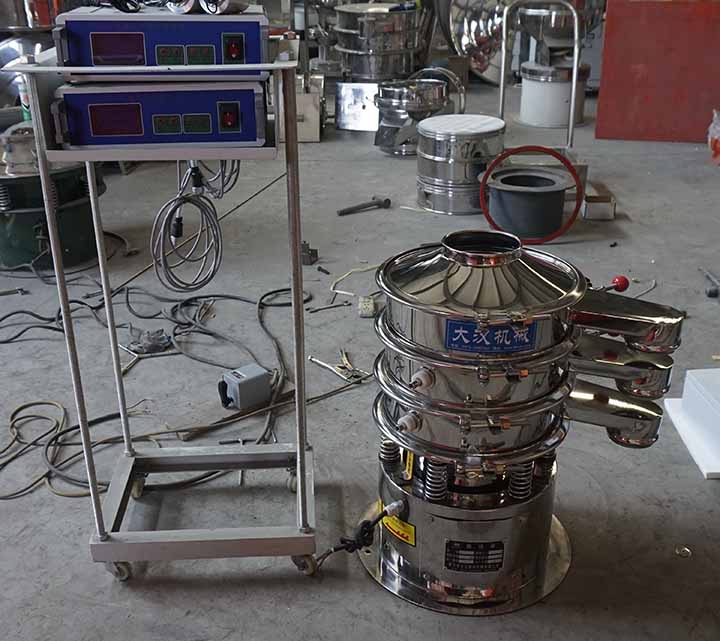
A1: It uses a metal mesh of a specific size to mechanically vibrate and classify powdery, granular, or slurry materials by size, intercepting foreign objects and clumps, thus improving the purity of the material particles.
A2: It depends on the chemical properties of the material. For ordinary metal powders, graphite, or non-corrosive food powders, SUS304 is sufficient; if the material contains high concentrations of chloride ions, strong acids or alkalis, or highly corrosive intermediates, molybdenum-containing SUS316L must be selected to prevent pitting corrosion.
A3: For dry metal powders, perform airflow purging every 80-100 hours of operation; for oily vegetable powders, rinse with warm water every 24 hours. The replacement cycle of the screen depends on the hardness of the material. When screening highly abrasive hard powders such as silicon carbide, the screen life is generally 3 to 6 months; when screening ordinary organic powders, the life can reach more than 1 year.
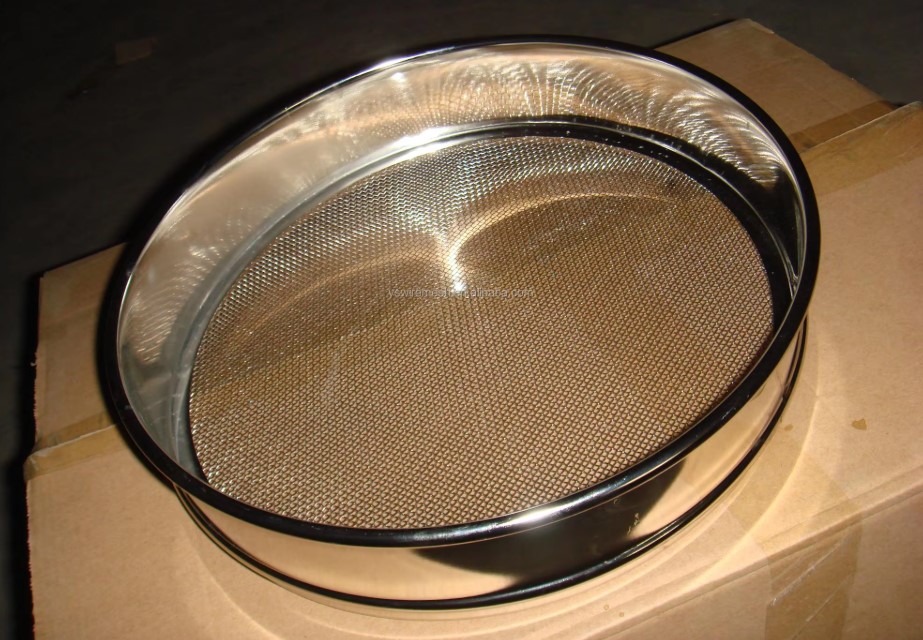
Stainless Steel Ultrasonic Sieves rely on the high-frequency energy generated by ultrasonic transducers to change the trajectory of fine powders on the screen surface, thereby alleviating the technical bottleneck of easy clogging of the mesh by ultrafine powders. By combining the corrosion resistance of SUS304 or SUS316L stainless steel, this equipment provides stable classification technology support for industrial micro-powder production lines. When selecting a sieve, companies should rationally calculate the equipment configuration based on the corrosiveness of their materials, target particle size, and production capacity requirements to obtain a customized solution that fits the production line process.
Ultrasonic Sieves for Fine Powder
Ultrasonic Sieves for Fine Powder adds an ultrasonic system to a regular vibrating screen, enabling the sieving of fine powders...
Sonic Sieve Shaker for Metal Powder Testing
Metal powders possess unique physical properties. When particle size decreases to the micrometer level...
Stainless Steel Test Sieve For Pharmaceutical Powder
Stainless Steel Test Sieve For Pharmaceutical Powder can be used to detect the particle size of pharmaceutical powders and separate powders of different coarseness...
Test Sieve For Cement Fineness Testing
Test Sieve For Cement Fineness Testing are common screening tools used in cement production, quality inspection, and engineering construction to determine the fineness of cement particles...
material separation test sieve
material separation test sieve separates materials such as powders, granules, and sand through sieving, thereby determining the particle size distribution or removing impurities...
Are you interested?

Then we look forward to hearing from you