
WhatsApp:+86 15236742901

Email:sale@xxdahan.com


WhatsApp:+86 15236742901
Email:sale@xxdahan.com
![[field:title/]](/uploads/260720/1-260H0153025I2.jpg)
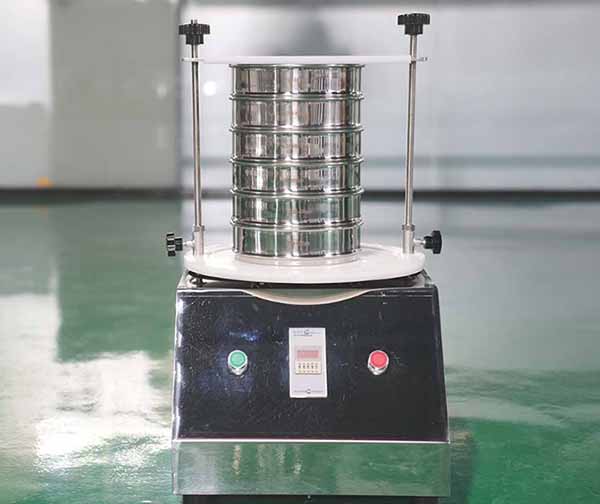
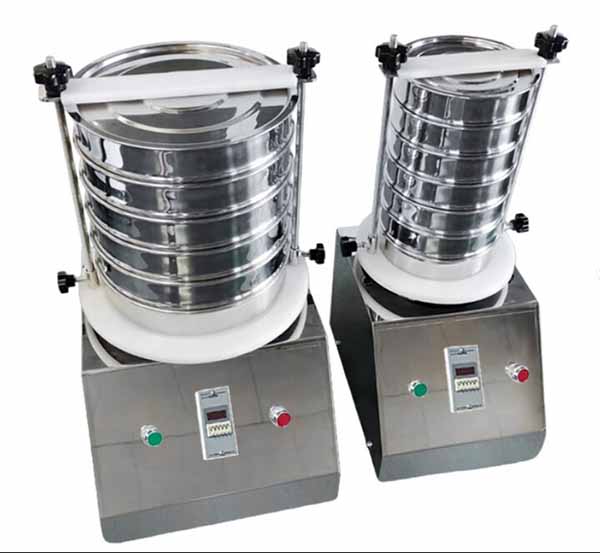
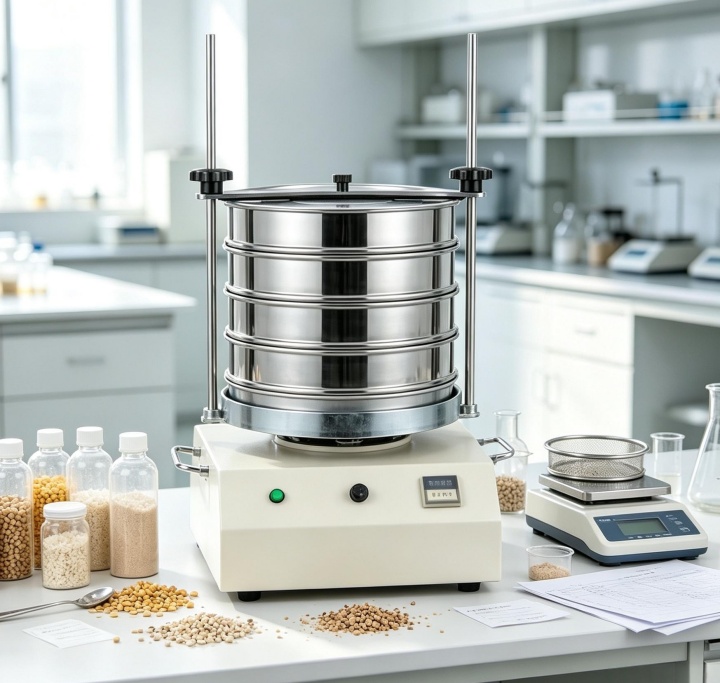
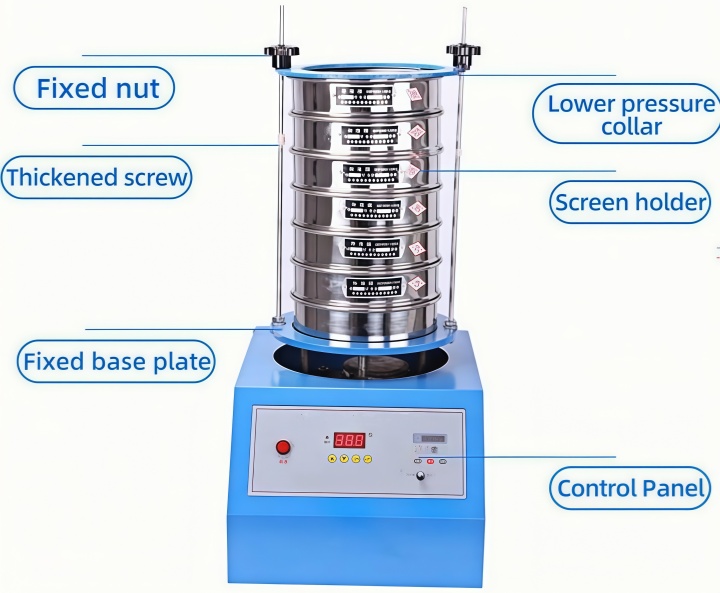
The Aggregate Test Sieve Shaker automates the separation of coarse and fine mineral fragments down to defined fractions, running particle sizing cycles from 75 μm up to 100 mm. It handles abrasive, high-density bulk goods including crushed granite, river gravel, limestone, and heavy topsoils without degrading the natural grain shapes during agitation. To endure the harsh friction of sharp-edged geological specimens and the moisture of wet-sieving workflows, the structural chassis consists of heavy-gauge carbon steel coated with industrial anti-corrosion enamel, while the clamping pillars and contact elements are milled from dense, vibration-absorbing cast iron.
| Parameter | Specification |
| Sieve Diameter Capacity | 8 inches (203 mm) / 12 inches (305 mm) |
| Stack Capacity | 7 full-height sieves plus 1 bottom collector pan |
| Drive Mechanism | Mechanical orbital oscillation with vertical tapping |
| Tapping Frequency | 290 taps per minute |
| Timer Range | 0 to 99 minutes mechanical countdown |
| Maximum Batch Load | 35 kg of dry aggregate sample |
| Electrical Rating | 220V, 50Hz, single-phase motor |
Compliance Statement: This apparatus conforms to the dimensional and operational framework dictated by ASTM C136, AASHTO T27, and EN 933-1 engineering benchmarks for mineral particle size distribution.
Mechanical Tapping Mechanism: A built-in overhead hammer strikes the sieve stack at a fixed interval of 290 repetitions per minute, which forces elongated or near-size grains to pass vertically through the wire openings instead of wedging sideways.
Heavy-Cast Stabilized Base: The 45 kg cast-iron footing absorbs kinetic energy locally, preventing the entire machine from migrating across laboratory workbenches during extended test cycles.
Quick-Thread Clamping Knobs: Threaded vertical rods feature split-nut assemblies that slide freely into position before tightening, cutting down the change-over routine when switching between different sieve heights.
Enclosed Belt-Drive System: The internal electric motor transmits power via a reinforced V-belt rather than direct gears, reducing high-frequency friction whine and sealing the mechanical interior from falling stone dust.
Asphalt and Concrete Batching Plants: Field technicians use this unit to verify the sand-to-stone ratios of incoming raw aggregate stock before mixing batches for highway foundations and structural slabs.
Quarry Quality Inspection: Extraction sites mount these shakers inside mobile testing trailers to run routine gradations on blasted stone piles, grading them into standard commercial sizes like road base or railroad ballast.
Geotechnical Laboratories: Civil engineers test civil soil samples and riverbed silt to estimate permeability rates, building load capacities, and slope stability metrics based on exact grain dimensions.
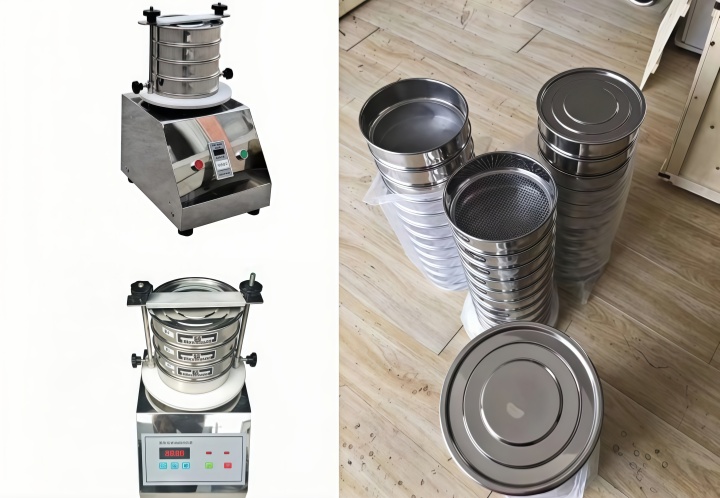
The total acquisition cost correlates directly with your required sieve diameter capacity and optional noise-reduction additions. To obtain a factory-direct quotation tailored to your operational scale, navigate to our contact page and submit a detailed checklist specifying your regional voltage supply (110V or 220V) alongside your required shipping port.
While legacy brands like Gilson and Humboldt represent historical baselines in North American civil engineering labs, LabSieve utilizes a modified split-nut quick-clamp assembly that reduces manual adjustments between cycles. Additionally, our direct manufacturing logistics model bypasses third-party distribution markups, reducing direct procurement costs while maintaining full adherence to standard ASTM dimensional criteria.
A digital copy of the technical layout, wiring schematics, and preventative maintenance logs is hosted directly on our server. You can download the setup documentation by clicking the direct document download link in our website footer resources tab, or by scanning the serial QR code fixed onto the steel compliance plate of the physical machine frame.
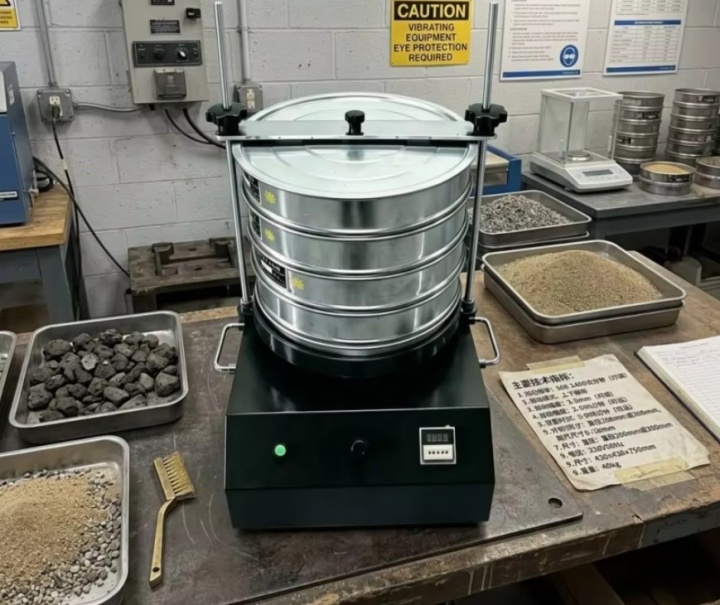
The Aggregate Test Sieve Shaker delivers repeatable particle separation across a 75 μm to 100 mm grading band by replacing human error with uniform mechanical orbital rotation and 290 vertical impacts per minute. Constructed with a heavy cast-iron foundation and carbon steel cladding, the machine withstands the abrasive dust and structural impacts of testing crushed stone, sand, and gravel. The operational layout incorporates rapid-adjust clamping components that hold up to seven standard 8-inch or 12-inch test sieves simultaneously, meeting the exact mechanical baselines demanded by global ASTM and AASHTO engineering methodologies. By consolidating parameters into an integrated countdown timer, laboratories can stabilize their quality control metrics, reduce sample preparation bottlenecking, and secure traceable gradation data for structural project compliance.
Are you interested?

Then we look forward to hearing from you