
WhatsApp:+86 15236742901

Email:sale@xxdahan.com


WhatsApp:+86 15236742901
Email:sale@xxdahan.com
![[field:title/]](/uploads/260625/1-2606251F644H7.jpg)
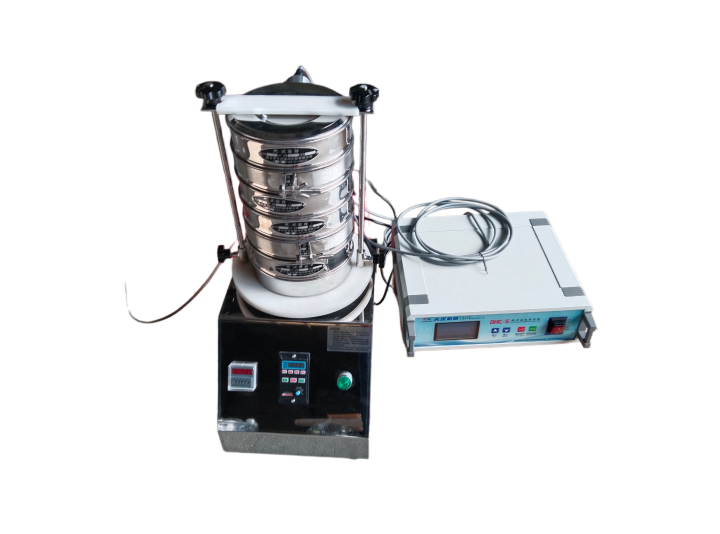
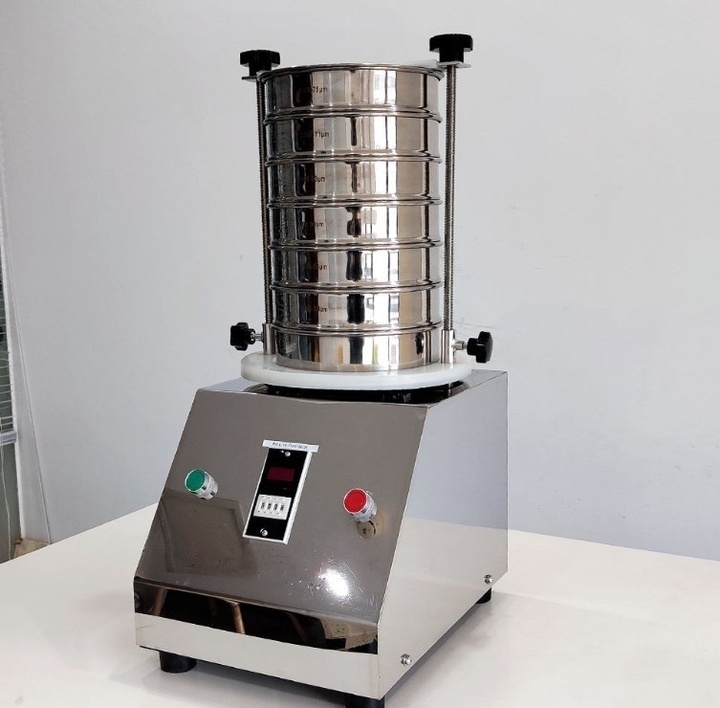
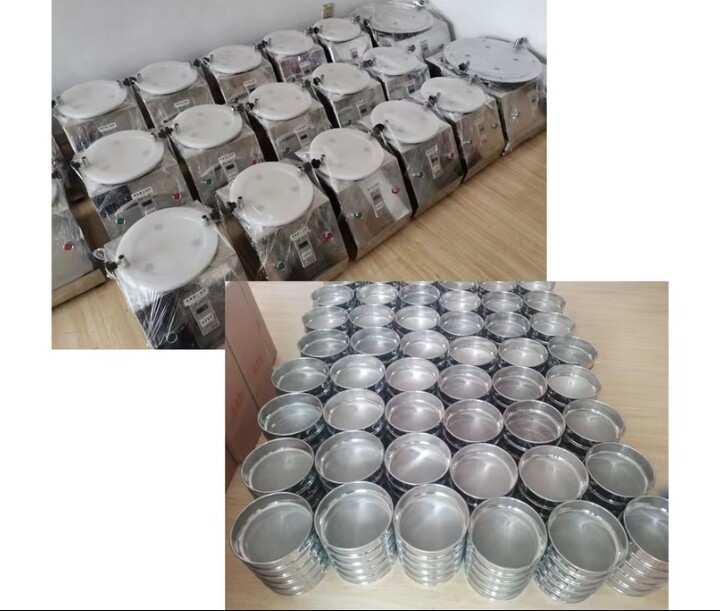
Particle Size Analysis Sieve Shaker is a high-precision laboratory screening device designed for accurate particle classification and size distribution determination, featuring full SUS304/316L stainless steel construction and compliant with ISO 3310-1 and ASTM E11 standards.
Key Technical Parameters:
Sieve Frame Diameter: 200 mm / 300 mm
Mesh Size Range: 20 Mesh to 635 Mesh (4.75 mm down to 20 µm)
Operating Noise Level: < 50 dB
Material Construction: SUS304 / SUS316L Stainless Steel
Sample Load Capacity: 500 g – 6 kg per batch
The Particle Size Analysis Sieve Shaker is a laboratory mechanical device used for particle classification and determination of material particle size distribution. In terms of material construction, the outer shell and internal fasteners in contact with the material are generally made of SUS304 or SUS316L stainless steel, meeting high standards of corrosion resistance and contamination prevention, resisting the erosion of most acid and alkali powders and reducing impurity contamination.
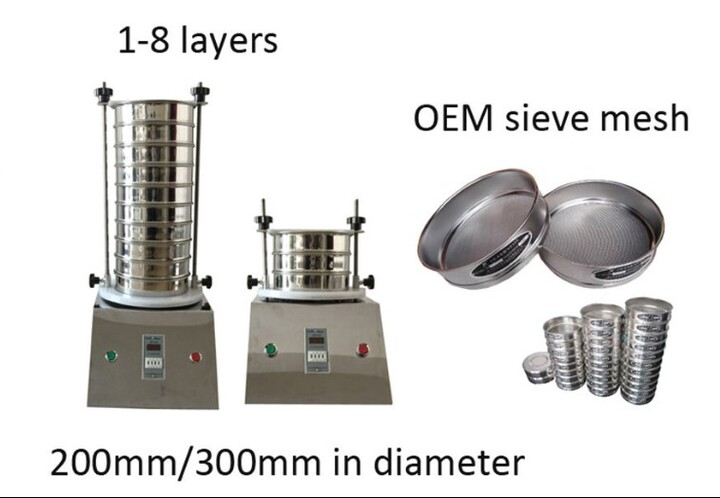
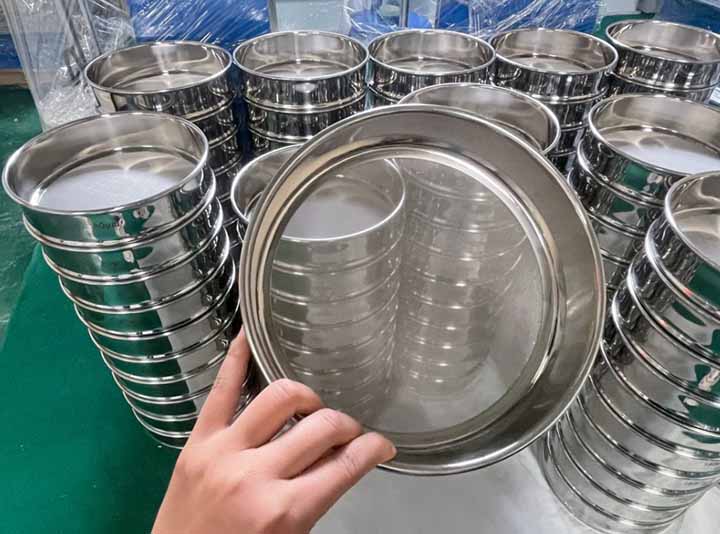
The standard laboratory sieve diameters applicable to particle size analysis vibrating sieves are 200 mm and 300 mm. Their design and manufacturing strictly adhere to ISO 3310-1 and ASTM E11 international standards. The sieve mesh size range typically extends from 20 mesh to 635 mesh. Through vertical multi-layer stacking, it can separate the original sample into multiple different particle size fractions in a single run.
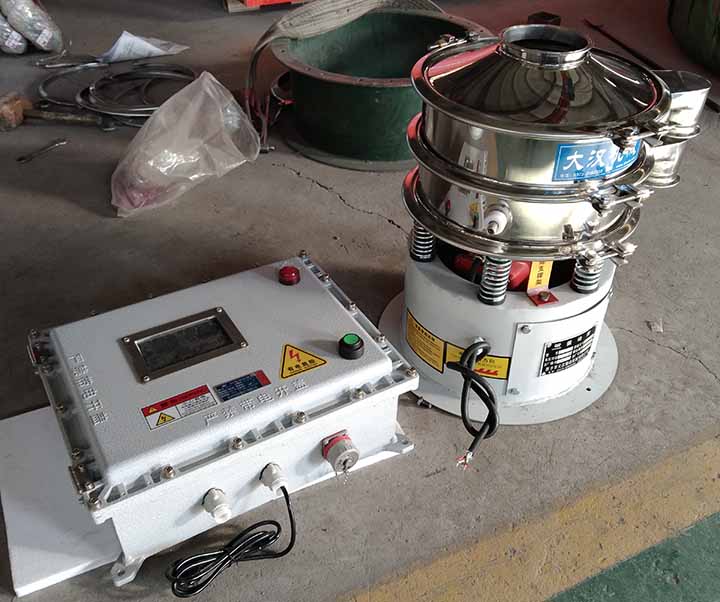
During sieving tests, the Sieve Shaker relies on electromagnetic drive or an eccentric vibrator to generate power, causing the upper sieve assembly to produce a three-dimensional vibration trajectory combining vertical oscillation and horizontal throwing. In this motion, particles are continuously thrown and tumbled in three-dimensional space, propelling them outward along a spiral path on the screen surface. This tumbling process increases the contact angle and collision frequency between the particles and the screen openings, allowing particles smaller than the screen opening size to smoothly penetrate to the next layer while retaining coarse material, thus completing a multi-stage separation process.
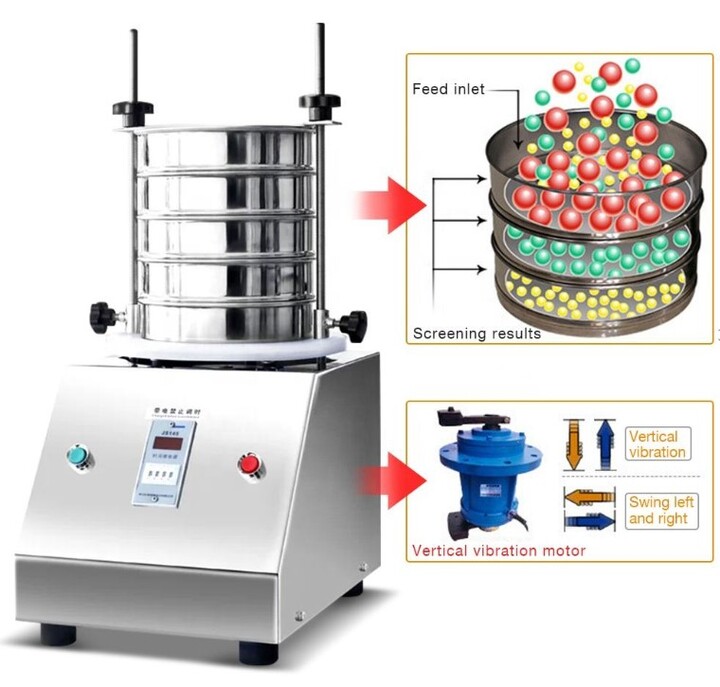
The advantages of using a Particle Size Analysis Sieve Shaker include high reproducibility and low noise. High reproducibility means that the built-in digital control chip can limit the vibration amplitude and running time to set values, allowing for comparison of screening data obtained from different batches and by different operators under the same settings. Regarding operating noise, thanks to the electromagnetic vibration damping suspension technology and sound-absorbing base design, mechanical collision noise during operation is suppressed, maintaining the operating noise level below 50 decibels. This reduces interference from high-frequency sharp noise in the office, protecting the auditory environment of laboratory personnel.
| Sieve Aperture Size (mm/μm) | US Standard Mesh Number (ASTM E11) | International Standard (ISO 3310-1) | Examples of Common Applied Materials |
| 4.75 mm | 4 Mesh | 4.75 mm | Coarse Sand, Crushed Stone, Large Granular Ore |
| 2.00 mm | 10 Mesh | 2.00 mm | Coarse Soil Granules, Cat Litter, Coarse Salt |
| 1.00 mm | 18 Mesh | 1.00 mm | Manufactured Sand, Rice Granules, Plastic Pellets |
| 600 μm (0.6 mm) | 30 Mesh | 600 μm | Refractory Materials, Coarse Wheat Flour, Granulated Sugar |
| 425 μm (0.425 mm) | 40 Mesh | 425 μm | Activated Carbon, Coarse Screening of Metal Powder, Chemical Raw Materials |
| 250 μm (0.25 mm) | 60 Mesh | 250 μm | Coffee Powder, Conventional Medicinal Powder, Milk Powder |
| 150 μm (0.15 mm) | 100 Mesh | 150 μm | Wheat Flour, Lithium Battery Cathode Materials, Quartz Sand |
| 106 μm (0.106 mm) | 140 Mesh | 106 μm | 3D Printing Metal Powder, Fine Chemical Powder |
| 75 μm (0.075 mm) | 200 Mesh | 75 μm | Cement Clinker, Kaolin, Heavy Calcium Carbonate Powder |
| 45 μm (0.045 mm) | 325 Mesh | 45 μm | Superfine Talcum Powder, Fine Ceramic Powder |
| 38 μm (0.038 mm) | 400 Mesh | 38 μm | Titanium Alloy Micropowder (Ultrasonic Device is Recommended) |
| 20 μm (0.020 mm) | 635 Mesh | 20 μm | Ultra-fine Laboratory-grade Micropowder (Electromagnetic 3D Vibration Required) |
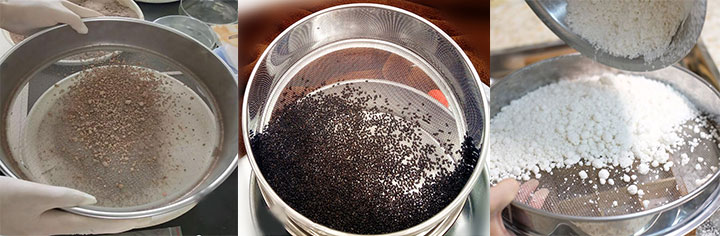
The application scenarios of particle size analysis vibrating screens cover many industrial sectors that require the determination of microscopic particle sizes, extending to specific powder particles. In the field of 3D printing metal powders, it is used to detect the spherical particle size distribution of titanium alloy powder and aluminum-silicon powder; in civil engineering and building materials testing, it is used to determine the particle size distribution of manufactured sand, quartz sand, and Portland cement clinker; in the testing of everyday consumer goods and raw materials, this machine has been introduced into the monitoring of particle size fluctuations in materials such as kaolin, lithium battery cathode materials, cocoa powder, corn starch, and silicon carbide micro powder in the abrasive industry.

The type of Particle Size Analysis Sieve Shaker should be selected based on the material particle size and the weight of the test sample. If the particle size is between 45 micrometers and 20 millimeters, a standard mechanical vibration type or electromagnetic type is sufficient. If the particle size is less than 45 micrometers or even reaches the 20-micrometer level, the fine powder is prone to electrostatic adsorption, and a model with an ultrasonic pulse-assisted system should be selected. Depending on the weight of the test sample, for conventional laboratories processing a total sample volume of 500 grams to 3 kilograms per batch, a lightweight machine with a 200-millimeter diameter sieve is sufficient. If the weight of the feed per batch is between 3 kilograms and 6 kilograms, a high-power, high-load sieve capable of supporting a 300-millimeter diameter sieve group is required to prevent amplitude attenuation due to overload.
A1: Fine powders are prone to electrostatic agglomeration due to their high surface energy, or clogging may occur due to moisture content exceeding 5% adhering to the edges of the mesh. The solution is to place 10 or 20 mm diameter agate cleaning balls inside the sieve and break up the agglomerates by tapping them; or to install an ultrasonic generator to use high-frequency longitudinal vibration waves to suspend the particles and free them from the mesh.
A2: A preliminary test is required. Pause and weigh the sample from each sieve layer every 2 minutes. When the mass change rate of two consecutive weighings is less than 1% of the total sample, it indicates that the sieving is approaching equilibrium. The accumulated time at this point is the standard test time limit for the material, usually between 10 and 15 minutes.
A3: Yes. Before leaving the factory, the particle size analysis vibrating sieve can be configured with electrical components according to the power grid standards of the area where it will be used, such as 220V 50Hz or 110V 60Hz as required in North America. The internal frequency converter and voltage converter module will adjust the output current to maintain a constant electromagnetic oscillation frequency.
Ultrasonic Sieves for Fine Powder
Ultrasonic Sieves for Fine Powder adds an ultrasonic system to a regular vibrating screen, enabling the sieving of fine powders...
cement fineness test sieve is a commonly used sieving tool in cement physical property testing...
Precise test sieves, also known as standard sieves, inspection sieves, particle size analysis sieves, or sample sieves, are precision sieving...
Sonic Sieve Shaker for Metal Powder Testing
Metal powders possess unique physical properties. When particle size decreases to the micrometer level...
Stainless Steel Test Sieve For Pharmaceutical Powder
Stainless Steel Test Sieve For Pharmaceutical Powder can be used to detect the particle size of pharmaceutical powders and separate powders of different coarseness...
Test Sieve For Cement Fineness Testing
Test Sieve For Cement Fineness Testing are common screening tools used in cement production, quality inspection, and engineering construction to determine the fineness of cement particles...
Are you interested?

Then we look forward to hearing from you