

WhatsApp:+86 15236742901

Email:sale@xxdahan.com


WhatsApp:+86 15236742901
Email:sale@xxdahan.com
Wednesday September-09 2026 09:44:54
Test sieves are vital precision instruments used in particle size analysis and quality control across laboratories and industrial plants.
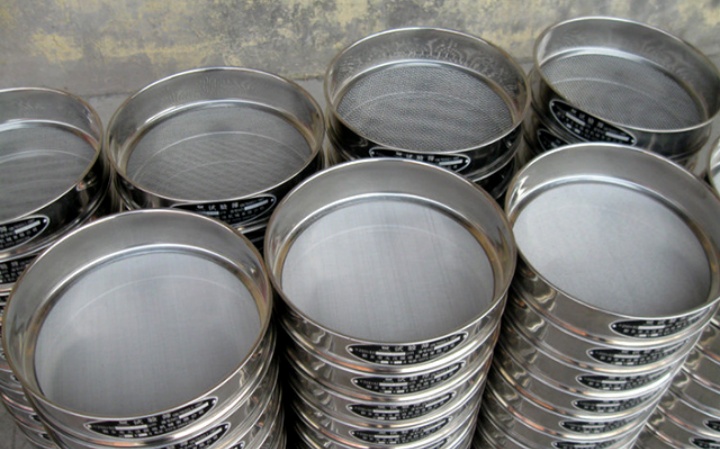
The accuracy of your testing data relies heavily on the integrity of the wire mesh. Over time, fine particles become wedged into the apertures—a phenomenon known as blinding or pegging.
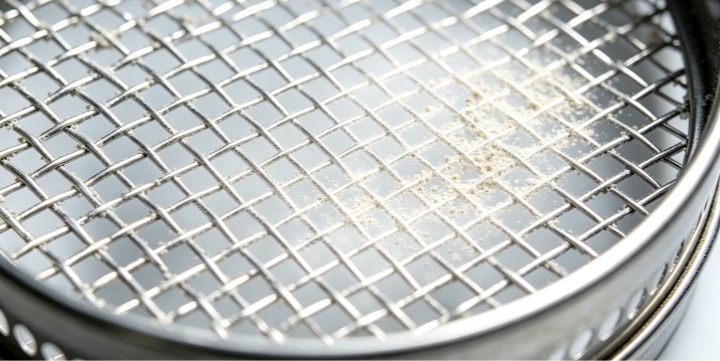
This not only compromises screening efficiency but can also accelerate metal fatigue or wire breakage. Implementing a rigorous routine of cleaning and maintenance is essential for extending the lifespan of your equipment and ensuring reliable results.
A systematic cleaning procedure removes residual particles effectively without causing physical damage to the delicate metal mesh.
Gentle Dry Pre-Cleaning
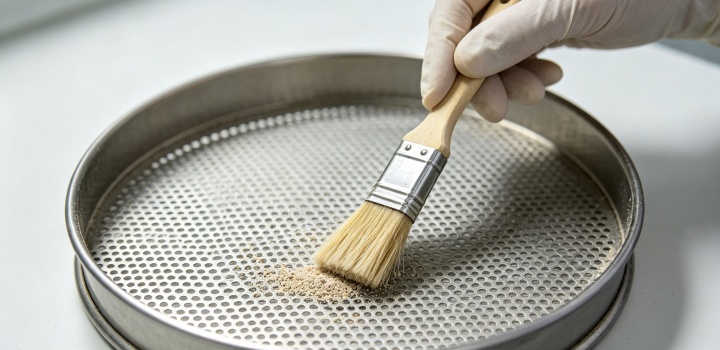
Perform cleaning immediately after each test to prevent material from drying and hardening inside the mesh.Tilt the sieve and use a soft-bristled brush (such as a nylon or horsehair brush) to sweep gently along the warp and weft directions of the mesh, or tap the sieve frame lightly to dislodge loose particles.
Never use wire brushes, sharp metal tools, or rigid scrapers directly on the mesh surface, as this will distort the apertures or puncture the wire.

Ultrasonic Cleaning for Stubborn Particles
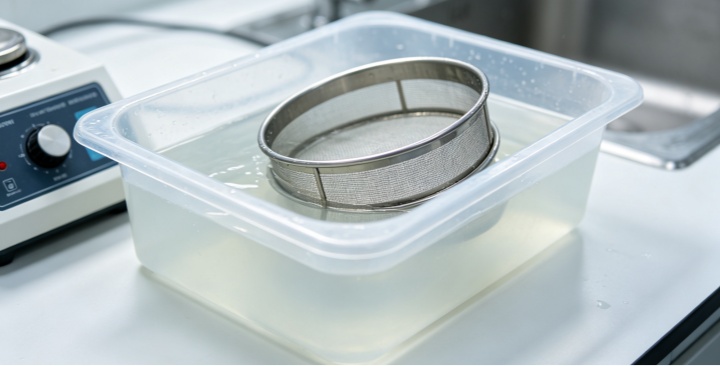
For fine mesh sizes or cohesive materials where dry brushing falls short, utilize an ultrasonic cleaning bath. Immerse the test sieve into a tank filled with clean water or a mild, neutral cleaning solution for 3 to 5 minutes. Avoid strong acids, alkaline substances, or harsh organic solvents, as they can damage the passivation layer or cause chemical corrosion on the stainless steel.
Thorough Reverse Flushing
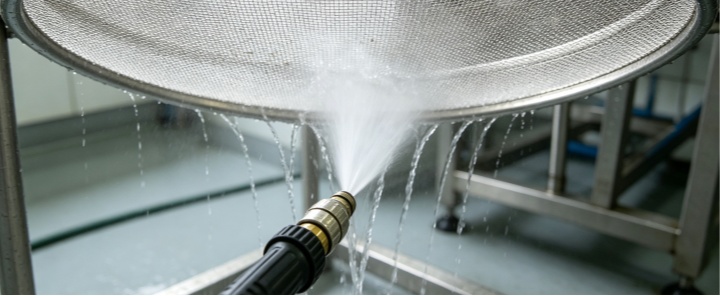
Spray clean or deionized water from the underside of the sieve (the reverse side of material impact) toward the top, using water pressure to flush out particles trapped deep within the mesh eyes. Keep water pressure moderate to prevent high-pressure streams from stretching or loosening delicate wire configurations.
Comprehensive Drying to Prevent Corrosion
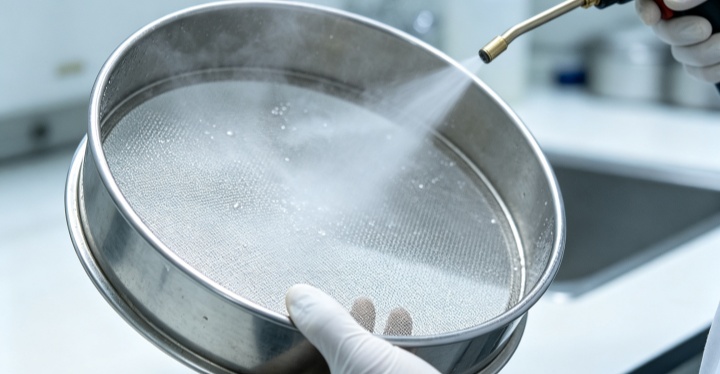
Dry the sieve immediately after cleaning to prevent oxidation or water spots on the metal surface. Use a low-temperature laboratory drying oven or clean, compressed air to eliminate all moisture traces. Never store or stack wet test sieves in enclosed, humid environments.
Beyond post-use cleaning, proper storage and periodic management determine the overall durability of your testing sieves.
Proper Storing and Nesting
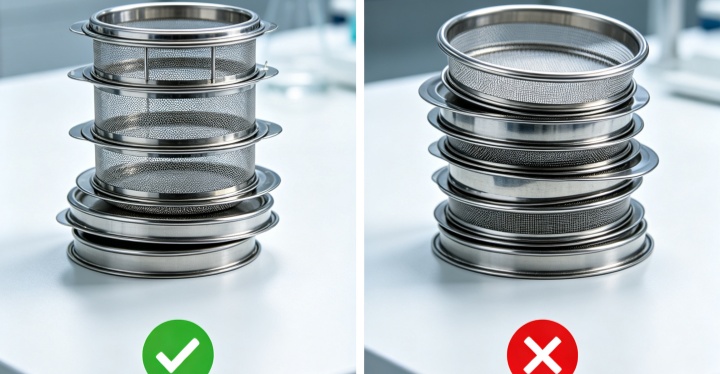
Store test sieves vertically and stably in dedicated racks or dry, ventilated cabinets when not in use. When nesting multiple sieves together, use proper cover lids and bottom pans, and avoid heavy vertical stacking to prevent bottom frames from warping under excessive pressure.
Periodic Calibration and Inspection
High-precision wire cloth can experience minor stretching or wear with frequent use. Laboratories should establish routine calibration schedules using reference materials or optical projectors to verify aperture sizes. If local mesh distortion, tearing, or loosening is detected, immediately take the sieve out of service and replace it to safeguard your testing reports.
Protection from Physical Impact and Chemical Attack
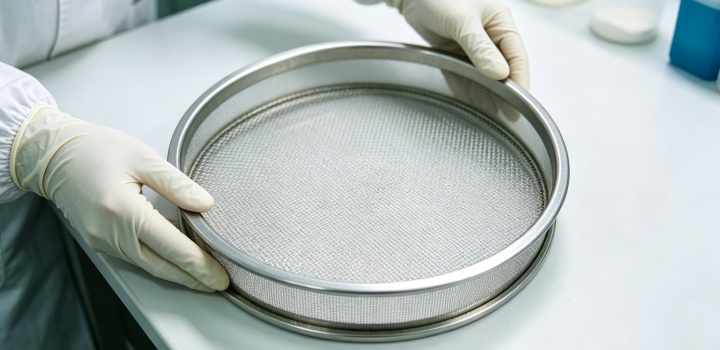
Handle sieves with care during transport and testing; avoid dropping them or subjecting frames to heavy impacts. For sieves exposed to corrosive substances, complete a thorough neutralization and washing cycle immediately after testing to stop chemical residue from degrading the metal.
Establishing a standardized cleaning and maintenance protocol ensures every particle analysis remains precise while lowering instrument replacement costs. As a trusted manufacturer of industrial screening equipment, Dahan Machinery provides high-quality, durable solutions designed for demanding laboratory environments. Discover more about our robust, high-precision options by browsing our Stainless Steel Test Sieves collection.
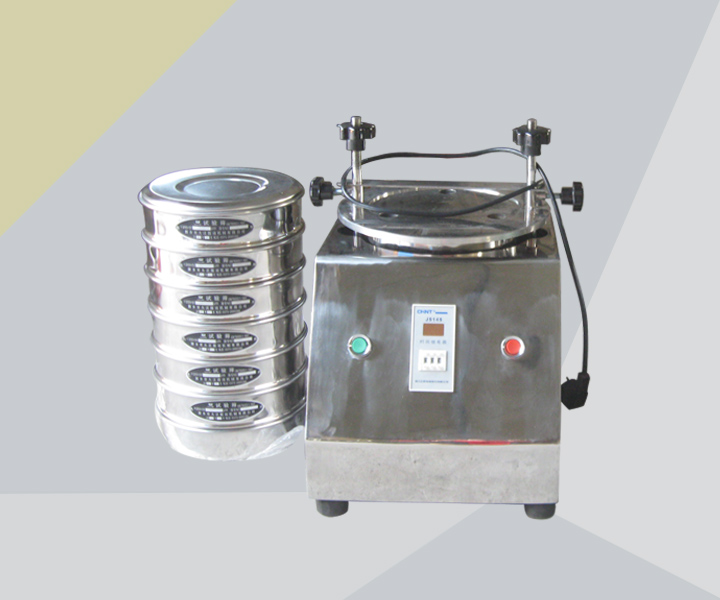
Screening particle size: 0.025mm-3mm
Price: $650.00 - $800.00/Set
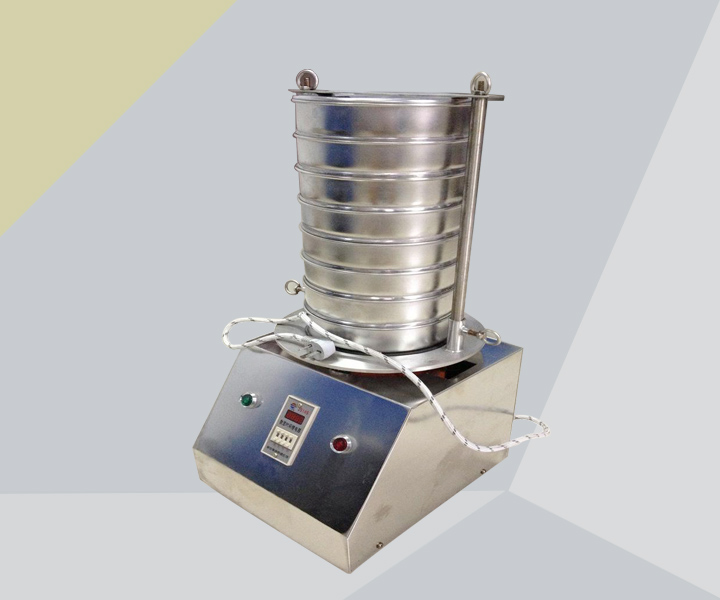
Mesh sizes: 20µm - 40mm
Price: $523.00 - $936.00/Sets
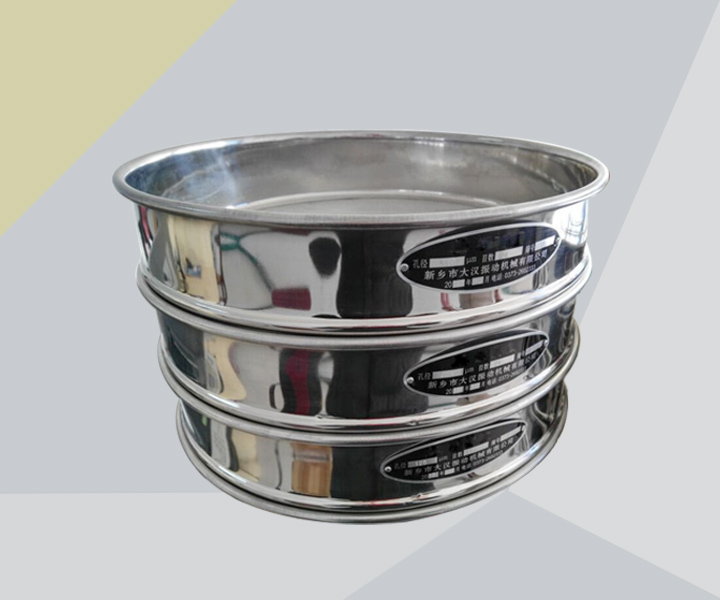
Screening particle size: 0.025-3mm
Price: $650.00 - $800.00/Set
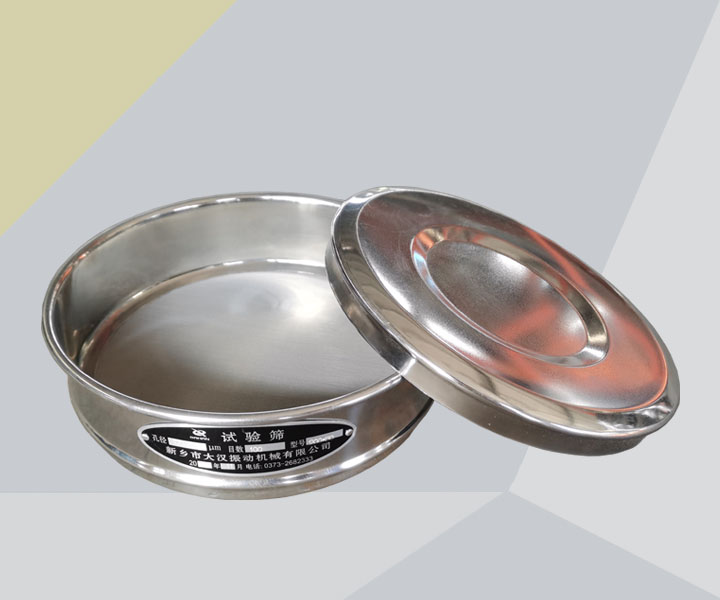
Stainless Steel Analysis Sieve
Mesh: 2-2800 mesh (0.003mm)
Price: $22.00 - $70.00/Set
Sep 09, 2026
How to Clean and Maintain Stainless Steel Test Sieves for Accurate Results
Stainless steel test sieves are precision instruments for particle size analysis. Mesh blinding, defo...
Sep 09, 2026
How to Choose the Right Sieve Shaker: Ro-Tap vs. Electromagnetic Sieve Shaker
Introduction The accuracy of particle size analysis in the laboratory depends heavily on the choice o...
Sep 09, 2026
ISO 3310-1 vs. ASTM E11: A Comprehensive Technical Comparison for Global Laboratories
This article compares the technical specifications of ISO 3310‑1:2016 and ASTM E11‑24 sieve testi...
Sep 09, 2026
How to Properly Clean and Maintain Ultrasonic Test Sieves
Learn proper cleaning steps, routine maintenance and common mistakes for ultrasonic test sieves. Exte...

Then we look forward to hearing from you