

WhatsApp:+86 15236742901

Email:sale@xxdahan.com


WhatsApp:+86 15236742901
Email:sale@xxdahan.com
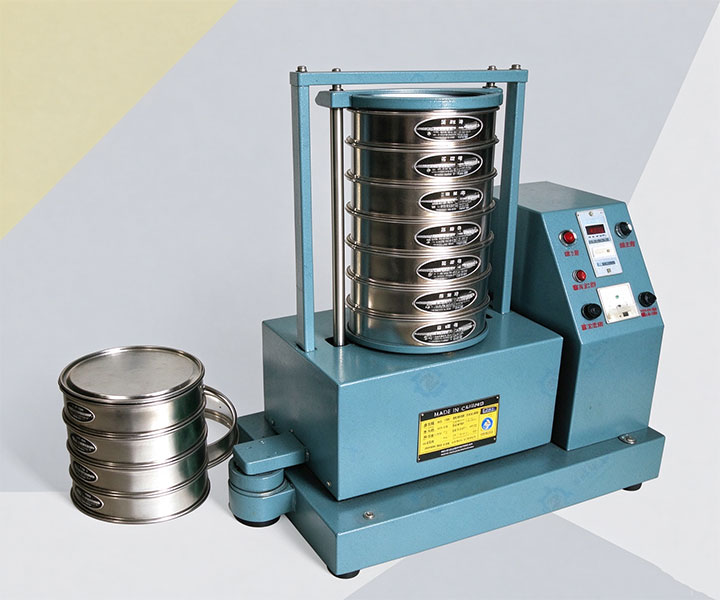
Multi-layer test sieve is a commonly used instrument in the laboratory for particle size analysis and screening of granular and powdered materials.
Sieve hole size: 0.15-4.75mm
Mesh size: 0.03-13mm
Sieving particle size: 0.025-3mm
Number of layers: 1-8 layers
Timing time: 1s-99h
It can accurately separate 8 particle segments at the same time, and can set the screening time and automatically shut down.
It has multiple screening layers and can screen granular materials of different particle size ranges at the same time.
It is widely used in materials science, chemical industry, food industry, pharmaceutical industry and other fields.

Multi-layer test sieve is a highly efficient screening equipment. By stacking multiple sieves with different apertures, the material can be screened at multiple levels at the same time to obtain products of various particle sizes at one time.
Screening is achieved through vibration. However, Multi-layer test sieves are stacked in the screen box of the multi-layer test sieve, and the aperture of each screen is different. When the material passes through the screen box, it will be layered according to the particle size.

1. Screening of granular materials: Multi-layer test sieves are widely used in the laboratory for screening and grading of granular materials, for particle size analysis of granular materials and determination of the distribution of granular materials.
2. Analysis of granular materials: Multi-layer test sieves can be used for particle size analysis of granular materials, and the particle size distribution and particle size range of granular materials can be determined through sieves with different mesh sizes.
3. Material experiments: Multi-layer test sieves are also commonly used in material experiments, such as screening and grading of granular materials such as building materials and chemical raw materials.


1、Multi-layer structure: Multi-layer test sieve is usually composed of multiple sieve layers, and the size of the sieve holes on each sieve layer gradually becomes smaller, which is used for screening granular materials of different particle sizes.
2. Efficient screening: Products of various particle sizes can be obtained by screening once, which improves work efficiency.
3. High precision: Multi-layer test sieve can achieve accurate particle classification, and has high requirements for particle size analysis and screening of granular materials in the laboratory.
4. High degree of automation: It can realize automatic feeding and automatic discharging, reducing manual operation.

Multi-layer test sieve s are widely used in mining, metallurgy, chemical industry, food, medicine and other industries to screen various granular and powdery materials.


1. Coarse sieve: It can usually measure granular materials in the range of several millimeters to tens of millimeters, and is used for preliminary screening of larger particles.
2. Medium sieve: It can measure granular materials in the range of hundreds of microns to several millimeters, and is used for screening of medium-sized granular materials.
3. Fine sieve: It can measure granular materials in the range of tens of microns to hundreds of microns, and is used for screening and particle size analysis of finer granular materials.

Multi-layer test sieve is composed of a sieve box, a sieve mesh, a vibration motor, a clamping device, etc.


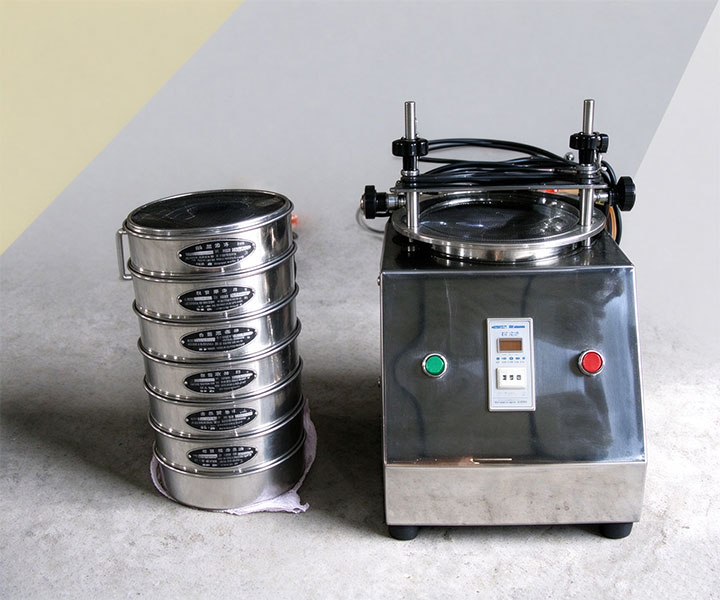
Laboratory standard test sieve
Diameter: 75mm/100mm/200mm/300mm
Aperture size: 20µm-63mm
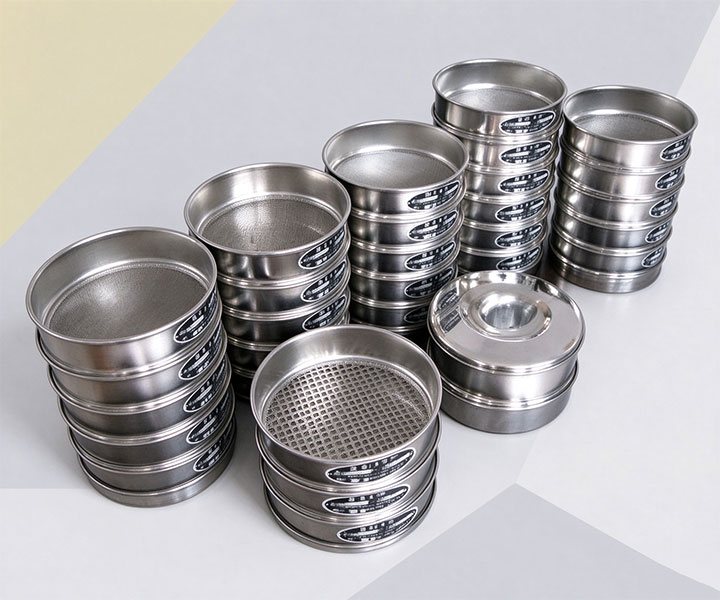
Screen size: 80 mesh in general
Vibration parameters: vibration frequency is 60 Hz, amplitude is 3 mm.
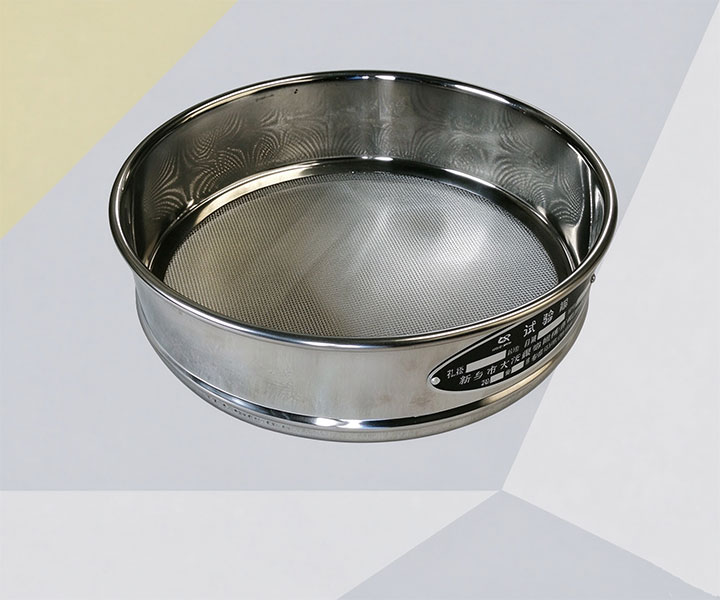
Series: R20/3
Standard: GB/6003.1 international standard
Laboratory Test Sieves are a common laboratory equipment used for separation, classification and screening experiments of granular materials...
For Laboratory Sieves Suppliers
For Laboratory Sieves Suppliers includes manufacturers such as Labsieve and Endecotts...
Sieve shaker is an instrument used for material particle separation and particle size detection. Its specific working principle is as follows...
How to choose Test Sieve Shaker
The selection of materials depends on the characteristics. The user's demand for the product will largely indicate the functions of a product...
Are you interested?

Then we look forward to hearing from you