

WhatsApp:+86 15236742901

Email:sale@xxdahan.com


WhatsApp:+86 15236742901
Email:sale@xxdahan.com
Tuesday September-29 2026 17:21:24
Choosing between an Ultrasonic Test Sieve and a Standard Test Sieve should start with the material being tested, not with the equipment itself. If the sample passes through the selected sieve opening smoothly and the mesh remains clear during the test, a standard test sieve may be all that is needed for routine particle size analysis.
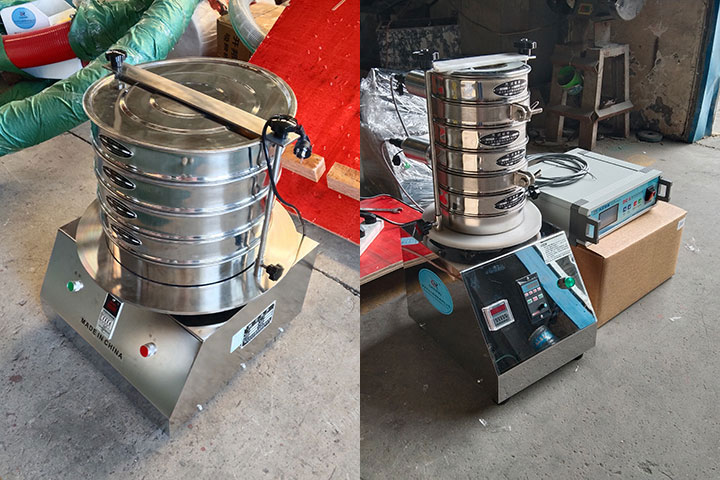
The situation changes when fine particles begin to stick to the mesh, lodge in the openings, build up during screening, or become difficult to separate because of cohesion or static. In these cases, adding ultrasonic assistance can help keep the fine sieve openings active while the sample is being screened.
So the practical question is simple: does the material pass through the required sieve opening reliably under normal screening conditions? If it does, a Standard Test Sieve is often sufficient. If the sieve itself becomes part of the screening problem, an Ultrasonic Test Sieve is worth considering.
| Screening condition | Suitable direction |
|---|---|
| Free-flowing material with little mesh blinding | Standard Test Sieve |
| Routine particle size analysis | Standard Test Sieve |
| Fine particles repeatedly block the mesh | Ultrasonic Test Sieve |
| Powder tends to adhere to fine mesh openings | Ultrasonic Test Sieve may be suitable |
The key difference in an Ultrasonic Test Sieve vs. Standard Test Sieve is not simply the presence of an ultrasonic system. It is the way the sieve mesh behaves while the sample is being screened. A standard test sieve relies on the movement of the material across the mesh, while an ultrasonic test sieve adds high-frequency vibration directly to the mesh.
Ultrasonic test sieve for fine powder screening
During screening, this additional vibration can help fine particles move through small sieve openings and reduce the tendency of particles to remain attached to the mesh surface. It can also limit the accumulation of material around the openings, which is useful when a fine mesh begins to restrict particle passage.
This difference is most relevant when the selected sieve aperture is small and the sample contains particles that are cohesive, electrostatic, or close to the size of the opening. Instead of depending only on the movement of the sample, the mesh receives additional high-frequency movement to support particle passage.
There is also a practical difference in how the test progresses. With a standard sieve, increasing screening time or manually cleaning the mesh may sometimes be used when particles accumulate. Ultrasonic assistance provides another way to address this problem during the screening process, reducing the need to rely entirely on prolonged screening or repeated mesh cleaning.
However, ultrasonic assistance does not replace correct sieve selection. The sieve aperture, sample characteristics, sample quantity, and test method still determine whether the particles can be separated properly. If a material already passes through the required mesh without significant buildup, a standard test sieve may remain sufficient.
Fine powder can behave very differently from free-flowing granules during screening. As particle size becomes smaller, the material has a greater tendency to interact with the sieve mesh instead of simply moving across it. This is one reason why a sieve that works well for coarse or free-flowing material may perform differently with fine powder.
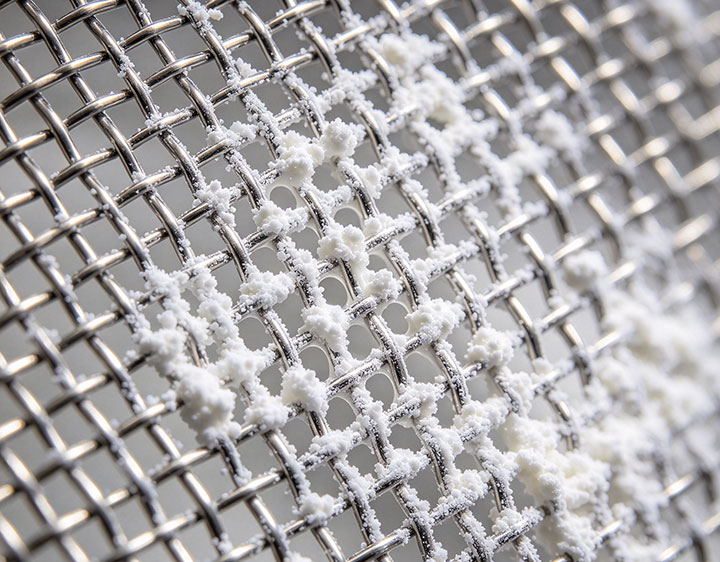
Particle cohesion is one common factor. Fine particles can attract and hold onto one another, forming small agglomerates that are larger than the individual particles. When these agglomerates reach the sieve surface, they may remain on the mesh rather than separating immediately.
Moisture and static electricity can create another problem. A small amount of moisture may increase adhesion between particles or between the powder and the mesh, while electrostatic charge can cause lightweight particles to cling to the screen surface. Particle shape also matters, especially when irregular or fibrous particles become lodged in the sieve openings.
The result is not always complete mesh blockage. Sometimes only part of the mesh becomes covered or individual openings become occupied by near-size particles. As this continues, fewer openings remain available for separation, making the screening process less consistent and increasing the importance of choosing the right sieve aperture and screening method.
A Standard Test Sieve remains a practical choice for many routine particle size tests. When the sample is relatively free-flowing and the selected sieve opening allows the undersize particles to pass without significant buildup, there may be no need for additional ultrasonic assistance.It is particularly suitable when the screening process is stable from one test to another. Materials such as dry granules, relatively free-flowing powders, and samples with limited mesh blinding can often be tested with a conventional sieve setup.
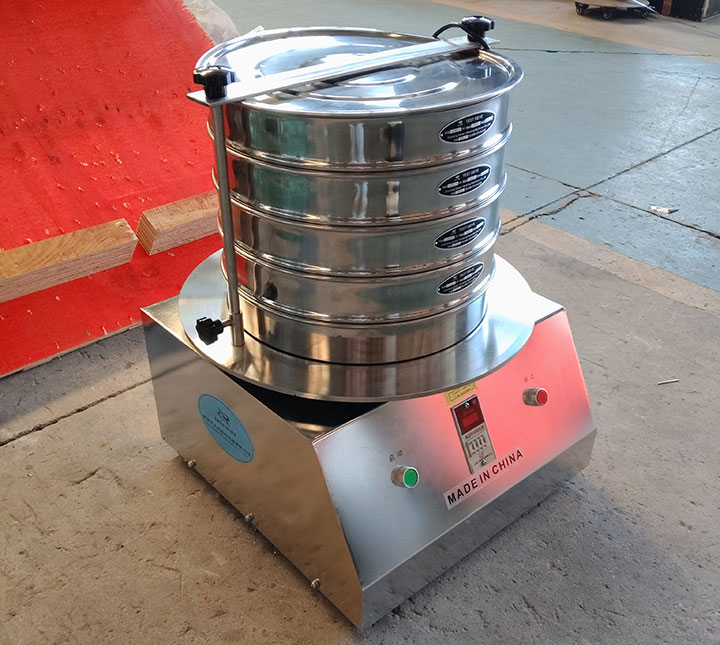
A standard sieve also keeps the test arrangement straightforward. The sieve aperture, mesh specification, sample quantity, screening time, and test procedure can be controlled according to the requirements of the analysis. If these conditions already provide consistent particle separation, adding an ultrasonic system may add complexity without solving a real screening problem.
The deciding factor is therefore not whether the material is simply “fine.” A fine material can still work well with a standard sieve if it remains free-flowing and does not significantly interfere with the mesh. The need for ultrasonic assistance becomes more relevant when the screening process itself is being limited by mesh blinding, adhesion, static, or difficult particle passage.
Ultrasonic screening becomes worth considering when the sieve mesh starts to interfere with the test. The material may be small enough to pass through the selected aperture, but in practice it does not pass consistently because particles remain on the mesh, occupy the openings, or accumulate as screening continues.

One clear sign is repeated mesh blinding. If the same fine sieve needs frequent cleaning during testing, or a noticeable layer of powder builds up on the mesh before the test is complete, the problem may be related to how the particles interact with the openings rather than the nominal sieve size alone.
Ultrasonic assistance can also be considered when fine particles are difficult to separate because of cohesion or static. These conditions can cause particles that should pass through the sieve to remain on the screen. Applying high-frequency vibration to the mesh can help keep the openings active during screening.
Another useful indicator is inconsistent screening behavior. If two tests using the same material, sieve aperture, and sample conditions produce noticeably different results because the mesh condition changes during screening, it may be time to examine whether ultrasonic assistance can improve the screening process.
There is no fixed particle size at which ultrasonic screening suddenly becomes necessary. The decision depends on the combination of sieve aperture, material properties, sample quantity, and actual mesh behavior during the test. A trial with the intended material and sieve opening is often the most practical way to determine whether ultrasonic assistance is justified.
The same sieve type does not perform identically with every material. The more useful comparison is to look at how the sample behaves on the mesh during the actual test. A free-flowing granule may pass through a standard sieve without difficulty, while a fine powder with similar particle size can require additional help to keep the mesh open.
| Material condition | Standard Test Sieve | Ultrasonic Test Sieve |
|---|---|---|
| Dry, free-flowing granules | Usually suitable for routine screening | May not be necessary |
| Free-flowing powder with little mesh buildup | Usually suitable | Consider when finer screening is required |
| Fine cohesive powder | May experience slower particle passage or mesh buildup | Can help maintain particle movement through fine openings |
| Powder affected by static or adhesion | Mesh condition may become difficult to maintain | Ultrasonic assistance may reduce particle accumulation |
| Material repeatedly blinding a fine mesh | May require manual mesh cleaning or longer screening | More suitable for evaluating ultrasonic assistance |
This comparison does not mean that one sieve type should always be assigned to a particular material. Material condition, sieve aperture, moisture, particle shape, and sample quantity can all change the result. The most useful starting point is to observe what happens on the mesh during screening rather than choosing the sieve from the material name alone.
Before deciding between an ultrasonic and standard test sieve, determine the sieve opening required by the particle size analysis. The opening controls which particles can pass through the mesh, while the sieve type determines how the material interacts with that mesh during the test.
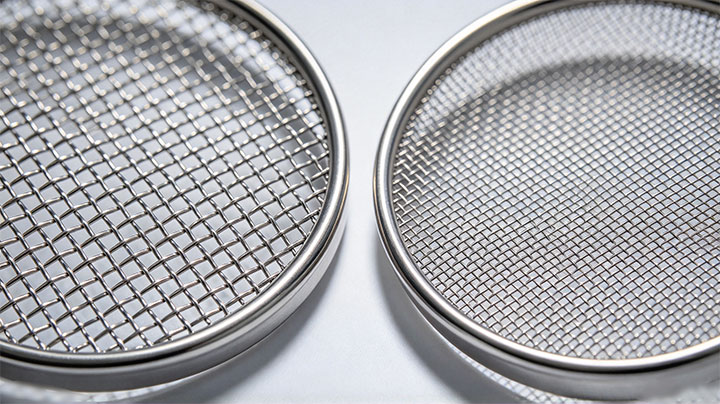
Mesh number alone is not enough to make this decision. Two screens with different wire diameters can have different openings even when their mesh counts are similar. For accurate selection, the required particle size range should be matched to the actual sieve aperture rather than choosing a mesh number without checking the corresponding opening.
Material behavior should then be considered. If the selected aperture is appropriate but the fine particles repeatedly remain on the mesh, blind the openings, or pass inconsistently, ultrasonic assistance may be worth evaluating. If the material moves through the same aperture normally, a standard test sieve may already provide the required separation.
A practical selection order is therefore: define the particle size requirement → select the appropriate sieve aperture → test how the material behaves on the mesh → decide whether ultrasonic assistance is needed. This prevents the sieve type from becoming the starting point when the actual screening requirement has not yet been established.
Choosing between a Standard Test Sieve and an Ultrasonic Test Sieve can be simplified by checking the screening conditions in the right order. Start with the test requirement, then look at the material behavior, and only then decide whether ultrasonic assistance is necessary.
Define the particle size you need to measure.
Determine the target particle size range and the separation point required for the analysis.
Select the appropriate sieve aperture.
Match the required particle size to the actual sieve opening rather than choosing a mesh number alone.
Observe how the material moves across the mesh.
Check whether the sample spreads and passes through the openings normally or begins to accumulate on the sieve surface.
Check for mesh-related problems.
Look for blinding, particle adhesion, static-related buildup, or near-size particles becoming lodged in the openings.
Choose the sieve configuration.
If the material passes through the selected aperture consistently, a Standard Test Sieve may be sufficient. If the mesh repeatedly limits particle passage, an Ultrasonic Test Sieve can be considered.
This approach keeps the selection focused on the actual test rather than assuming that fine material automatically requires ultrasonic assistance. When the screening conditions are unclear, testing the intended material with the required aperture can provide a more useful answer than choosing a sieve based on particle size alone.
Yes. A Standard Test Sieve can be suitable for fine powder when the material flows through the selected aperture without significant mesh buildup or blinding. Fine particle size alone does not mean ultrasonic assistance is required.
No. The need for ultrasonic assistance depends on how the powder behaves on the mesh. Adhesion, cohesion, static, moisture, and repeated mesh blinding are more useful indicators than particle size alone.
Common factors include cohesive particles, static electricity, moisture, irregular particle shapes, and particles that are close to the sieve aperture. These conditions can reduce the number of open passages available for screening.
Start with the particle size range and separation requirement of the test, then select the corresponding sieve opening. Mesh number should not be considered independently from the actual aperture and wire diameter.
It is worth considering when the selected fine mesh repeatedly becomes part of the screening problem—for example, when particles accumulate on the mesh, openings become blocked, or screening becomes inconsistent. A test with the actual material can help confirm whether ultrasonic assistance is appropriate.
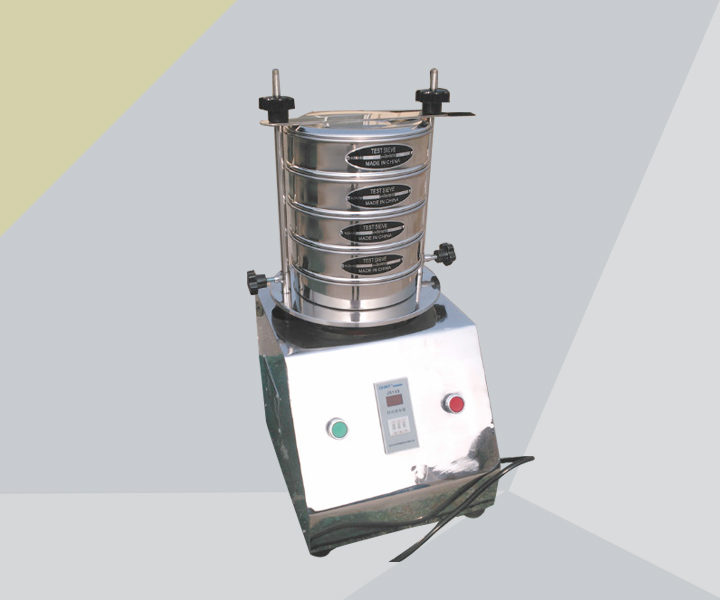
Measuring range: 20µm - 125mm
Price: $520.00/Sets
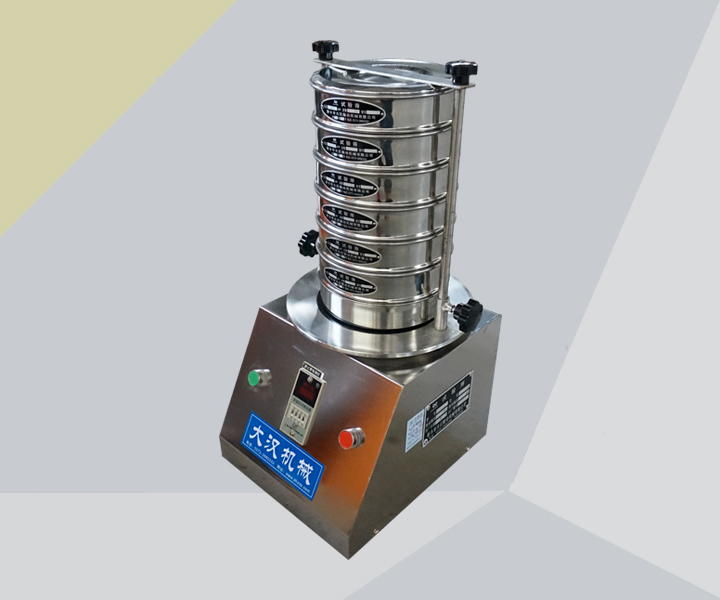
Laboratory Sieve Shaker Machine
Measuring range: 20µm-125mm
Price: $600.00 - $980.00/Set
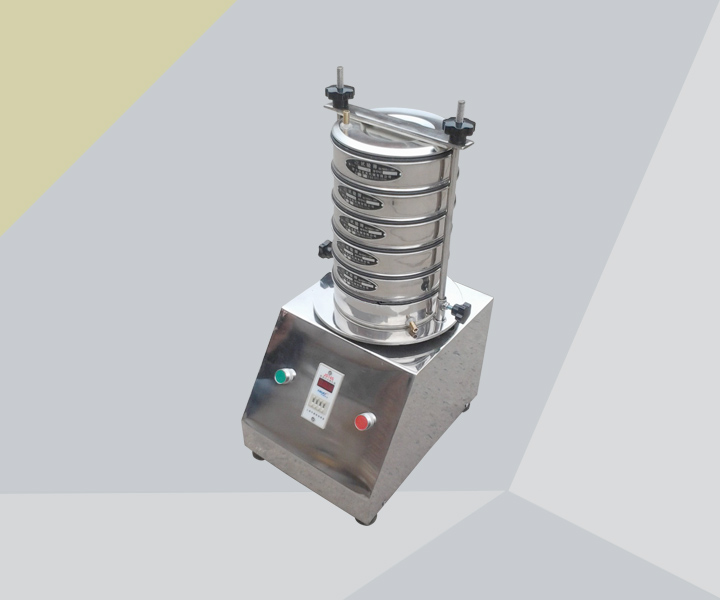
Screening particle size: 0.025-3mm
Price: $538.00 - $925.00/Set
Sep 29, 2026
Ultrasonic Test Sieve vs. Standard Test Sieve Which Is Right for You
Compare Ultrasonic Test Sieve vs. Standard Test Sieve based on sieve aperture, material behavior, mes...
Sep 09, 2026
Mechanical Sieve Shaker Price varies depending on the model. The basic model, suitable for routine sc...
Sep 09, 2026
How to Properly Clean and Maintain Ultrasonic Test Sieves
Learn proper cleaning steps, routine maintenance and common mistakes for ultrasonic test sieves. Exte...
Sep 09, 2026
ISO 3310-1 vs. ASTM E11: A Comprehensive Technical Comparison for Global Laboratories
This article compares the technical specifications of ISO 3310‑1:2016 and ASTM E11‑24 sieve testi...

Then we look forward to hearing from you