
WhatsApp:+86 15236742901

Email:sale@xxdahan.com


WhatsApp:+86 15236742901
Email:sale@xxdahan.com
![[field:title/]](/uploads/260815/1-260Q5105416424.jpg)
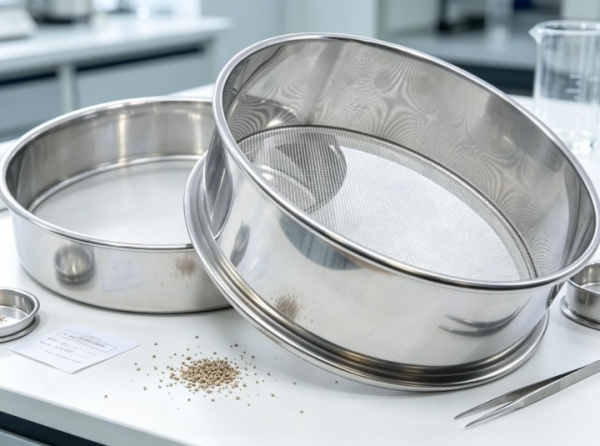
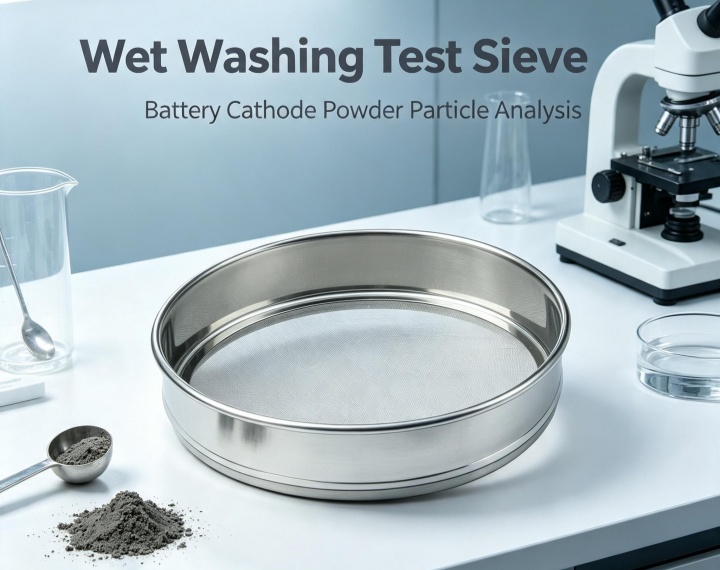
This 316L stainless steel wet washing test sieve features a deep frame design and a wash nozzle connector, engineered for particle size distribution analysis of battery cathode materials and wet sieving of ultrafine powders.
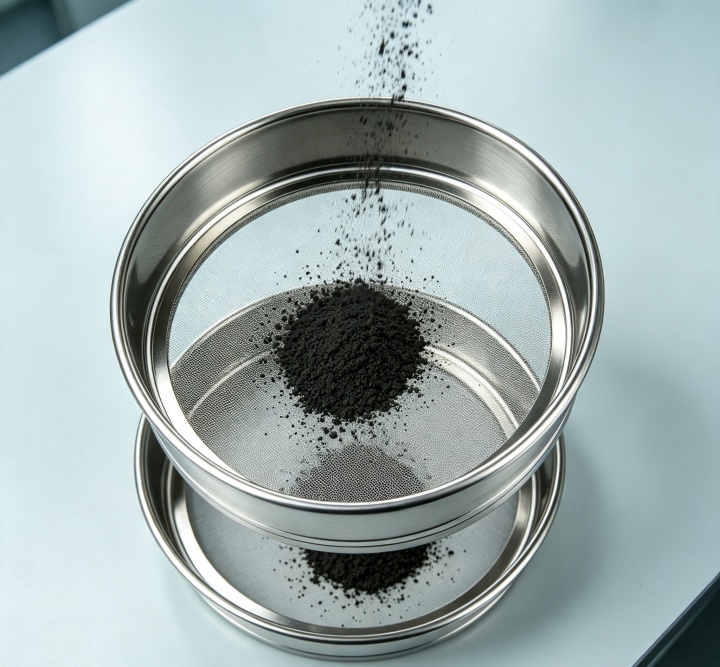
During particle size control for ternary materials (NCM/NCA) and lithium iron phosphate (LFP), micron-scale powders (D50 between 3μm and 15μm) easily agglomerate due to electrostatic attraction and van der Waals forces. Traditional dry sieving methods cause powders to adhere to wire surfaces when aperture sizes fall below 45μm (325 mesh), blinding the mesh and resulting in passing rate measurement errors as high as 15% to 30%. The 316L Stainless Steel Wet Washing Test Sieve for Battery Cathode Powder utilizes a continuous liquid rinse mechanism, allowing liquid dispersants to flow through the mesh and move suspended particles. This breaks up soft agglomerates and achieves physical particle size separation. Overflow ports on the frame and a bottom drain connector smoothly guide fluid through the mesh, preventing liquid accumulation from overloading and damaging the screen.
| Parameter Item | Standard Specification / Technical Indicator |
| Frame Diameter | 200 mm / 203 mm (8 inches) |
| Total Frame Height | 120 mm / 170 mm / 220 mm |
| Mesh Type | Stainless steel woven wire mesh / Electroformed nickel micro-mesh (suitable for <20μm) |
| Aperture Uniformity | Complies with ISO 3310-1 Class 1 and ASTM E11 Inspection/Calibration Grade |
| Surface Roughness | Inner frame surface Ra ≤ 0.4 μm (Electropolished) |
| Rinsing Connectors | Includes Ø8mm inlet spray lance kit and bottom Ø25mm drainage tube |
Cathode materials often require deionized water or anhydrous ethanol for slurry dispersion during wet testing. 304 stainless steel is prone to pitting corrosion in wet systems containing trace chloride ions or weak acidity. Stripped trace iron (Fe) and chromium (Cr) metallic impurities in the battery powder can cause increased self-discharge rates or internal short circuits in batteries. By incorporating 2%–3% molybdenum (Mo), 316L stainless steel enhances resistance to pitting and crevice corrosion in wet media environments.
| Performance Indicator | 304 Stainless Steel | 316L Stainless Steel |
| Chemical Composition (%) | 18Cr-8Ni | 16Cr-10Ni-2.0Mo (Carbon content ≤ 0.03%) |
| Pitting Resistance Equivalent (PREN) | ~ 19.0 | ~ 23.0 - 25.0 |
| Free Iron Contamination Risk | Risk of oxidative flaking in pH<5 or Cl- containing wet media | Low intergranular corrosion tendency, reducing metallic impurity introduction (PPM level) |
| Electropolishing Suitability | Surface roughness Ra approx. 0.6 μm | Achieves Mirror Finish, Ra ≤ 0.2 - 0.4 μm |
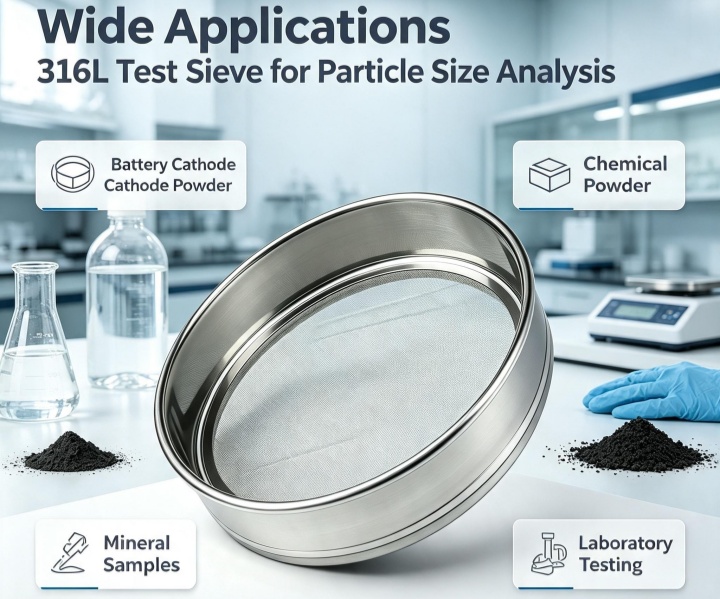
This equipment is widely utilized for particle size distribution testing and oversized particle screening in lithium battery precursors and finished cathode powders:
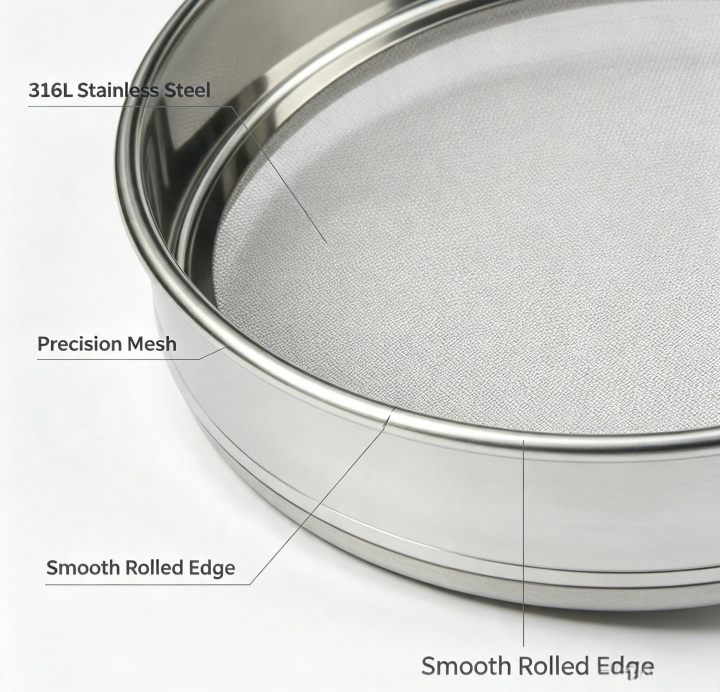
The sieve frame utilizes a one-piece stamping process, eliminating traditional lap-welded seams. The mesh is secured to the frame rim using advanced polymers or seamless laser ring welding techniques. The interior transition corners feature an arc design of R≥5mm to prevent powder retention in corner gaps. Prior to dispatch, every test sieve undergoes multi-station ultrasonic cleaning to remove lubricants and micro-particles, followed by 3-axis mesh aperture scanning under a 200x optical microscope to randomly measure the actual transverse and longitudinal diameters of no less than 50 apertures, calculating mean square deviation values.
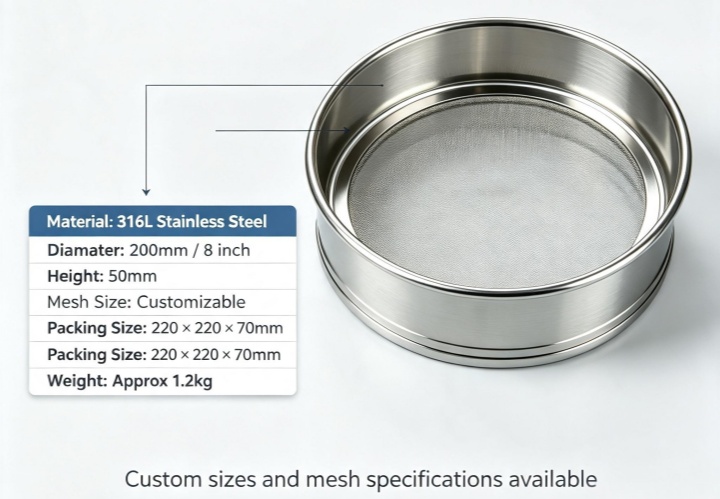
Q: Why is 316L material strictly required for lithium battery powder wet sieving?
A: Lithium battery cathode materials are sensitive to transition metal contaminants, especially iron, chromium, and nickel ions. During wet sieving with deionized water, alcohol, or mild chemical dispersants, standard metals or 304 stainless steel can experience micro-pitting corrosion. 316L contains 2-3% molybdenum and has a lower carbon content (≤0.03%), which inhibits intergranular oxidation and prevents iron-based micro-particles from flaking off into the test sample.
Q: Can this wet washing test sieve be customized with a spray nozzle or extra-deep frame?
A: Yes. Customization options include frame depths up to 200mm to contain liquid splashing during high-flow washing. Top-cover assemblies equipped with adjustable dispersion spray nozzles, as well as bottom drainage pans with custom barbed hose fittings (e.g., 8mm, 10mm, 12mm ID), can be engineered to match existing laboratory setups.
Q: Does each sieve come with an inspection certificate compliant with ISO/ASTM standards?
A: Each test sieve is supplied with an individual Calibration Certificate. The document records statistical mesh aperture measurements, wire diameter tolerances, and overall frame dimensions evaluated via automated optical coordinate measuring machines in compliance with ISO 3310-1 or ASTM E11 requirements.
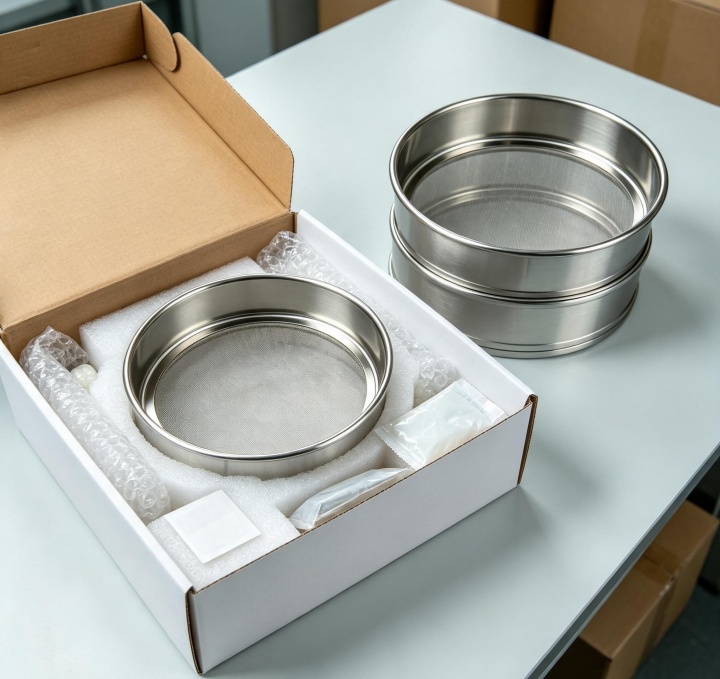
The 316L Stainless Steel Wet Washing Test Sieve addresses electrostatic agglomeration and metallic impurity contamination issues during micron-scale sieving of battery cathode powders through corrosion-resistant 316L material, an extended-depth wash structure, and an electropolished seamless design. To obtain mesh selection recommendations or customized liquid wash fitting specifications for specific cathode materials (LFP/NCM), please contact our technical team to receive CAD structural drawings and sample calibration certificates.
cement fineness test sieve is a commonly used sieving tool in cement physical property testing...
Test sieves for laboratory use are widely adopted in scientific research and quality control because they cover sieving needs ranging from...
Are you interested?

Then we look forward to hearing from you