
WhatsApp:+86 15236742901

Email:sale@xxdahan.com


WhatsApp:+86 15236742901
Email:sale@xxdahan.com
![[field:title/]](/uploads/260706/1-260F616023b42.jpg)
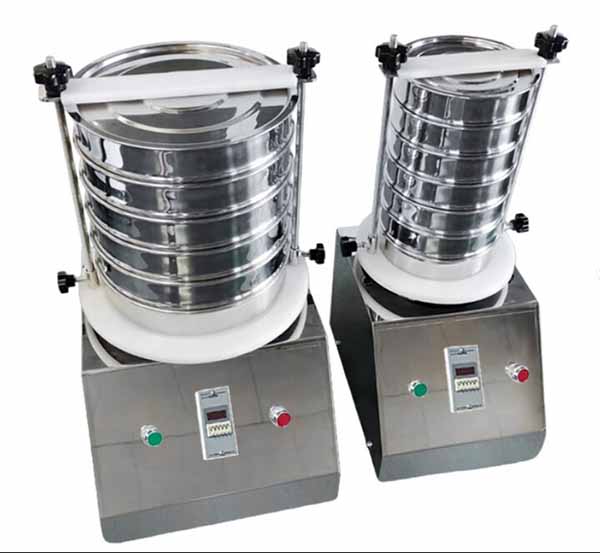
The Automated Sieve Shaker Machine is an automatic vibrating sieve for particle and powder size classification. It can be used with standard test sieves to complete laboratory analysis and quality testing.
Supports multi-layer test sieves, suitable for analysis and testing of different particle sizes.
Automatic setting of time and vibration parameters reduces manual operation.
Compatible with ASTM and ISO standard test sieves.
Multiple vibration modes are available to suit different materials.
Stainless steel contact parts, suitable for long-term use.
Port:Any port in China (Mainland)or as you need.
| Quantity(sets) | 1-2 | >2 |
| Delivery time(days) | 5 | To be negotiated |
An Automated Sieve Shaker Machine is a sieving device used for particle and powder size analysis. It separates samples layer by layer according to particle size through mechanical vibration, electromagnetic vibration, or three-dimensional motion in multiple layers of standard test sieves, obtaining particle size distribution data. It can be used as a particle size analysis machine, laboratory sieve shaker, or test sieve shaker in laboratory testing, raw material inspection, and production process quality control. Compared to manual sieving, an automated sieve shaker machine can operate automatically according to set vibration time, frequency, and amplitude, ensuring that each batch of samples undergoes the same testing conditions. Therefore, automated sieve shakers for laboratories have become common equipment in many laboratories.
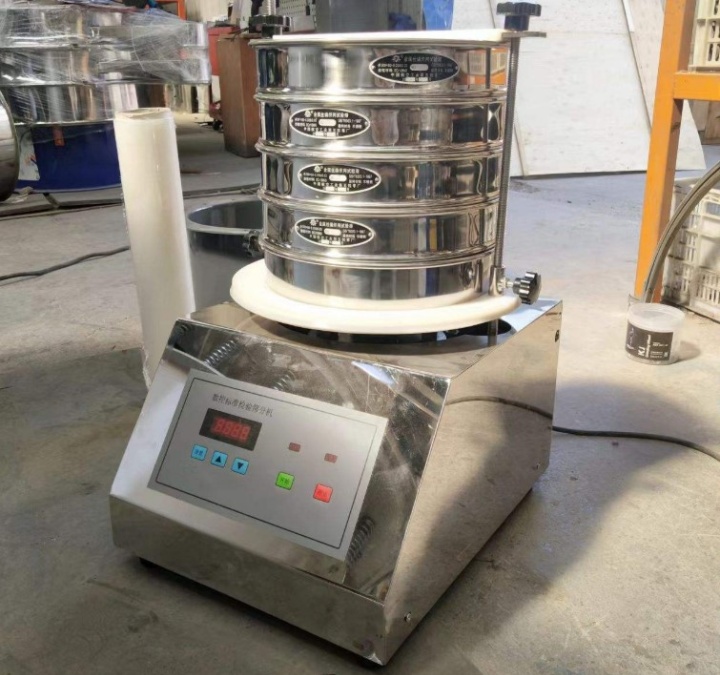
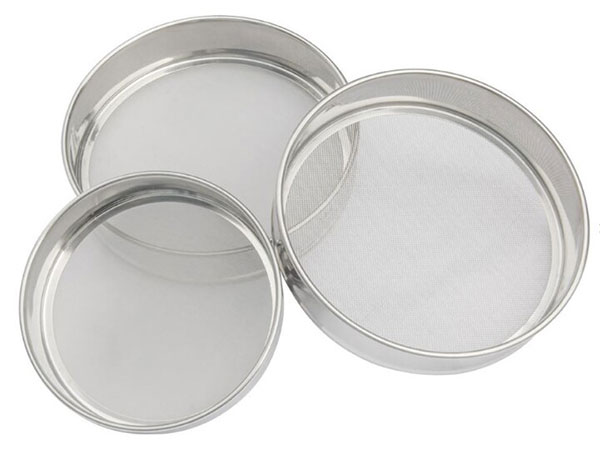
The main body of the equipment is usually made of carbon steel or stainless steel, while the parts in contact with the sample are mostly made of 304 or 316 stainless steel, taking into account both wear resistance and corrosion resistance. The sieving range is determined by the sieve size, with common apertures ranging from approximately 20μm to 125mm (approximately 635 mesh to 0.125 mesh). It can meet the sieving needs of fine powders, medium-sized particles, and coarse particles, and is compatible with standard test sieves such as Φ75mm, Φ100mm, Φ150mm, Φ200mm, Φ300mm, 8-inch, and 12-inch sieves.
Manual sieving is suitable for small sample volumes, but when the number of tests increases or repeated testing is required, automated sieve shakers can maintain consistent operating parameters, reducing variations caused by human operation.
| Comparison Item | Manual Sieving | Automated Sieve Shaker Machine |
| Operation Mode | Manual shaking sieves | Automatic motor drive |
| Test Time | Manually controlled | Timed operation |
| Repeated Test | Affected by operators | Consistent parameters |
| Sieve Layer Quantity | Labor-intensive operation | Multiple test sieves can be installed simultaneously |
| Data Repeatability | Large fluctuation | Suitable for continuous testing |
| Work Intensity | Long-time manual operation | Automatically complete after sample feeding |
| Applicable Samples | Small batch samples | Daily batch inspection |
| Standard Compliance | Manually controlled | Easy to perform in accordance with ASTM or ISO procedures |
For applications such as sieve shakers for soil testing and sieve shakers for aggregate testing, which require testing at fixed times and with fixed vibration patterns, automated sieve shakers make it easier to maintain a uniform testing process.
Automated sieve shakers can not only be used for sieving particles and powders, but also for particle size analysis, quality control, and sample grading. It can perform particle size distribution, particle size analysis, raw material inspection, incoming material inspection, finished product sampling, powder grading, particle grading, sieve residue analysis, and multiple batch repeat testing. For example, after sand samples pass through test sieves of different mesh sizes, the proportion of each particle size can be obtained, providing a reference for material proportioning and product quality evaluation. As a particle size analysis machine, it can be used with electronic balances and standard test sieves to complete a complete sieving process, suitable for laboratory testing and daily quality inspection in the production process.
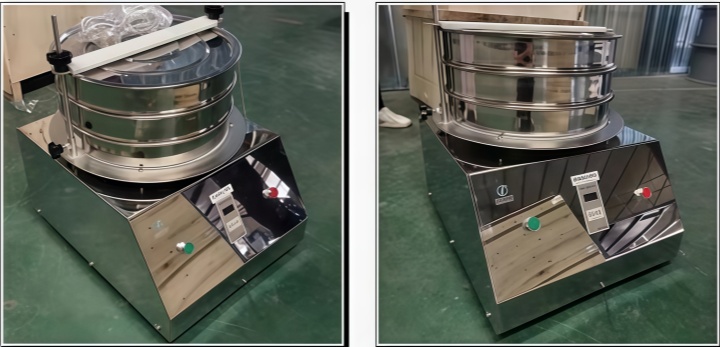
The automatic vibrating sieve machine is suitable for dry or partially wet samples of different particle sizes. It can be used for sieving and particle size analysis of materials such as quartz sand, river sand, building sand, crushed stone, aggregate, cement, limestone, graphite, activated carbon, metal powder, copper powder, iron powder, aluminum powder, ceramic powder, battery material powder, soil, clay, coal powder, coffee powder, flour, sugar powder, salt, plastic granules, resin granules, fertilizer granules, glass microspheres, and feed granules. For fine powder samples, an electromagnetic sieve shaker can be selected; for samples with larger particle sizes, a vibratory sieve shaker can be selected. The vibration mode, sieving time, or the use of a sieve cleaning device should be adjusted according to the sample characteristics to reduce clogging and agglomeration, achieving stable sieving results.
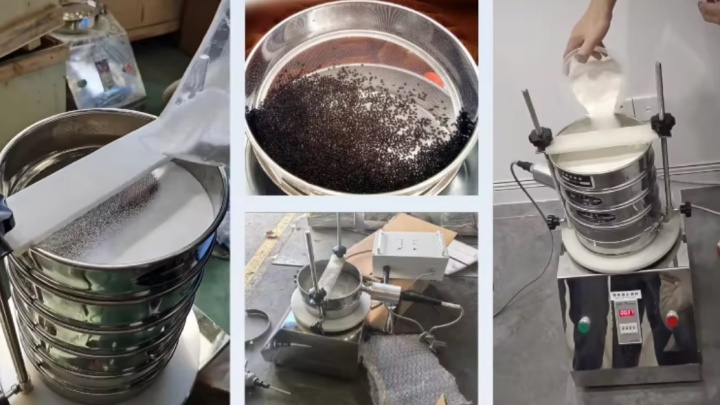
Different samples have different particle shapes, densities, and flowability; therefore, automatic vibratory sieve shakers can employ various vibration modes. Selecting the appropriate drive type based on sample characteristics helps reduce sieve clogging and sample residue, making the sieving process smoother. Common drive methods include mechanical vibration, electromagnetic vibration, three-dimensional motion, and impact vibration, each with different applicable ranges.
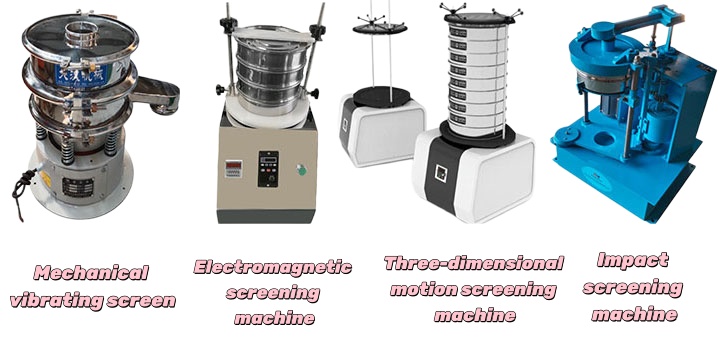
A mechanical vibratory sieve shaker uses a motor to drive an eccentric mechanism to generate continuous vibration, causing the sample to move on the sieve and pass through the sieve openings layer by layer. This type of vibratory sieve shaker is commonly used for medium to coarse-grained materials such as building sand, crushed stone, cement, ore, plastic granules, and fertilizer granules. It features simple structure, easy maintenance, and continuous operation, making it a common type of sieve shaker for aggregate testing.
The Electromagnetic Sieve Shaker utilizes electromagnetic coils to generate vibration, eliminating the need for traditional eccentric motors. It is suitable for fine-particle samples such as metal powders, graphite powders, ceramic powders, battery materials, talc powder, and quartz powder. The machine operates by using AC power to drive an electromagnetic system, causing the sieve disc to vibrate continuously. This redistributes the sample layer by layer through the sieve, making it suitable for fine powder particle size analysis.
The Three-Dimensional Motion Sieve Shaker simultaneously generates horizontal, vertical, and rotational motions during the sieving process, continuously changing the sample's direction of movement. It is suitable for easily agglomerated powders, mixed samples with significant differences in specific gravity, and materials with poor flowability. This type of device improves sample distribution on the sieve surface and is often used as a particle size analysis machine in laboratory particle size analysis.
Tap Sieve Shakers incorporate a tapping motion during vibration, helping particles adhered to the sieve openings to relocate. They are suitable for fine powders, highly electrostatically charged powders, and sticky samples. Tap Motion is commonly used in some ASTM testing procedures and still has application value in fine particle sieving and the testing of special materials.
| Drive Type | Suitable Particle Size | Typical Materials | Application |
| Mechanical | Medium to Coarse | Sand, Aggregate, Plastic Pellets | Routine sieving |
| Electromagnetic | Fine Powder | Metal Powder, Graphite, Ceramic Powder | Laboratory particle analysis |
| Three-Dimensional | Mixed Particle Sizes | Composite Materials, Fine Powders | Precision particle distribution |
| Tap Motion | Fine and Sticky Materials | Mineral Powder, Cement, Flour | Fine mesh sieving |
There is no fixed superiority or inferiority among different drive methods. Selection should be based on sample properties, sieve specifications, and testing standards.
When selecting an Automated Sieve Shaker Machine, an evaluation should be conducted based on sample type, particle size range, sieve specifications, and testing requirements. Different materials require different vibration methods; for example, a sieve shaker for soil testing is suitable for soil samples, while a sieve shaker for aggregate testing is suitable for larger particles such as aggregates and crushed stone. Sample particle size determines the sieve aperture and equipment type.
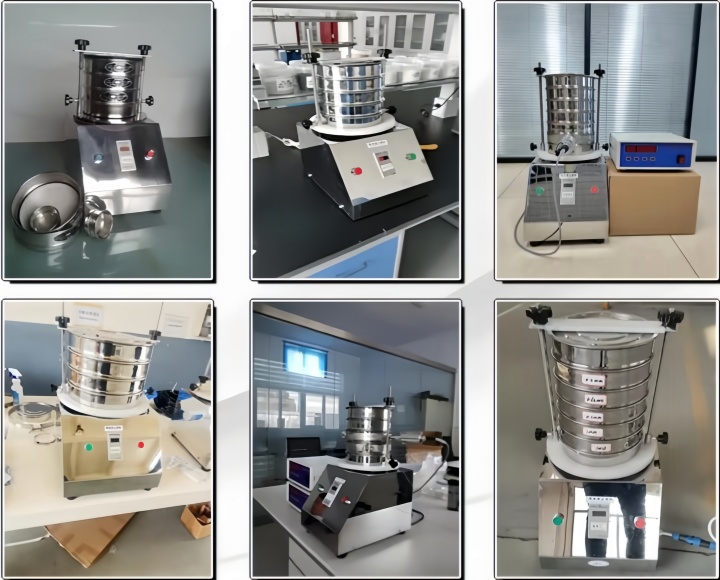
Simultaneously, the compatible test sieve sizes (e.g., 75 mm, 100 mm, 200 mm, 8 inches, 12 inches, etc.), the number of sieve layers that can be installed, and the maximum sample load should be confirmed to meet actual testing needs. If compliance with ASTM or ISO sieve shaker standards is required, it should also be confirmed that the equipment supports the corresponding testing procedures and sieve specifications. Furthermore, regular sieve shaker maintenance, including inspection of the motor, clamps, and vibration mechanism, helps maintain long-term stable operation of the equipment.
Parameters vary between models; the table below shows common configurations for automated sieve shakers in laboratories.
| Item | Specification |
| Product Name | Automated Sieve Shaker Machine |
| Drive Type | Mechanical / Electromagnetic |
| Sieve Diameter | 75 mm – 300 mm |
| Compatible Standards | ASTM / ISO |
| Maximum Sieve Layers | 8–12 Layers |
| Mesh Range | 20 μm – 125 mm |
| Timer | 1–99 min Adjustable |
| Amplitude | Adjustable |
| Vibration Frequency | Adjustable |
| Sample Capacity | According to Model |
| Maximum Load | According to Model |
| Power Supply | 110V / 220V / 380V |
| Frequency | 50 Hz / 60 Hz |
| Display | Digital Control Panel |
| Machine Material | Carbon Steel / Stainless Steel |
| Contact Material | SUS304 / SUS316 Stainless Steel |
| Optional Accessories | Test Sieves, Lid, Receiving Pan, Clamping Device |
When purchasing, in addition to parameters, attention should also be paid to whether the equipment supports different voltages, different sieve sizes, and customized clamp configurations to ensure compatibility with existing laboratory equipment.
When selecting an Automated Sieve Shaker Machine, it should be confirmed that the equipment meets the testing standards adopted by the customer or laboratory. Different standards vary in sieve specifications, sieving processes, sample weights, and data recording methods. ASTM Standards are primarily used in the US and Canadian markets and are suitable for particle analysis of building materials, minerals, and soil. ISO Standards are commonly used in international trade and laboratory quality management. EN Standards are mainly used in the European market. JIS Standards are applicable to Japanese industrial standards. Before purchasing equipment, you should select an ASTM or ISO sieve shaker that supports the corresponding sieve specifications and testing requirements based on the actual testing standards.
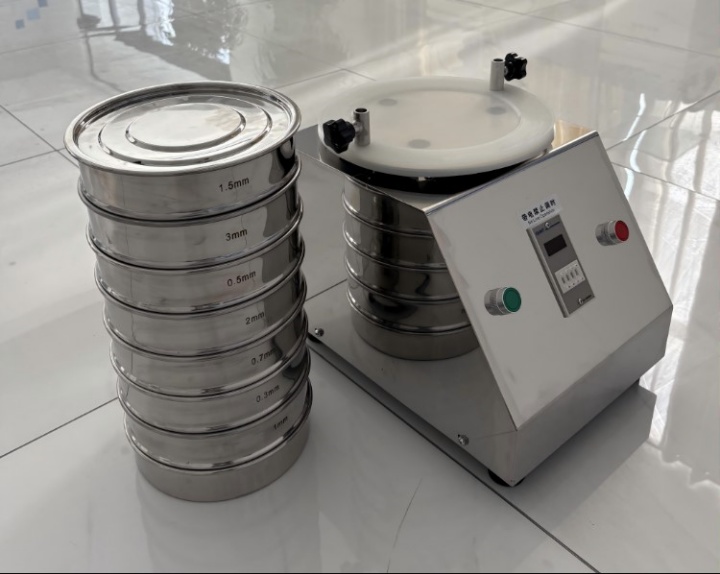
A sieve shaker machine is a device that uses mechanical or electromagnetic vibration to pass samples through sieves of different apertures to achieve particle size classification.
The equipment uses set time and vibration patterns to cause the sample to move in layers on the sieve mesh, allowing smaller particles to pass through the sieve openings and form different particle sizes.
Install the test sieves according to the sieve aperture sequence, add the sample, set the time, and start the equipment. After completion, weigh the sample residue on each sieve layer.
Originally, check the operating status monthly, perform calibration or performance verification every 6–12 months, and re-verify after maintenance or relocation.
The price depends on the drive method, sieve size, number of sieve layers, and configuration requirements. Different specifications correspond to different cost ranges.
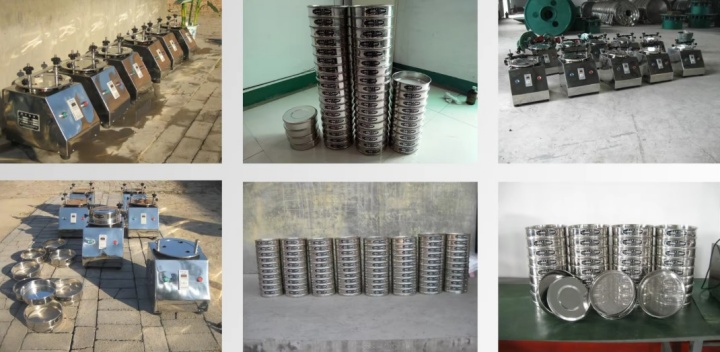
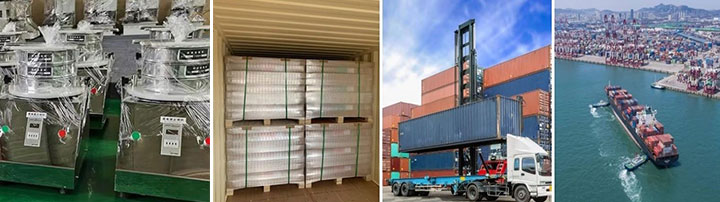
Automated Sieve Shaker Machines have become common testing equipment in particle size analysis of particulate materials. They can be used with test sieves of different sizes to complete sieving, grading, and particle size statistics. If you are looking for an automated vibrating sieve machine suitable for laboratory or production quality testing, you can provide DaHan Machinery with sample type, particle size range, sieve specifications, and testing requirements. Engineers will provide model suggestions, technical parameters, and product quotations based on the application scenario of the material to help you complete the equipment selection.
Ultrasonic Sieves for Fine Powder
Ultrasonic Sieves for Fine Powder adds an ultrasonic system to a regular vibrating screen, enabling the sieving of fine powders...
Sonic Sieve Shaker for Metal Powder Testing
Metal powders possess unique physical properties. When particle size decreases to the micrometer level...
Stainless Steel Test Sieve For Pharmaceutical Powder
Stainless Steel Test Sieve For Pharmaceutical Powder can be used to detect the particle size of pharmaceutical powders and separate powders of different coarseness...
Test Sieve For Cement Fineness Testing
Test Sieve For Cement Fineness Testing are common screening tools used in cement production, quality inspection, and engineering construction to determine the fineness of cement particles...
Are you interested?

Then we look forward to hearing from you