
WhatsApp:+86 15236742901

Email:sale@xxdahan.com


WhatsApp:+86 15236742901
Email:sale@xxdahan.com
![[field:title/]](/uploads/260701/1-260F11H2103I.jpg)
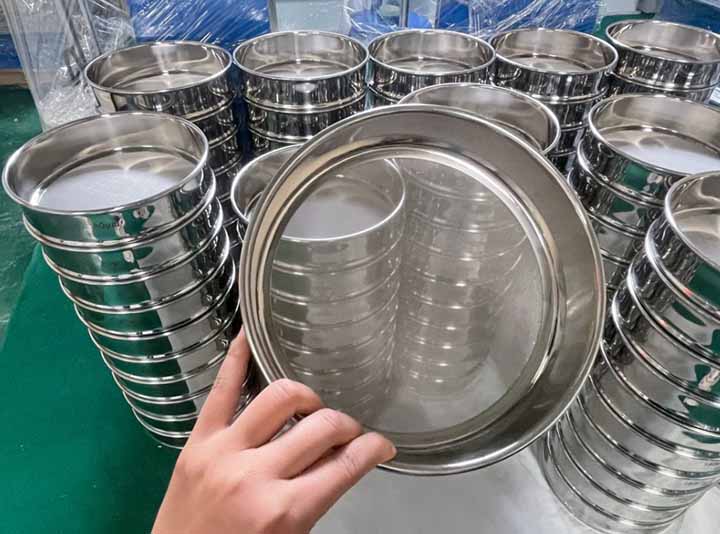
In material testing, technicians often face the challenge of sieve clogging and deformation. Standard analytical sieves separate fine powders through strict size limitations. A Fine Mesh Lab Sieve is a disc-shaped metal container fitted with a tensioned woven metal mesh for grading particles by size. If a laboratory needs to handle metal powders, mineral particles, or chemical microparticles, even slight inconsistencies in sieve aperture can alter test results. A wide range of sieve sizes are available, from 20 mesh to 635 mesh, corresponding to particle sizes ranging from 850 micrometers to 20 micrometers.
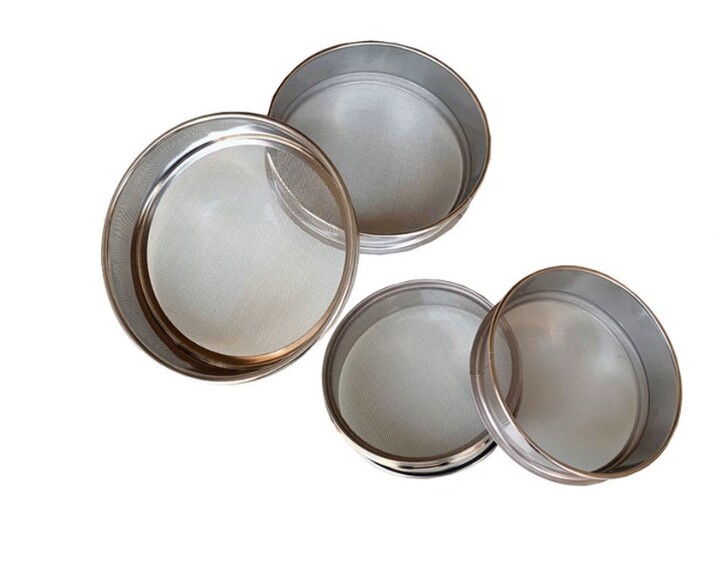
Selecting the correct aperture requires mapping the mesh number to metric dimensions. To clearly verify data during procurement, please refer to the technical conversion data below. This table shows how a 100 mesh sieve in mm transitions to a finer 325 mesh.
| Mesh Size | Aperture in mm | Aperture in μm | Wire Diameter |
| 20 Mesh | 0.850 mm | 850 μm | 0.500 mm |
| 40 Mesh | 0.425 mm | 425 μm | 0.280 mm |
| 60 Mesh | 0.250 mm | 250 μm | 0.160 mm |
| 100 Mesh | 0.150 mm | 150 μm | 0.100 mm |
| 200 Mesh | 0.075 mm | 75 μm | 0.050 mm |
| 325 Mesh | 0.045 mm | 45 μm | 0.030 mm |
| 400 Mesh | 0.038 mm | 38 μm | 0.025 mm |
| 635 Mesh | 0.020 mm | 20 μm | 0.020 mm |
Introducing standard metal sieves into the quality control process can bring about concrete changes. The wire mesh undergoes mechanical tensioning before being locked to the sieve frame, maintaining a uniform square aperture even after high-frequency ultrasonic cleaning. The connection between the wire mesh and the stainless steel sieve frame utilizes a continuous welding process; this seamless geometry prevents fine powder from getting stuck in the edge gaps, reducing the probability of cross-contamination during subsequent testing. The sieves are manufactured in 200 mm or 8-inch diameters, and the standard-sized extended skirts allow for tight stacking, preventing dust from escaping into the laboratory air during vibration.
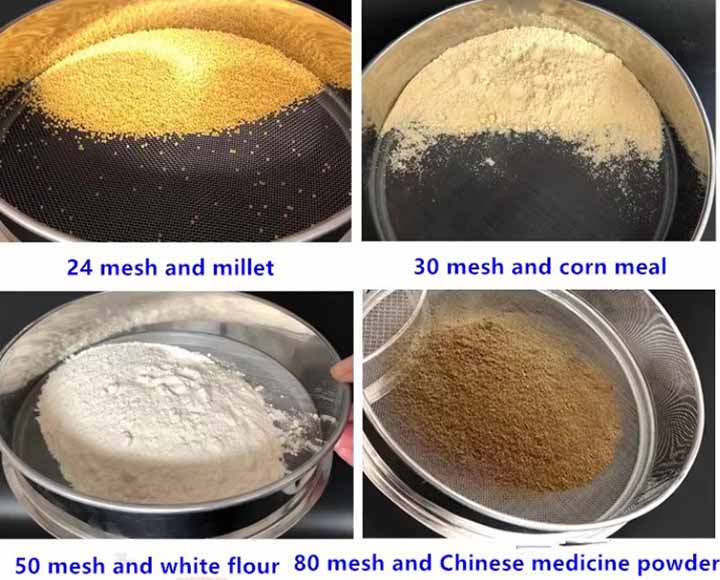
Different industries rely on these detection components to maintain particle size distribution indicators. In powder metallurgy, technicians evaluate titanium and aluminum powders used for 3D printing, checking whether particles can pass through a 325-mesh sieve to prevent nozzle clogging. In the aggregate and mining industry, geologists examine sand, gravel, crushed limestone, and soil samples to plot gradation curves for building materials. In chemical processing, plant operators monitor cosmetic pigments, plastic particles, and abrasive particles, sieving out coarse agglomerates before final packaging.

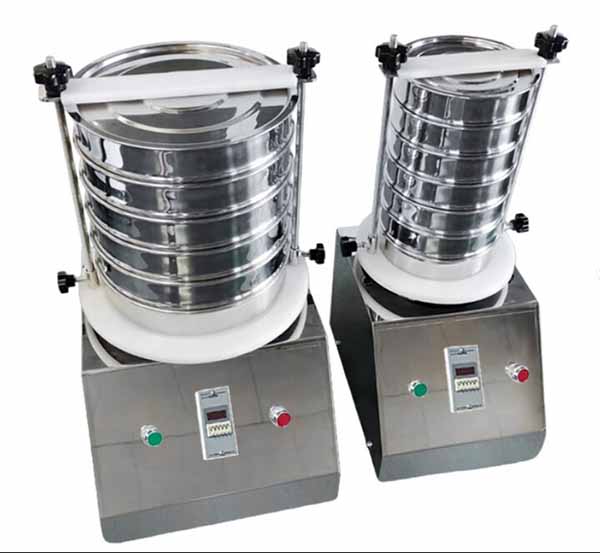
Manual shaking introduces human error and limits separation speed. To increase testing output, the factory offers a complete Laboratory Sieve Set, consisting of multiple combinations arranged in ascending order of coarseness, topped with a cover, and bottomed with a receiving tray.
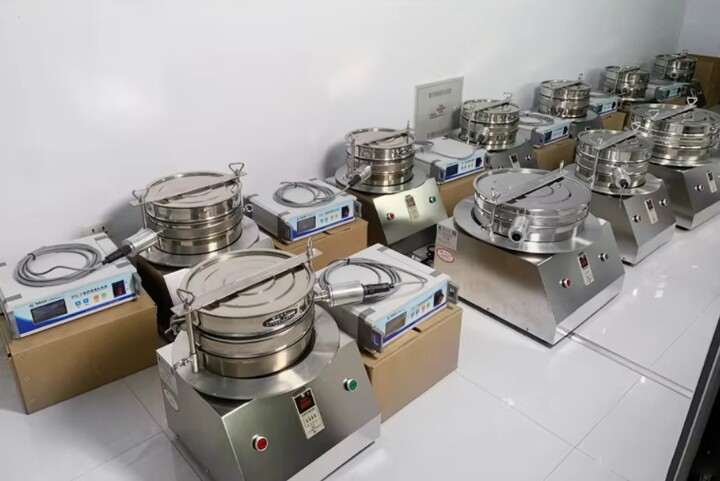
For automated operation, it is recommended to mount this sieve set on a mechanical sieve shaker. The shaker applies vertical vibration combined with planar rotation, forcing particles through the corresponding sieve levels within a set time, thus obtaining repeatable test data across different shifts.
A: In a technical context, this instrument is called an analytical test sieve or a standard grading sieve. It consists of a rigid cylindrical sieve frame with a fixed woven metal mesh, used to separate bulk samples into different size fractions for particle size analysis.
A: Mesh count indicates the number of pores per linear inch. Therefore, a 60-mesh sieve has a smaller aperture than a 40-mesh sieve. Following this pattern, a 325-mesh sieve (0.045 mm aperture) is finer than a 100-mesh sieve (0.150 mm aperture), trapping even smaller dust particles.
A: 100-mesh screens used in industrial filters prioritize fluid throughput and mechanical strength, typically lacking a rigid sieve frame geometry. Lab sieves, on the other hand, must conform to ASTM E11 or ISO 3310-1 standards, requiring microscopic inspection of the sieve frame diameter and the aperture of each wire to meet legal tolerances.
A: The cost of a 0.075 mm (200 mesh) test sieve varies depending on the sieve frame diameter you choose (e.g., 75 mm, 200 mm, or 300 mm) and whether you require a factory declaration or an independent calibration certificate traceable to national standards. Please submit your specific dimensions to our team for a detailed quotation.
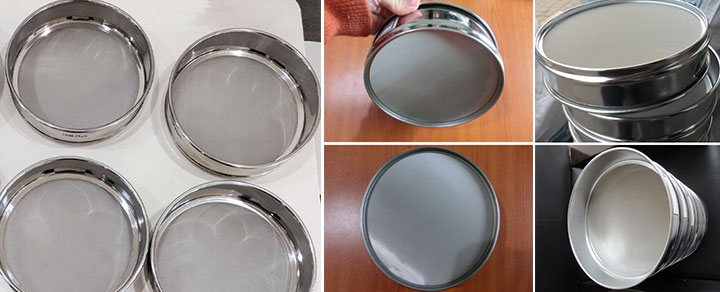
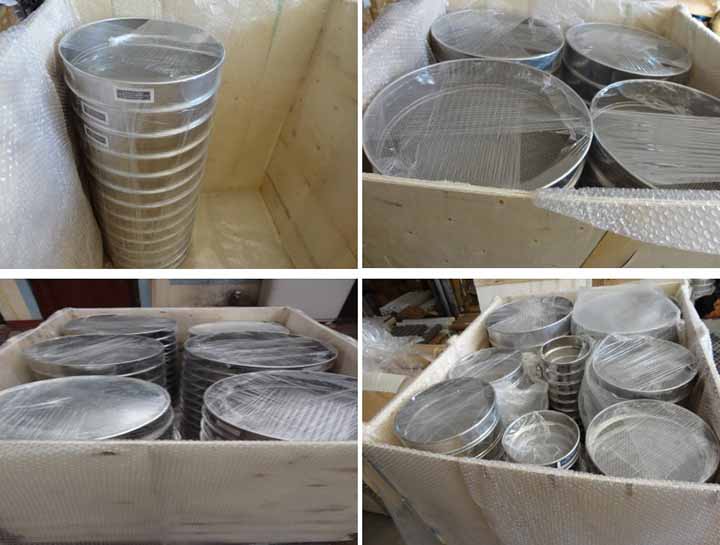
Fine Mesh Lab Sieve is a benchmark tool for verifying material consistency. By aligning your mesh selection with international standards and using a structured Laboratory Sieve Set, machining errors can be reduced and quality indicators stabilized. You can send your size requirements to DaHan Machinery's engineering team for technical specifications and direct factory pricing.
Ultrasonic Sieves for Fine Powder
Ultrasonic Sieves for Fine Powder adds an ultrasonic system to a regular vibrating screen, enabling the sieving of fine powders...
cement fineness test sieve is a commonly used sieving tool in cement physical property testing...
Precise test sieves, also known as standard sieves, inspection sieves, particle size analysis sieves, or sample sieves, are precision sieving...
Sonic Sieve Shaker for Metal Powder Testing
Metal powders possess unique physical properties. When particle size decreases to the micrometer level...
Stainless Steel Test Sieve For Pharmaceutical Powder
Stainless Steel Test Sieve For Pharmaceutical Powder can be used to detect the particle size of pharmaceutical powders and separate powders of different coarseness...
Test Sieve For Cement Fineness Testing
Test Sieve For Cement Fineness Testing are common screening tools used in cement production, quality inspection, and engineering construction to determine the fineness of cement particles...
Are you interested?

Then we look forward to hearing from you