
WhatsApp:+86 15236742901

Email:sale@xxdahan.com


WhatsApp:+86 15236742901
Email:sale@xxdahan.com
![[field:title/]](/uploads/260811/1-260Q1103121c8.jpg)
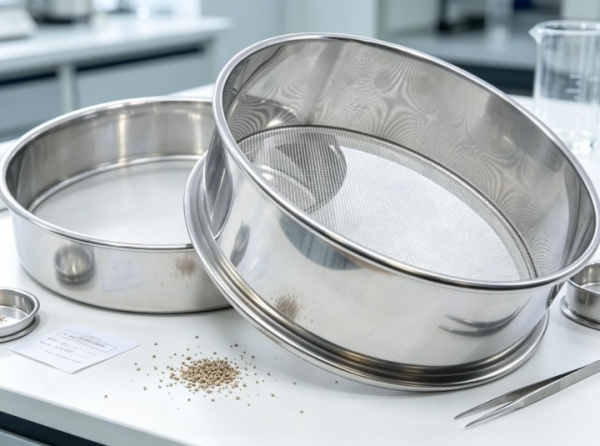
ASTM E11 200 Mesh Stainless Steel Test Sieve for Pharmaceutical Powder is fabricated with 316L stainless steel wire mesh, featuring a 75μm standard aperture and a seamless rim structure to assist pharmaceutical quality control personnel in measuring micro-powder fluidity and particle size distribution.
Mesh Size: 200 Mesh / 0.075 mm (75 microns)
Frame Material: AISI 316L Stainless Steel
Standard Compliance: ASTM E11 / ISO 3310-1
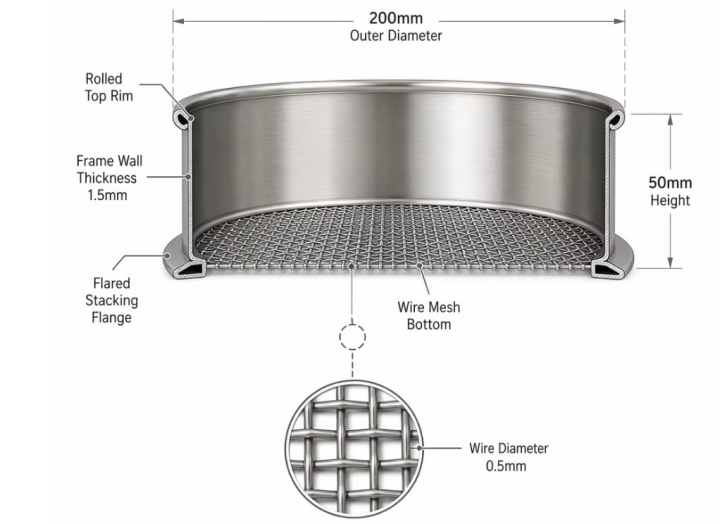
Frame Diameter: 200 mm (8 inches) / Depth: 50 mm
Manufacturing Technique: Electro-welded, Seamless Rim Construction
|
Quantity(sets) |
1-2 |
>2 |
|
Delivery time(days) |
5 |
To be negotiated |
When powder passes through the 75μm (200 mesh) woven opening, it easily bridges due to electrostatic attraction. During the particle size testing of active pharmaceutical ingredients (APIs) and excipients such as microcrystalline cellulose or lactose, minor mesh clogging alters the weight percentage of the residue, which interferes with dissolution rate measurements.
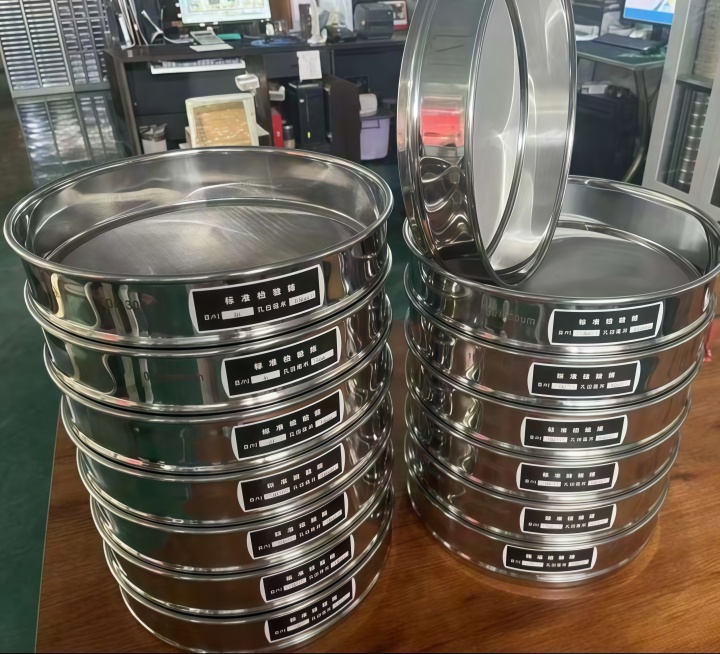
In actual operation, powder agglomeration often originates from environmental humidity (R.H. > 55%) or static charges generated during dry granulation. Using traditional brushing methods to clean residual particles deforms the 0.050 mm stainless steel wire, causing the aperture to deviate from the ±5μm tolerance range allowed by ASTM E11. To minimize particle adhesion, weld spatter and grooves must be eliminated at the frame junction. A seamless die-cast construction is applied to block powder accumulation and prevent cross-batch contamination.
| Parameter | Specification | Validation Note |
|---|---|---|
| Mesh Designation | 200 Mesh (No. 200) | Corresponding to 75 Micron standard aperture |
| Nominal Wire Diameter | 0.050 mm | Wire diameter uniformity tested per ASTM E11 Table 1 |
| Sieve Frame Depth | Full Height (50 mm) / Half Height (25 mm) | Fits clamping mechanisms of various motorized sieve shakers |
| Permissible Variation | ±5 μm (Average Aperture) | Random sampling of mesh openings using optical microscopes |
| Solder / Seal Type | Epoxy-Free Seamless Weld | Free of resin residue, resistant to alcohol and acetone wiping |
To meet the audit requirements of R&D laboratories and production quality inspection, every sieve set is supplied with traceable, independent quality verification documentation.
Each sieve rim is deep-engraved via laser with a unique serial number, the corresponding ASTM E11 version, and the material batch number. A Certificate of Inspection is enclosed upon shipment, recording average aperture and wire diameter measurements sampled across 100 random mesh openings. For laboratories with advanced quality control needs, a third-party Calibration Certificate can be provided, offering a complete measurement data log to support equipment audit records.
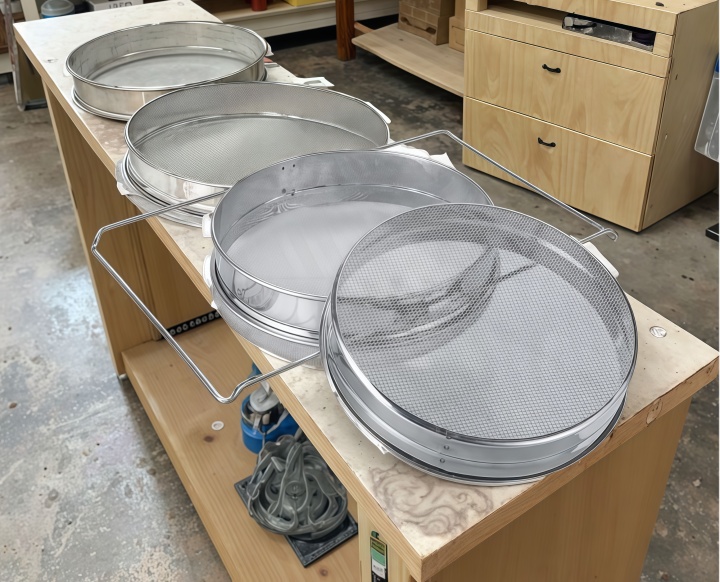
Cleaning a 200 mesh sieve requires avoiding metal brushes or high-pressure air blast guns. It is recommended to place the sieve into an ultrasonic cleaning bath operating at 40kHz with adjustable power, submerged in a mixture of deionized water and neutral detergent at 40°C for 3 to 5 minutes. After cleaning, gently absorb bottom water residue with a dust-free cloth and place the unit in a drying oven under 60°C.
SS304 offers basic corrosion resistance suitable for dry powder filtration. SS316L incorporates 2%-3% molybdenum (Mo) into its alloy formulation, providing resistance against organic solvents, weak acids, and chloride disinfectants used during sanitation. Furthermore, its carbon content remains below 0.03%, reducing intergranular corrosion risks along weld seams to sustain rigorous washing and drying cycles.
Yes. In addition to the standard Compliance Certificate provided with the equipment, an Automated Optical Inspection System can be utilized prior to shipment to measure mesh openings row by row, supplying an ASTM E11 Inspection or Calibration grade certificate with an authentic measurement distribution map.
Labsieve offers optically verified testing sieves tailored for micro-powder analysis. The structural design eliminates traditional adhesive bonding processes, utilizing laser seamless welding across the product line to minimize material residue dead zones. Each unit includes traceable serial numbers and verification documents to assist quality control staff in establishing standardized particle size measurement protocols.
cement fineness test sieve is a commonly used sieving tool in cement physical property testing...
Test sieves for laboratory use are widely adopted in scientific research and quality control because they cover sieving needs ranging from...
Mesh to Micron Conversion Chart
In particle size analysis and laboratory sieving, quickly converting mesh count to micron aperture size is foundational to daily measurement work...
Are you interested?

Then we look forward to hearing from you