
WhatsApp:+86 15236742901

Email:sale@xxdahan.com


WhatsApp:+86 15236742901
Email:sale@xxdahan.com
![[field:title/]](/uploads/260612/1-2606121AS0645.jpg)
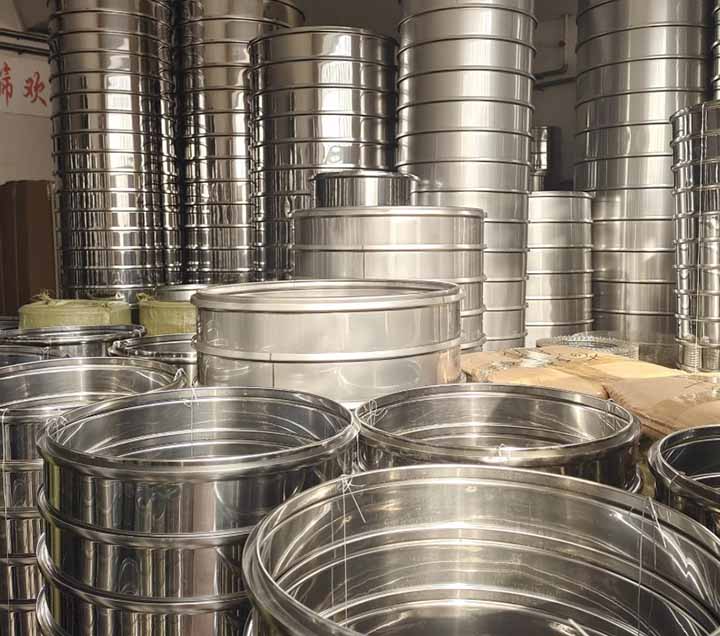
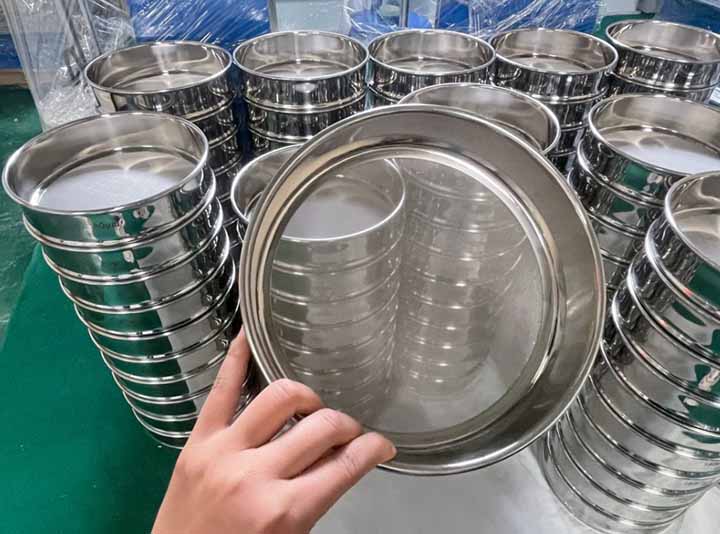
Woven Wire Mesh Laboratory Sieves are laboratory-grade stainless steel testing tools that meet the requirements of high-precision particle size analysis.
Price: $15-$120Chat Now
Aperture: Covers sizes from 20μm to 125mm, suitable for powders of varying fineness.
Material Standard: Superior 304/316 stainless steel, strictly conforming to ASTM E11 / ISO 3310-1 standards.
Sieve Frame Size: Available in commonly used laboratory diameters such as 200mm (8") and 300mm (12").
Product Highlights: Seamless one-piece molding design, prevents sample jamming, easy to clean, high-tensile mesh surface that does not deform under vibration.
| Quantity(sets) | 1-2 |
>2
|
| Delivery time(days) | 5 | To be negotiated |
Woven Wire Mesh Laboratory Sieves are testing tools used for particle size classification and analysis. The sieve aperture sizes typically cover a physical range from 20 micrometers (approximately 635 mesh) to 125 millimeters (approximately 0.5 mesh). Common sieve frame diameters include metric 200 mm and 300 mm, as well as imperial 8-inch and 12-inch sizes. To resist chemical corrosion during testing and reduce wear, the sieve frame and woven mesh are generally made of 304 or 316 stainless steel.
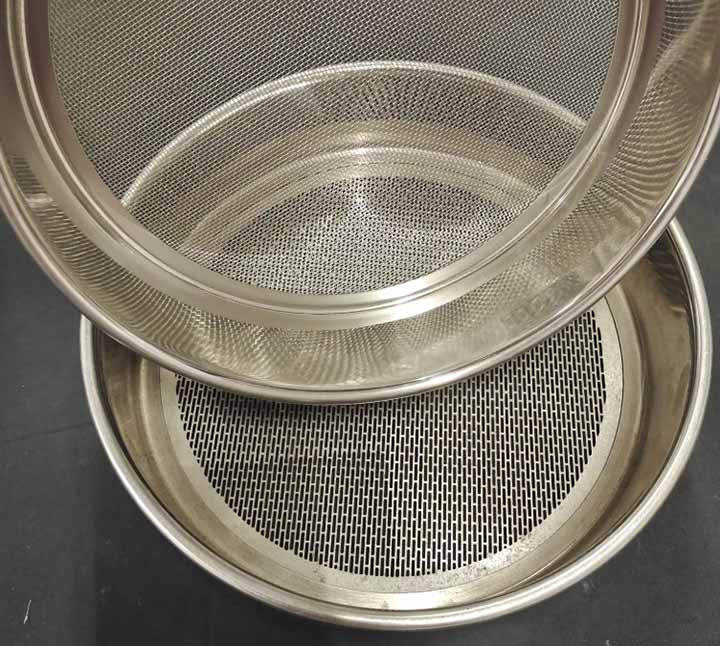
In practical testing, laboratory technicians often encounter inherent defects in traditional sieves. The following is a comparison of common problems and improved solutions.
| Common Pain Points of Traditional Test Sieves | Solutions of Improved Stainless Steel Test Sieves |
| Insufficient screen mesh tension: After several hours of vibration, the wire mesh shifts, resulting in changed aperture shape. | High-tension pre-tightening process: The woven mesh is mechanically stretched and fixed before assembly, keeping apertures undeformed under long-term vibration impact. |
| Dead corners left at joints: Gaps exist at the connection between frame and mesh surface, where powder tends to accumulate and cause cross-contamination of samples. | Integrated forming welding: The inner wall of the frame adopts a seamless smooth transition design without dead corners, leaving zero residues during cleaning. |
| Unqualified material grade: Prone to rust when exposed to acid and alkaline samples, damaging the metal structure. | Spectral material inspection: Each batch of raw materials is subject to composition analysis upon incoming inspection to ensure qualified chromium and nickel ratios inside stainless steel. |
This testing tool possesses several structural features. Its sieve aperture geometry is highly symmetrical, and the transverse and longitudinal wires are evenly interwoven, limiting the probability of false particle detection. The seamless frame design not only protects the operator's hands but also facilitates ultrasonic cleaning. The frame wall thickness is typically maintained between 0.6 mm and 0.8 mm, providing structural rigidity to withstand mechanical vibrations and prevent overall frame distortion.
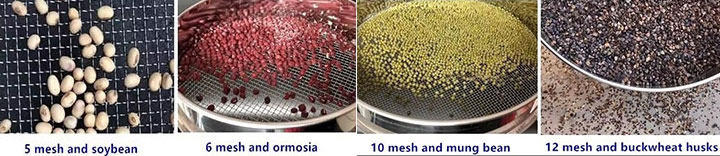
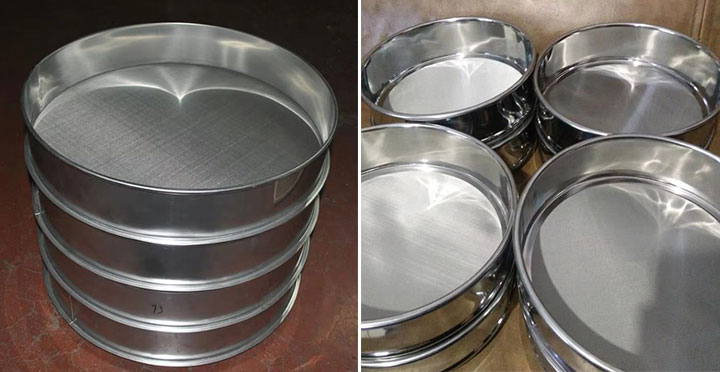
Product forms are categorized according to experimental needs. By height, there are full-height sieves (approximately 50 mm deep) and half-height sieves (approximately 25 mm deep), the latter suitable for stacking more layers when space is limited in the sieving machine. By standard, there are metric sieves conforming to ISO 3310-1 and imperial sieves conforming to ASTM E11; the mesh count and aperture correspondence between the two differ slightly and they should not be used interchangeably.
Woven wire mesh laboratory sieves can be used in various inspection applications. In powder metallurgy, it's used to detect the coarseness ratio of 3D printed metal powders; in construction engineering, it's used to determine the gradation curves of sand, cement, and gravel; in grain processing, it's used to test the fineness of flour or the particle size classification of coffee beans; and in soil testing, it's used to analyze the composition of sandy and clay soils.
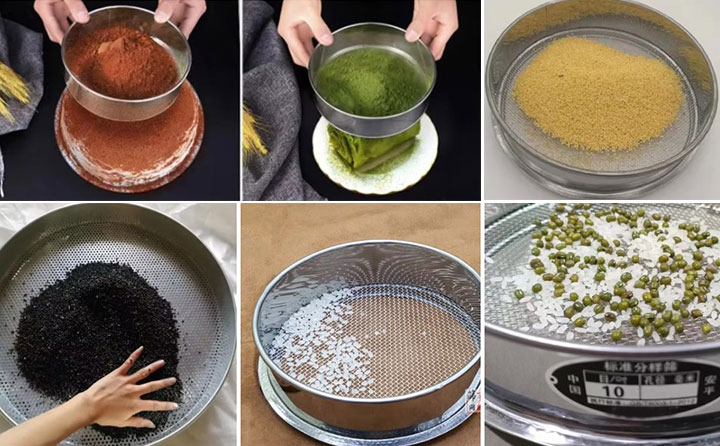
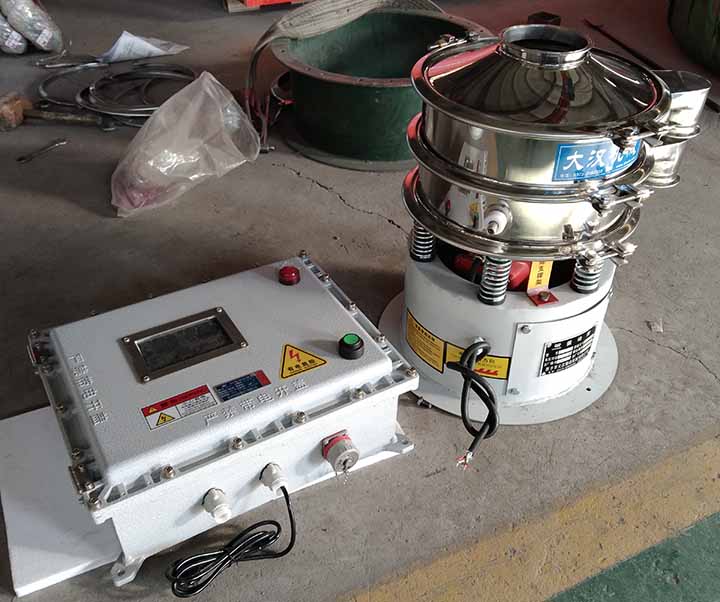
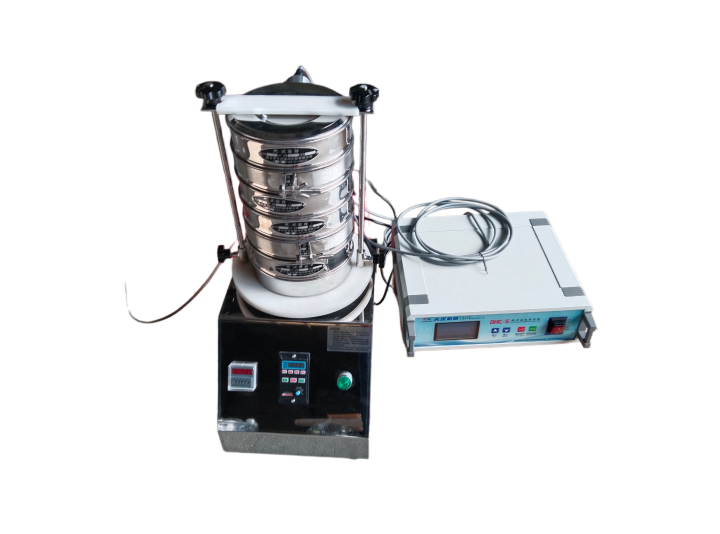
The sieving process of a woven wire mesh laboratory sieve relies on the relative motion caused by gravity and external forces. Materials are piled on top, and the sieve body undergoes three-dimensional vibration under the action of vibrating machinery. Particles smaller than the sieve aperture size pass through the mesh and fall to the next layer, while particles larger than the aperture size remain on the mesh surface, thus completing the grading.
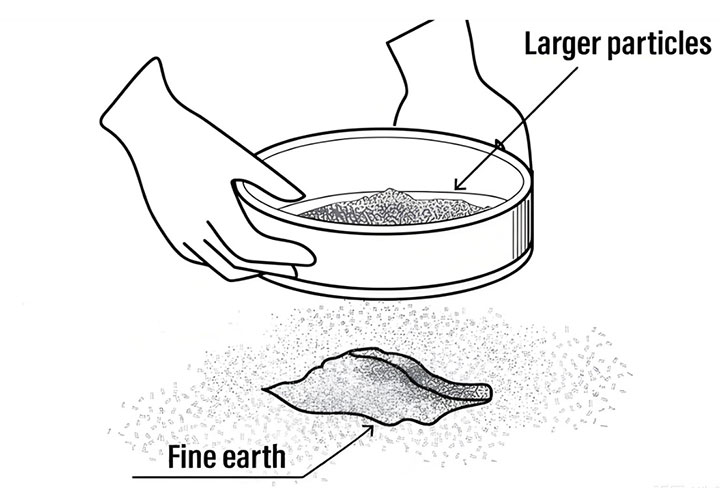
Quality control in the manufacturing process covers the entire workflow. After the metal wire is systematically woven by an automated machine tool, the mesh geometry is randomly checked under a high-magnification optical projector. Subsequently, the sieve is fixed to a stainless steel ring with constant stress using pneumatic clamps, and the mesh surface is fused to the frame using laser non-destructive welding technology. Finally, a traceable laser code is affixed to the base.
| ASTM Standard Mesh | ISO / Metric Aperture (mm / μm) | Tyler Standard Mesh | Typical Application Materials |
| No. 4 | 4.75 mm | 4 Mesh | Coarse sand, crushed stone, ore particles |
| No. 8 | 2.36 mm | 8 Mesh | Fine construction gravel, coal powder, large-grain seeds |
| No. 10 | 2.00 mm | 9 Mesh | Soil analysis, cat litter pellets, coarse feed |
| No. 16 | 1.18 mm | 14 Mesh | Coarse granulated sugar, resin pellets, detergent beads |
| No. 20 | 850 μm (0.85 mm) | 20 Mesh | Standard sand, medium plastic pellets, pollen |
| No. 30 | 600 μm (0.60 mm) | 28 Mesh | Coarse flour, quartz sand, chemical raw materials |
| No. 40 | 425 μm (0.425 mm) | 35 Mesh | Edible salt, explosive raw materials, abrasives |
| No. 50 | 300 μm (0.30 mm) | 48 Mesh | Cosmetic base powder, fine flour, metal powder |
| No. 60 | 250 μm (0.25 mm) | 60 Mesh | Calcium carbonate powder, milk powder, coarse pharmaceutical powder |
| No. 80 | 180 μm (0.18 mm) | 80 Mesh | Fine sand, barite powder, talcum powder |
| No. 100 | 150 μm (0.15 mm) | 100 Mesh | Rubber additives, activated carbon powder, pigments |
| No. 140 | 106 μm (0.106 mm) | 150 Mesh | Silica powder, fine ceramic raw materials, coffee powder |
| No. 200 | 75 μm (0.075 mm) | 200 Mesh | Cement fineness test, fly ash, ultrafine metal powder |
| No. 270 | 53 μm (0.053 mm) | 270 Mesh | 3D printing coating powder, fine chemical powder |
| No. 325 | 45 μm (0.045 mm) | 325 Mesh | Kaolin, titanium dioxide, micro pesticide powder |
| No. 400 | 38 μm (0.038 mm) | 400 Mesh | Ultra-fine cosmetic raw materials, high-grade polishing powder |
The price of this type of laboratory equipment is affected by various factors. Typically, a single standard woven wire mesh laboratory sieve ranges in price from $15 to $120. A standard 304 stainless steel coarse-mesh sieve with a diameter of 200 mm costs around $15 to $25; upgrading to 316 stainless steel will increase the price by 30%. Due to the high weaving difficulty, micron-sized high-mesh sieves with apertures smaller than 45 microns (greater than 325 mesh) typically cost between $45 and $90. Furthermore, if a third-party calibration or traceability certificate is required, additional testing costs will be incurred per sieve. For a detailed configuration list and basic quote conforming to specific experimental specifications, please provide your specific mesh count and diameter requirements via email. Our technicians will provide a formal response within 24 hours.
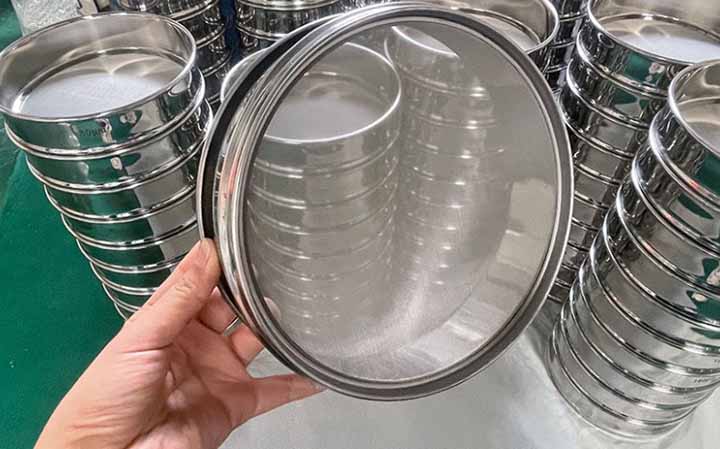
A: Never use a hard steel wire brush to directly scrub the mesh surface. The sieve should be placed in an ultrasonic cleaning tank with a neutral detergent and vibrated for 5 to 10 minutes. After removal, rinse with distilled water and dry in a 60°C oven.
A: Not recommended. Because there is a slight dimensional difference in the sieve frame diameter (e.g., 200 mm vs. 8 inches), forcibly stacking them will result in poor sealing, allowing samples to leak out during vibration.
A: When visible dents appear on the mesh surface, the wires loosen, or when calibration tests using standard materials show data exceeding the standard's allowable tolerances, it indicates that a new sieve needs to be replaced.
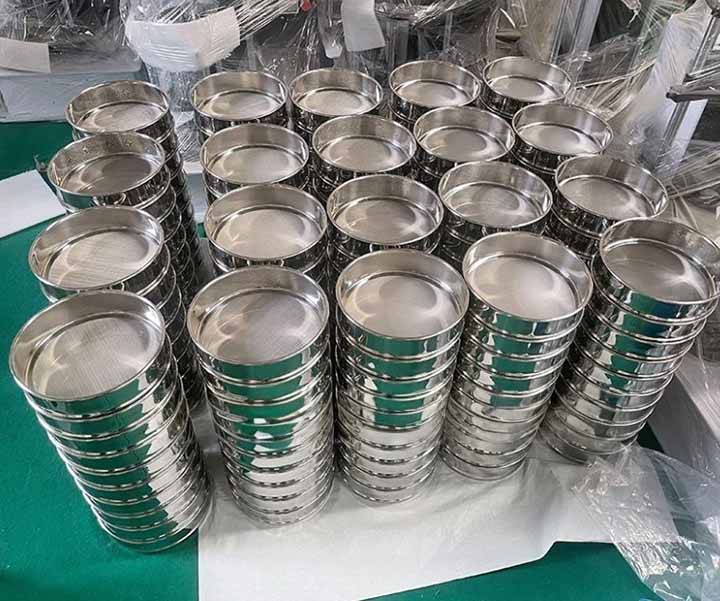
Woven Wire Mesh Laboratory Sieves are a standard tool for obtaining material particle size data. By focusing on the physical dimensions of the sieve openings, the seamless manufacturing process of the sieve frame, and the specific application materials, researchers can obtain stable test data. When selecting products, choosing the mesh size and standard based on the actual material properties and particle size distribution range is the foundation for completing the testing task.
Ultrasonic Sieves for Fine Powder
Ultrasonic Sieves for Fine Powder adds an ultrasonic system to a regular vibrating screen, enabling the sieving of fine powders...
Sonic Sieve Shaker for Metal Powder Testing
Metal powders possess unique physical properties. When particle size decreases to the micrometer level...
Stainless Steel Test Sieve For Pharmaceutical Powder
Stainless Steel Test Sieve For Pharmaceutical Powder can be used to detect the particle size of pharmaceutical powders and separate powders of different coarseness...
Test Sieve For Cement Fineness Testing
Test Sieve For Cement Fineness Testing are common screening tools used in cement production, quality inspection, and engineering construction to determine the fineness of cement particles...
Are you interested?

Then we look forward to hearing from you