
WhatsApp:+86 15236742901

Email:sale@xxdahan.com


WhatsApp:+86 15236742901
Email:sale@xxdahan.com
![[field:title/]](/uploads/260808/1-260PQ0404Ba.jpg)
Frame Diameter: Outer diameter 200 mm (Inner diameter 190 mm)
Frame Height: Full height (50 mm / depth 40 mm) or Half height (25 mm / depth 15 mm)
Frame & Mesh Material: AISI 304 stainless steel or corrosion-resistant AISI 316L stainless steel
Mesh Range: 4 Mesh (4.75 mm) to 635 Mesh (20 μm)
Set Configuration: Standard 8-layer or 10-layer sieve stack + Lid + Receiver Pan (Custom layers supported)
Testing & Certification: Supplied with factory optical measurement inspection report and tolerance compliance certificate
|
Quantity(sets) |
1-2 |
>2 |
|
Delivery time(days) |
5 |
To be negotiated |
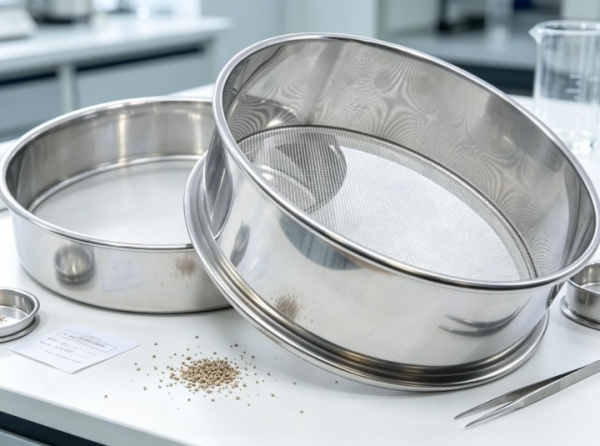
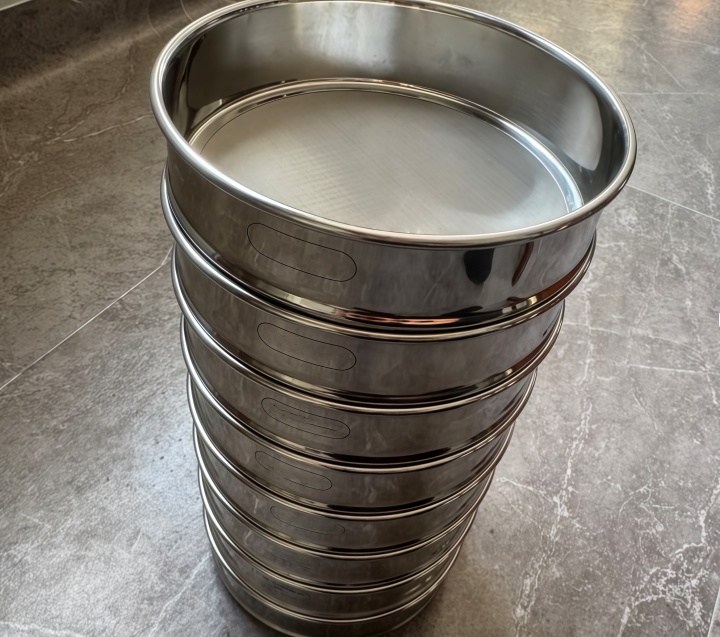
The 200mm stainless steel test sieve set is designed for laboratory particle size distribution analysis. It consists of stainless steel sieve frames with selected mesh sizes, a receiver pan, and a top lid. Sieve specifications are available in accordance with ASTM E11 and ISO 3310-1 requirements, with mesh configurations available for coarse particles, powders, and fine particle analysis.
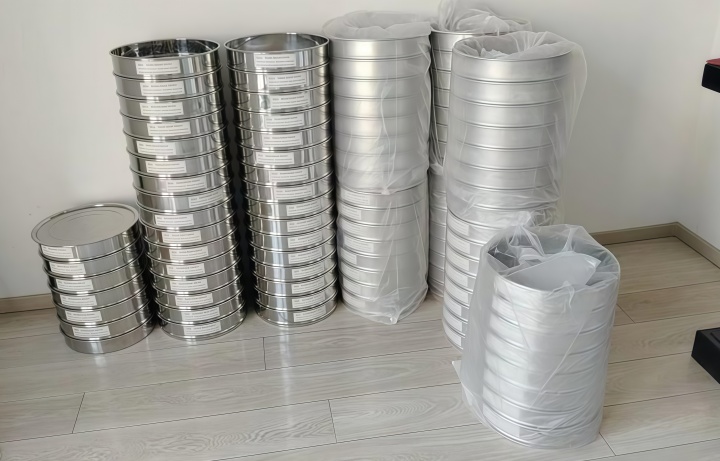
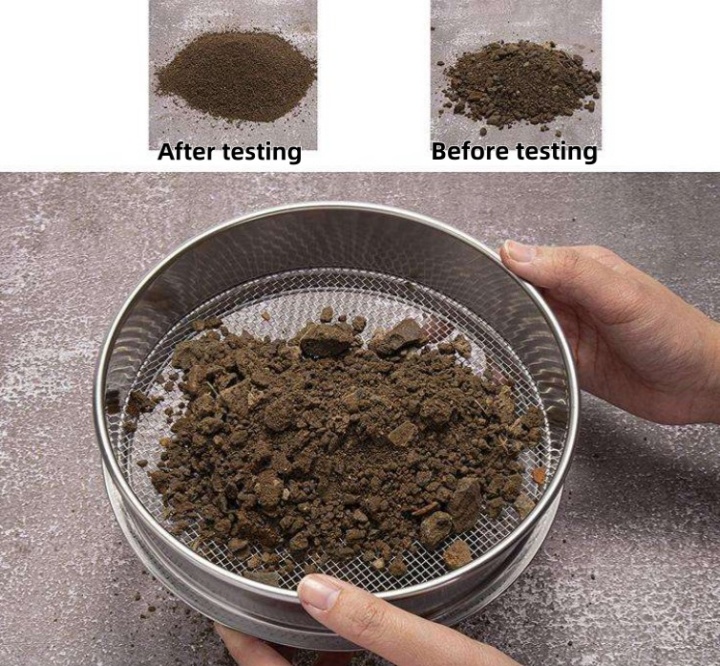
Mesh tension and aperture uniformity directly dictate the repeatability of test results. During manufacturing, a pneumatic quantitative tensioning system evenly stretches the stainless steel woven wire mesh to a predetermined tension before fixing it into the frame. Mesh apertures are scanned and inspected aperture-by-aperture using a computer image analyzer, controlling the aperture deviation per square centimeter within the tolerances specified by ISO 3310-1 (e.g., ±2.1 μm tolerance for 75 μm mesh). This tensioning process eliminates mesh sagging or localized dipping during sieving vibrations, maintaining a consistent particle passing rate.
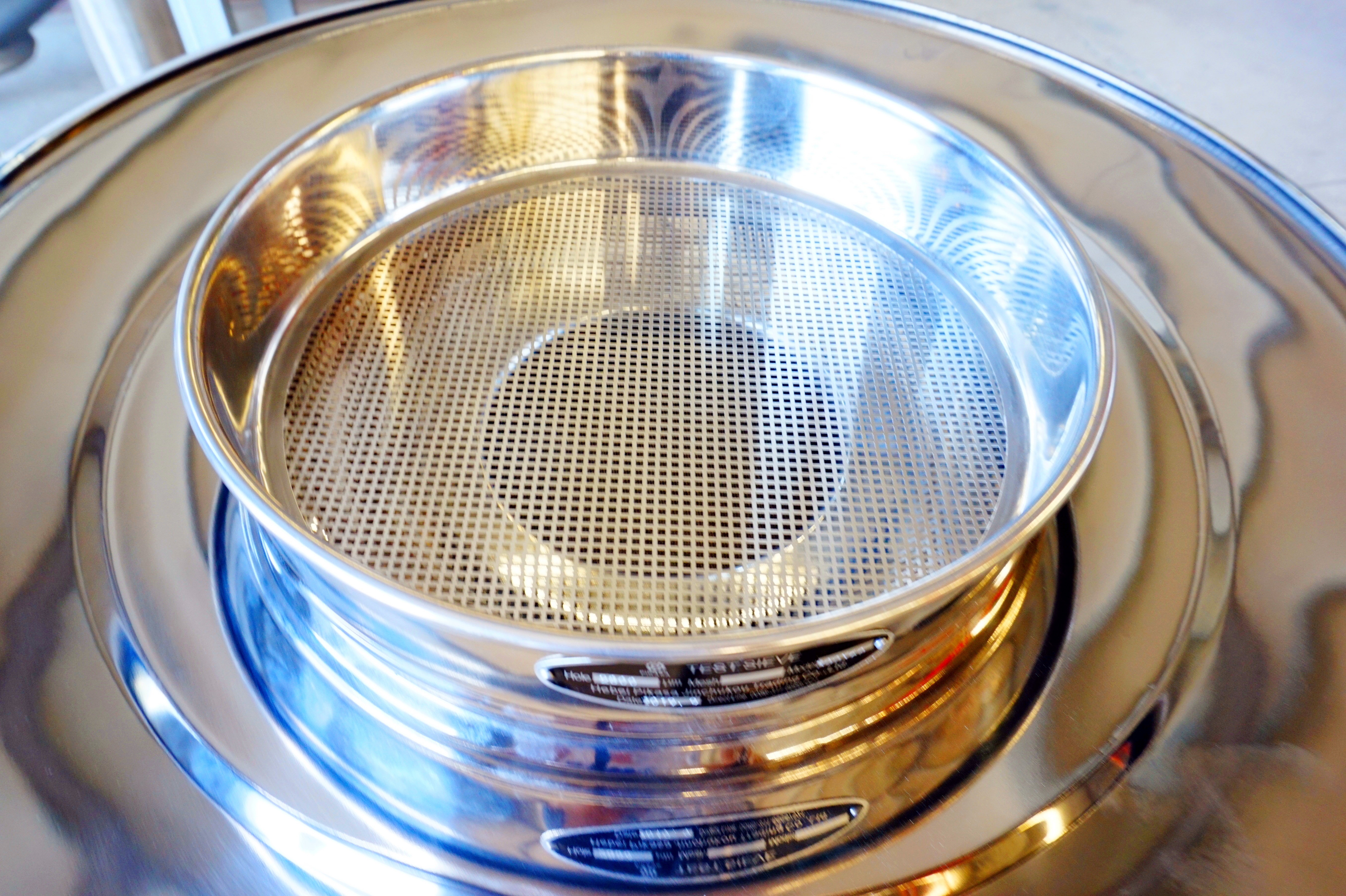
A 360-degree continuous laser welding technique is applied at the junction between the sieve frame and the woven mesh. Compared with traditional soldering or clamping bar fixation, seamless laser welds present a smooth, flat surface free of crevices and burrs. Structurally, this prevents sample particles from trapping in the frame edges, eliminates cross-contamination between samples, and enhances cleaning smoothness. The frame itself is stamped from a single piece of stainless steel plate with a wall thickness of 1.0 mm, maintaining structural stability when multi-layered stacks endure vertical and horizontal vibrations.
Prior to dispatch, each sieve undergoes testing via NIST-traceable standard glass microspheres, and wire diameter as well as mesh open area percentage are measured under optical microscopes. A unique laser-etched identification code (including serial number, production batch number, nominal mesh size, and aperture dimension) is permanently marked on the outer wall of every frame. A factory inspection certificate is included, detailing the average aperture size, upper limit values, and international standard codes met, facilitating annual laboratory calibration and quality system auditing.
| Specification | Details |
| Product Type | 200mm Stainless Steel Test Sieve Set |
| Nominal Sieve Diameter | 200 mm |
| Inner Diameter | 190 mm |
| Frame Height | 25 mm / 50 mm |
| Frame Material | Stainless Steel |
| Available Materials | AISI 304 / AISI 316L |
| Mesh Type | Stainless Steel Woven Wire Mesh |
| Mesh Range | 4 Mesh–635 Mesh |
| Aperture Range | Available according to selected mesh specification |
| Sieve Layers | 8 / 10 layers or customized |
| Sieve Shape | Round |
| Mesh Tensioning | Controlled mesh tensioning for uniformity |
| Welding Method | Laser welding |
| Identification | Laser-etched identification code |
| Inspection | Aperture and dimensional inspection available |
| Applicable Standards | ASTM E11 / ISO 3310-1 |
| Inspection Documentation | Factory inspection certificate available |
| Accessories | Lid and receiver pan available |
| Application | Particle size analysis, laboratory testing and material classification |
| Customization | Mesh size, material, sieve height and set configuration can be customized |
| MOQ | 1 set |
| Lead Time | Subject to specification and order quantity |
| Packaging | Export-standard protective packaging |
Laboratories select different mesh combinations based on the distribution range of the sample to be analyzed. The table below outlines standard configuration options for 200mm stainless steel test sieve sets:
| Kit Configuration Type | Number of Layers | Typical Mesh Combinations (Mesh / μm) | Frame Height Specs | Applicable Sample Forms |
| Coarse Particle Kit | 5 Layers + Lid/Pan | 5 Mesh (4.0mm), 10 Mesh (2.0mm), 18 Mesh (1.0mm), 35 Mesh (500μm), 60 Mesh (250μm) | Full Height 50mm | Ores, crushed stone, plastic granules, agricultural seeds |
| General Powder Kit | 8 Layers + Lid/Pan | 20 Mesh (850μm), 40 Mesh (425μm), 60 Mesh (250μm), 80 Mesh (180μm), 100 Mesh (150μm), 140 Mesh (106μm), 200 Mesh (75μm), 325 Mesh (45μm) | Full Height 50mm / Half Height 25mm | Metal powders, cement powders, sand grains, dry pigments |
| Ultra-Fine Powder Kit | 6 Layers + Lid/Pan | 200 Mesh (75μm), 270 Mesh (53μm), 325 Mesh (45μm), 400 Mesh (38μm), 500 Mesh (25μm), 635 Mesh (20μm) | Half Height 25mm | Fine ceramics, battery anode/cathode materials, micronized pigments |
| Custom Combination | Customizable (2-12 Layers) | Freely paired according to user-provided micrometers (μm) or ASTM mesh sizes | Full / Half height mix available | Meets custom testing procedure requirements |
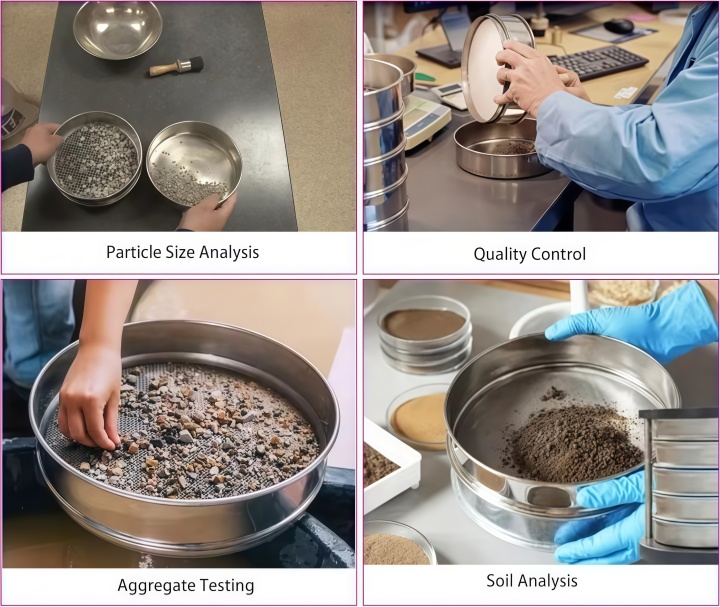
The 200mm stainless steel test sieve serves as a standard particle size analysis tool across multiple industrial and research fields:
Metallurgy & Mining: Sieve analysis for iron ore, copper powder, tungsten powder, and foundry sand.
Construction & Cement: Determination of sieve residue proportions in concrete aggregates, gypsum, and cement samples.
Agriculture & Food Processing: Inspection of particle distribution in flour, starch, powdered sugar, cocoa powder, and spices.
Chemicals & Plastics: Particle analysis of resin granules, catalyst carriers, detergent powders, and polymers.
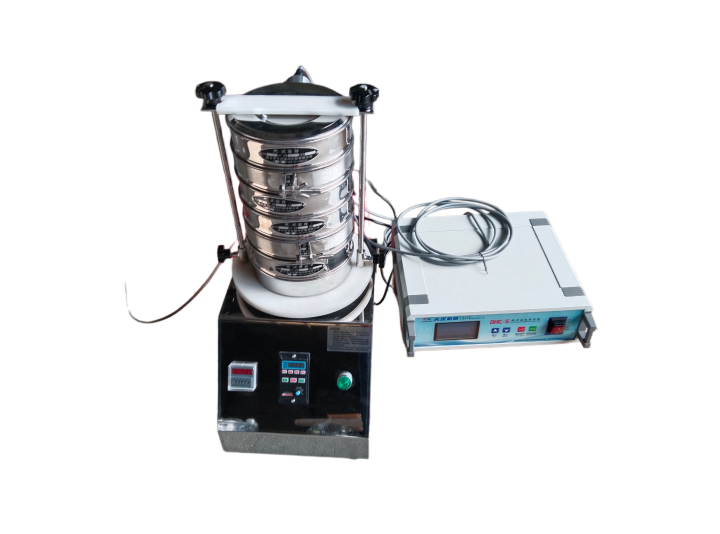
The 200mm outer diameter frame complies with internationally accepted 200 mm / 8-inch standard dimensions and mounts directly onto mainstream tapping and electromagnetic vibratory shakers:
Retsch: AS 200 series (AS 200 basic, digit cA, control)
Endecotts: OCTAGON 200, MINIMET, D100
Haver & Boecker: TYLER Ro-Tap 8-inch tapping sieve shaker, EML 200 series
Pascall & Fritsch: ANALYSETTE 3 electromagnetic sieve shaker
All 200mm stainless steel test sieves are manufactured according to international standardization organization and inspection association standards:
ISO 3310-1:2016 (Test sieves - Technical requirements and testing - Part 1: Test sieves of metal wire cloth): Regulates wire cloth aperture tolerances, wire diameter tolerances, and mesh surface flatness.
ASTM E11-22 (Standard Specification for Woven Wire Test Sieve Cloth and Test Sieves): Defines the conversion relationship between Mesh count and micrometer (μm) opening dimensions.
ISO 565 (Test sieves - Metal wire cloth, perforated metal plate and electroformed sheet - Nominal sizes of openings): Establishes opening dimension sequences.
Factory Material Certificate (EN 10204 3.1): Accompanied by a stainless steel chemical composition analysis report detailing actual percentage contents of Nickel (Ni), Chromium (Cr), and Molybdenum (Mo) in 304/316L materials.
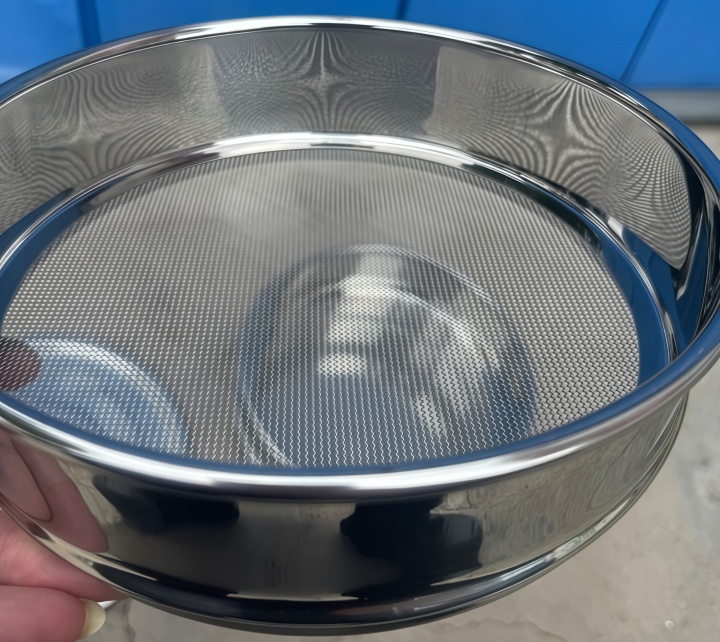
A: A 200 mesh test sieve refers to a woven wire cloth containing 200 openings per linear inch (25.4 mm), corresponding to a nominal aperture size of 75 micrometers (0.075 mm). In a 200mm test sieve set, the 200 mesh sieve is typically positioned in the lower-middle portion of the stack as a division point between medium-fine and micro powders. Since 200mm refers to the external physical frame diameter, the 200 mesh wire cloth is secured inside this 200mm frame, providing approximately 280 square centimeters of mesh filtration area for 75-micron particle passing.
A: According to the ASTM E11 standard, "No. 200" designates a 200 Mesh sieve with an aperture opening size of 75 micrometers (μm) or 0.0029 inches. In terms of physical dimensions, this 200mm specification No. 200 sieve has an outer diameter of 200 millimeters (7.87 inches), a full-height wall height of 50 millimeters, and a half-height wall height of 25 millimeters.
A: Cleaning and maintenance require differentiated approaches based on mesh size:
Coarse Mesh (less than 100 mesh): Use a soft nylon brush under warm water, gently brushing along the direction of the wire weave to remove trapped particles.
Fine Mesh (200 mesh and above): Hard brushes or metal picks are strictly prohibited to prevent wire displacement and deformation. Submerge the sieve in an ultrasonic cleaner filled with water and neutral cleaning agent for 2-5 minutes.
Drying & Storage: After cleaning, place in an oven at 80°C–100°C to dry. Once water evaporates, store in a dry cabinet.
A: The price of a 200mm test sieve set is determined by the following elements:
Stack Layers & Composition: The number of sieve frames included, plus whether a top lid and receiver pan are configured.
Material Selection: Standard AISI 304 stainless steel carries a lower cost than AISI 316L used under acidic or corrosive environments.
Mesh Count & Craftsmanship: Ultra-fine wire weaving and inspection costs for high mesh counts (e.g., 400 mesh, 500 mesh, 635 mesh) exceed those for coarse meshes.
Calibration Certification Level: Cost variations exist between basic factory inspection reports and third-party calibration certificates containing detailed multi-point scan data.
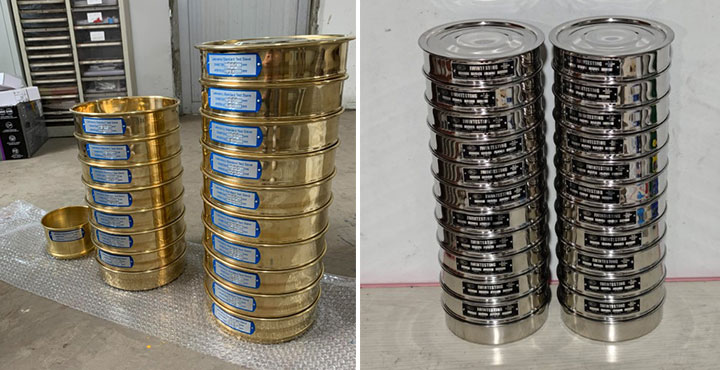
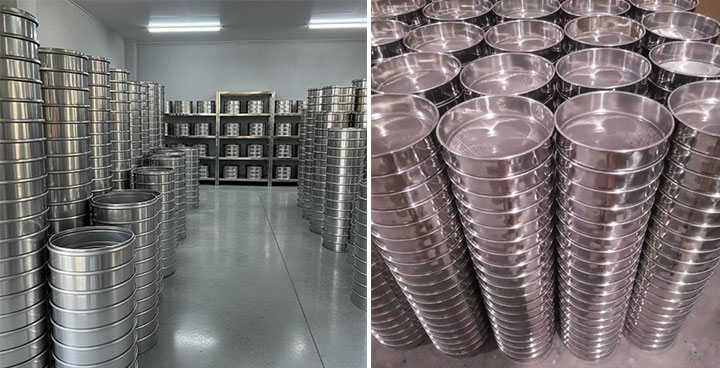
When purchasing a 200mm stainless steel test sieve set, please confirm the following key procurement details:
Order Specifications: Specify required material (304 or 316L), frame height (50mm or 25mm), specific mesh/micrometer configuration list, and total layer count.
Packaging: Shipped in dual-layer packaging featuring shockproof foam boxes and export wooden cases, with an internal protective moisture-proof sealed bag.
Lead Time: Standard mesh configurations ship within 3-5 business days; custom non-standard aperture orders take 7-10 business days.
Minimum Order Quantity (MOQ): 1 Set (including lid and pan).
Mesh to Micron Conversion Chart
In particle size analysis and laboratory sieving, quickly converting mesh count to micron aperture size is foundational to daily measurement work...
cement fineness test sieve is a commonly used sieving tool in cement physical property testing...
Test sieves for laboratory use are widely adopted in scientific research and quality control because they cover sieving needs ranging from...
Sieve Mesh is a precision tool made of metal, nylon, or other synthetic materials, with a uniform pore size...
How to choose Test Sieve Shaker
The selection of materials depends on the characteristics. The user's demand for the product will largely indicate the functions of a product...
Are you interested?

Then we look forward to hearing from you