
WhatsApp:+86 15236742901

Email:sale@xxdahan.com


WhatsApp:+86 15236742901
Email:sale@xxdahan.com
![[field:title/]](/uploads/260407/1-26040GIQE91.jpg)
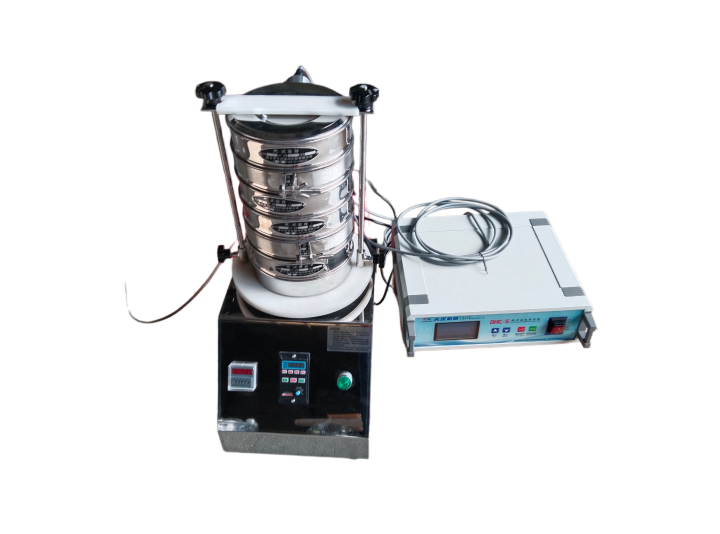
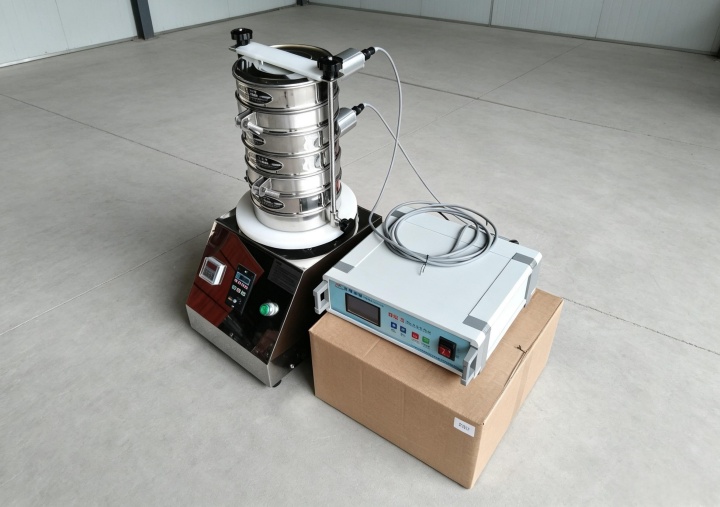
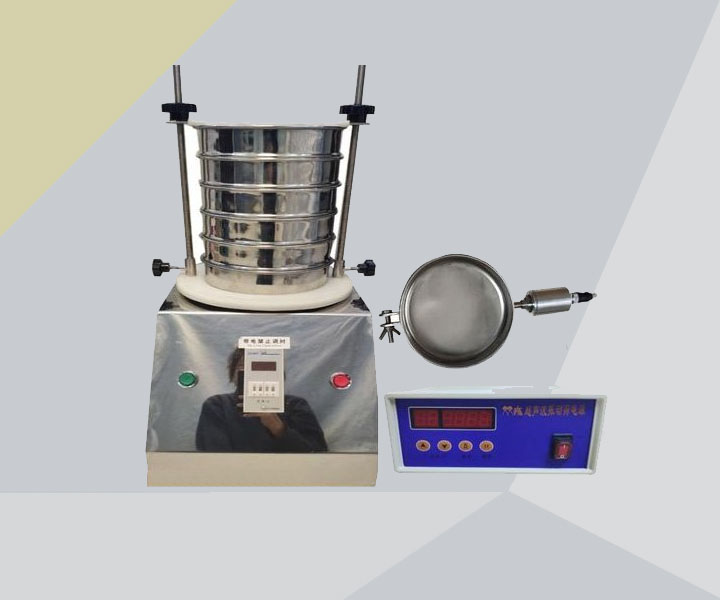
An ultrasonic sieve combines mechanical vibration with high-frequency ultrasonic oscillation to help reduce mesh blockage during fine powder screening. It is suitable for selected powders that tend to adhere to the screen or clog small mesh openings. Equipment specifications can be selected according to the required mesh aperture, material properties, and screening application.
| Parameter | Specification |
|---|---|
| Ultrasonic Frequency | 36 kHz or 40 kHz, depending on model |
| Ultrasonic Power | 50–200 W, depending on model |
| Compatible Screen Diameter | Confirm available sizes by model |
| Mesh Count | 100–635 mesh, subject to material and screen availability |
| Power Supply | AC 220 V ±10%, subject to model confirmation |
| Operating Mode | Pulse / Continuous, if supported by the selected model |
An ultrasonic sieve combines mechanical vibration with high-frequency ultrasonic oscillation to help screen fine powders that tend to clog mesh openings, adhere to the screen, or form agglomerates. This technology supports more consistent fine powder screening when conventional vibration alone is insufficient.
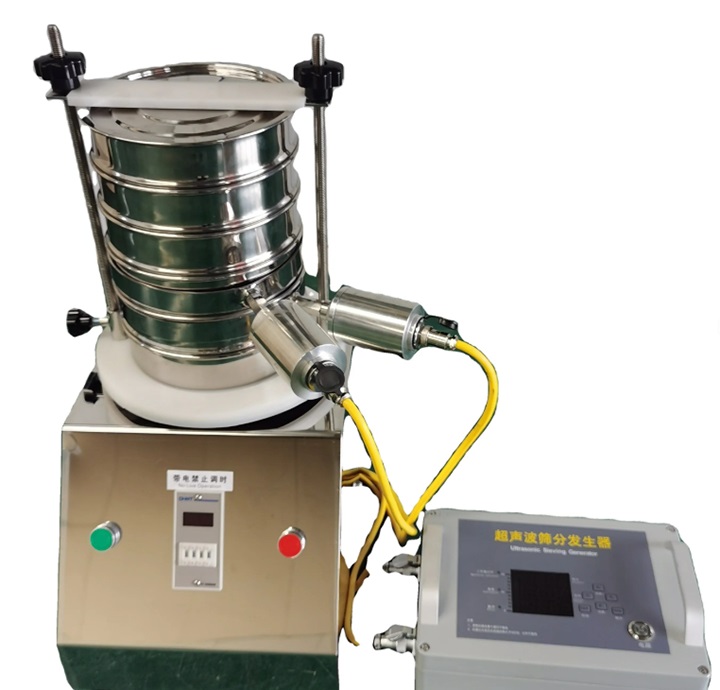
Labsieve offers ultrasonic screening equipment for both laboratory particle size analysis and industrial powder processing. Options include ultrasonic test sieves for small-sample analysis and industrial ultrasonic vibrating screens for production applications. The appropriate model depends on the material properties, required mesh aperture, sample size, and processing capacity.
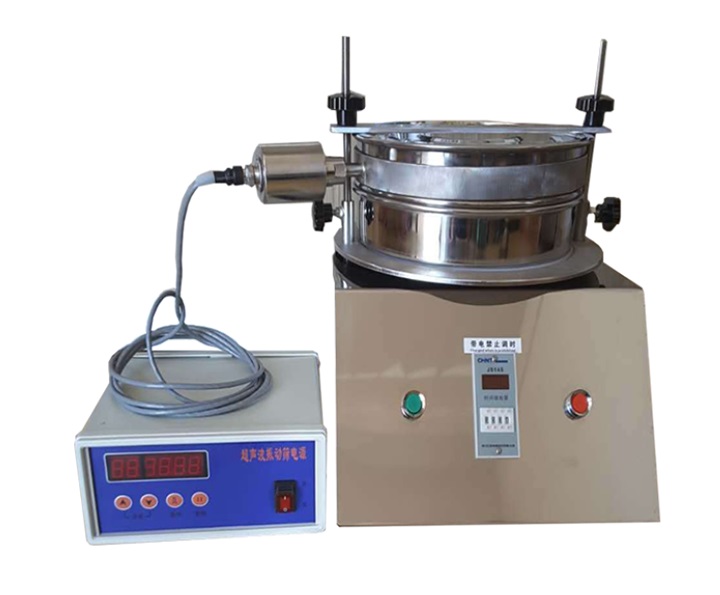
An ultrasonic sieve uses an ultrasonic generator, transducer, and resonator to transmit high-frequency mechanical oscillations to the screen mesh. These oscillations work alongside the machine's mechanical vibration to help reduce fine-particle buildup and mesh blockage.
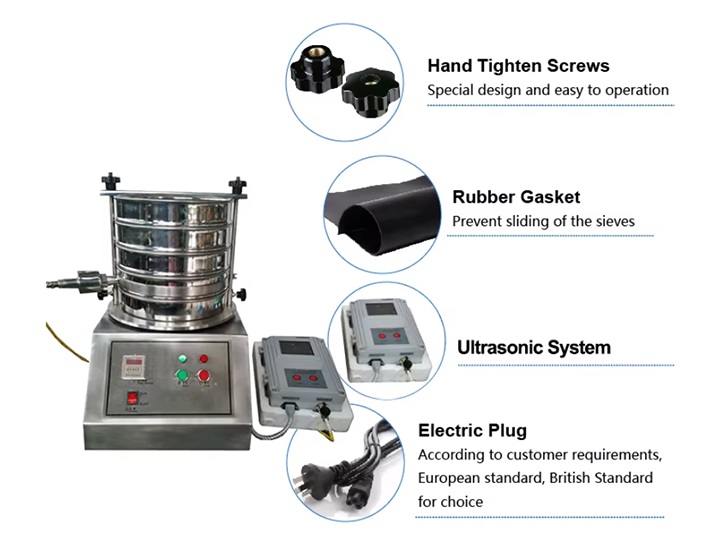
As material moves across the screen, ultrasonic vibration helps particles interact with the mesh openings, supporting fine powder separation when conventional screening alone is less effective. This can be particularly useful for powders that tend to adhere to the mesh or block small apertures.
Actual screening performance depends on the material properties, mesh aperture, feed rate, and equipment configuration. The ultrasonic system should be selected according to the specific screening requirements.
Reduced Mesh Blockage
Fine powders can accumulate in small mesh openings, reducing the effective screening area. Ultrasonic oscillation helps reduce particle buildup and supports more stable screening of materials prone to mesh blockage.
Improved Fine Powder Screening
When processing fine powders, conventional vibration alone may not provide sufficient assistance for particles to pass through small mesh apertures. An ultrasonic system adds high-frequency oscillation to help improve the screening process, depending on the material and operating conditions.
Suitable for Difficult-to-Screen Materials
Some powders tend to adhere to the mesh because of their particle size, electrostatic properties, or tendency to agglomerate. Ultrasonic screening can help address these challenges when the equipment is properly configured for the material.
Flexible Screening Configurations
Ultrasonic screening equipment is available for laboratory particle size analysis and industrial powder processing. Screen mesh, equipment size, and ultrasonic system specifications should be selected according to the required separation size and processing capacity.
Industrial Ultrasonic Vibrating Sieve
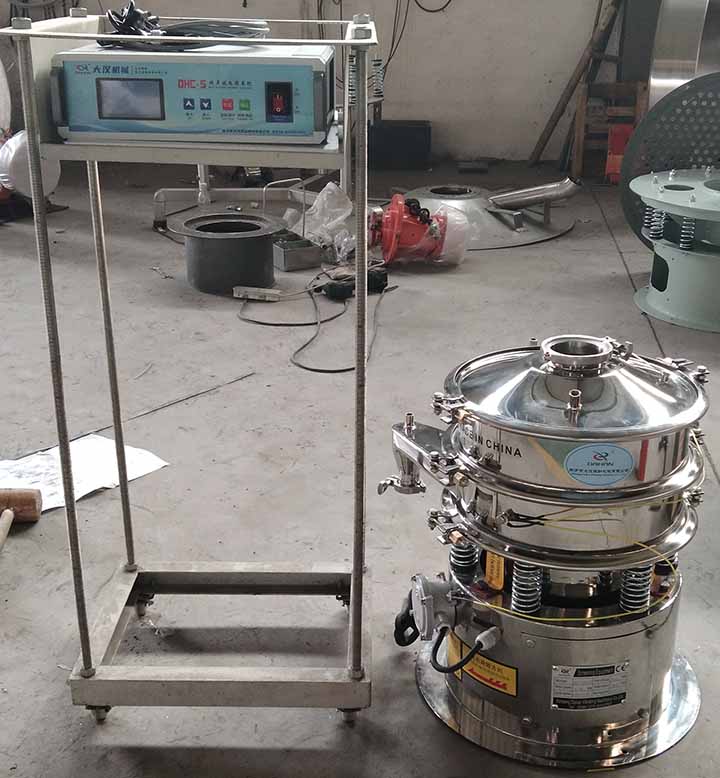
An industrial ultrasonic vibrating sieve is designed for fine powder screening and particle classification in production environments. It combines mechanical vibration with ultrasonic oscillation to help reduce mesh blockage when processing powders that are difficult to screen.
Screen diameter, deck configuration, feeding method, and discharge arrangement can be selected according to the material characteristics and production requirements. This type of equipment is suitable for industrial applications that require continuous powder screening.
Laboratory Ultrasonic Test Sieve
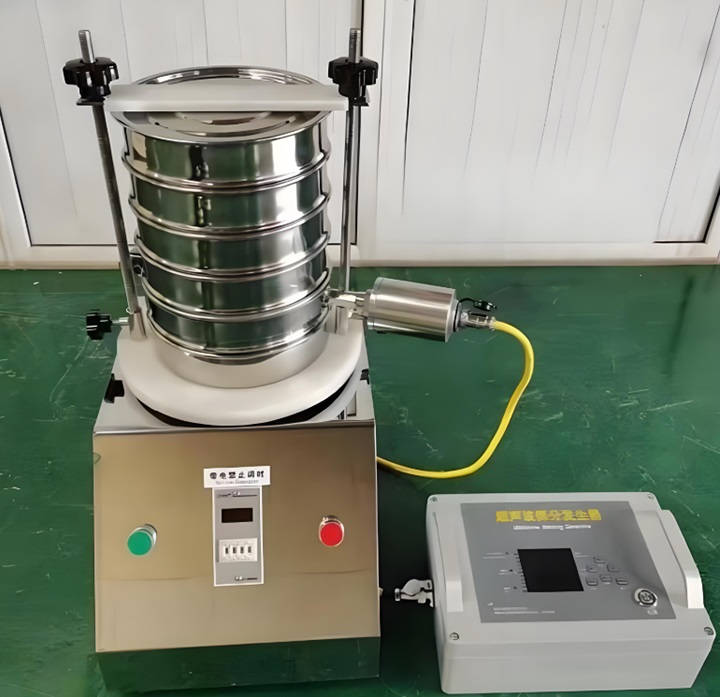
A laboratory ultrasonic test sieve is designed for small-sample particle size analysis and quality control. Ultrasonic oscillation helps reduce mesh blockage when testing fine powders, supporting more consistent screening under suitable test conditions.
It is commonly considered for laboratories, research facilities, and quality control departments that need to analyze fine powder samples using specified test procedures.
How to Choose Between the Two Types
Choose an industrial ultrasonic vibrating sieve when the main requirement is production screening and processing capacity. Choose a laboratory ultrasonic test sieve when the priority is small-sample testing and particle size analysis.
Before selecting a model, confirm the material, required mesh aperture, sample quantity or target throughput, and applicable testing or production requirements.
| Parameter Category | Parameter Name | Common Range |
| Basic Parameters | Screener Type | Circular Vibrating Screen / Test Sieve |
| Sieving Method | Ultrasonic + Vibratory Sieving | |
| Applicable Materials | Powders, Granules (e.g. Metal Powder, Chemical Powder, Food Powder) | |
| Sieving Accuracy | Up to 1 - 500 μm | |
| Screen Layers | 1 - 5 Layers | |
| Processing Capacity | 1 - 500 kg/h (Depends on Model) | |
| Ultrasonic System Parameters | Ultrasonic Frequency | 20 - 40 kHz (Commonly 28 kHz) |
| Ultrasonic Power | 50 - 200 W | |
| Power Input | AC 220V / 50Hz or 110V / 60Hz | |
| Control Method | Digital Adjustment / Automatic Frequency Tracking | |
| Transducer Mode | External or Built-in Transducer | |
| Screen Mesh Parameters | Screen Mesh Material | Stainless Steel (304 / 316L) |
| Screen Mesh Count | 20 - 635 Mesh | |
| Screen Mesh Diameter | 100 mm - 1200 mm | |
| Screen Frame Structure | Adhesive Type / Binding Type / Bolt Type | |
| Vibration System Parameters | Vibration Motor Power | 0.12 - 2.2 kW |
| Vibration Frequency | 1400 - 3000 rpm | |
| Amplitude | 1 - 5 mm Adjustable | |
| Excitation Force | Adjustable (Eccentric Block Adjustment) | |
| Structure & Material | Equipment Material | Carbon Steel / Stainless Steel (304 / 316) |
| Sealing Method | Silicone Seal Ring / Dust-proof Design | |
| Overall Dimensions | Customized by Model | |
| Weight | 50 - 150 kg |
An ultrasonic sieve can help address common fine powder screening challenges, particularly when particles accumulate on the mesh or have difficulty passing through small apertures.
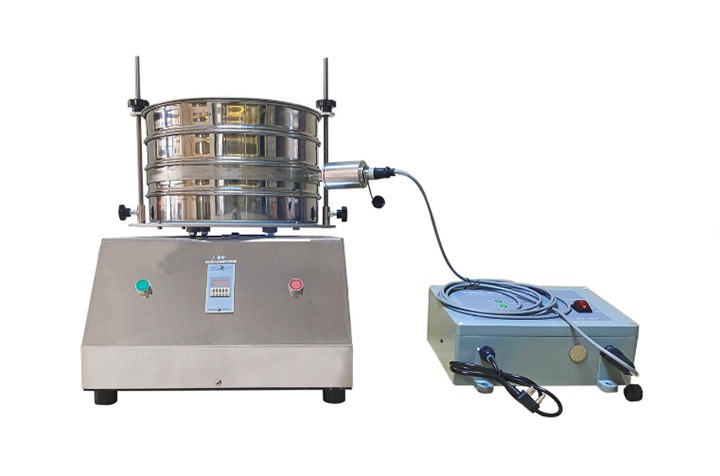
Mesh Clogging: Fine particles can become trapped in small mesh openings, reducing the effective screening area. Ultrasonic oscillation helps reduce particle buildup and can support more consistent screening of materials prone to mesh blockage.
Particle Adhesion and Static: Some fine powders adhere to the screen because of their physical properties or electrostatic behavior. Ultrasonic assistance may help reduce particle accumulation, although results depend on the material and operating conditions.
Powder Agglomeration: Fine powders may form clusters that interfere with particle separation. Suitable screening conditions and equipment configuration can help manage this issue. Ultrasonic screening may be useful for certain materials, but it does not eliminate agglomeration in every application.
Fine Powder Screening: Small mesh apertures can be difficult to use when particles block the openings or fail to pass through consistently. An ultrasonic system adds high-frequency oscillation to the screening process and may improve performance when conventional vibration alone is insufficient.
For powders with high moisture content, strong electrostatic behavior, or persistent agglomeration, material testing is recommended to determine whether ultrasonic screening is suitable.
Ultrasonic sieves are used for selected fine powder screening applications where mesh blockage, particle adhesion, or difficult particle separation affects screening performance. The suitable equipment depends on the material properties, required mesh aperture, and processing requirements.
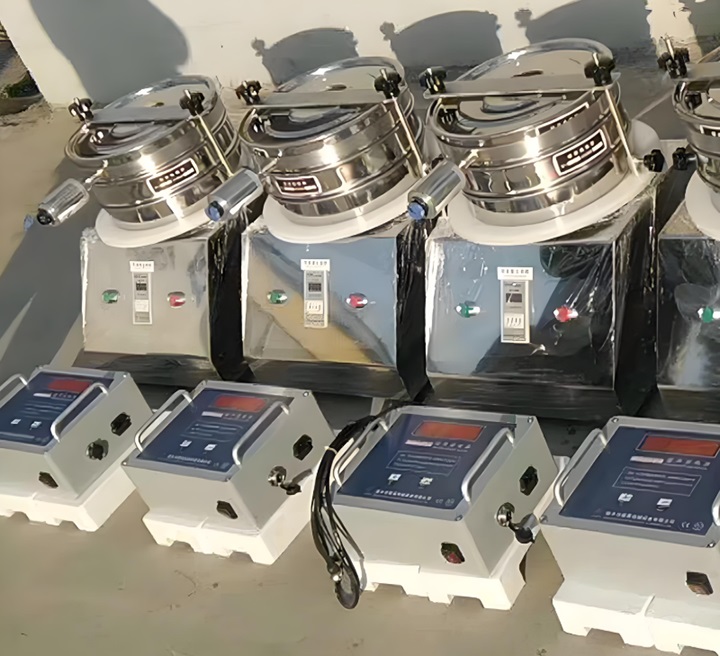
Chemical and Resin Powders: Some chemical powders and resin materials tend to adhere to the mesh or accumulate in small screen openings. Ultrasonic assistance may help reduce mesh blockage during fine powder screening.
Metal and Alloy Powders: Selected metal and alloy powders require fine particle classification. An ultrasonic screening system may help when conventional vibration alone is insufficient to maintain effective screening.
Food and Pharmaceutical Powders: Suitable food ingredients and pharmaceutical powders may require fine particle separation and consistent screening conditions. Equipment materials, cleaning procedures, and applicable hygiene requirements should be confirmed before selecting a model.
Advanced Materials and Battery Powders: Selected battery materials, ceramic powders, catalysts, and other advanced materials may require fine screening or particle classification. The appropriate mesh specification and ultrasonic configuration depend on the characteristics of the material being processed.
To determine whether an ultrasonic sieve is suitable for your application, consider the material type, particle size distribution, moisture content, target mesh aperture, and required processing capacity. Material testing can help establish an appropriate screening configuration.
Choosing an ultrasonic sieve depends on the material properties, required mesh aperture, and screening capacity. Laboratory applications require consideration of sample size and testing requirements, while industrial applications depend on target throughput and production conditions.
To select a suitable model, provide the material type, target mesh aperture, required capacity, and intended application. For difficult-to-screen powders, material testing can help determine whether ultrasonic screening is appropriate.
Dahan provides ultrasonic sieving solutions for laboratory particle size analysis and industrial powder processing. Equipment selection depends on your material, required mesh aperture, processing capacity, and screening conditions.
Contact our team with your material type, target mesh size, required capacity, and application details to discuss a suitable configuration.
Ultrasonic Test Sieve vs. Standard Test Sieve Which Is Right for You
Choosing between an Ultrasonic Test Sieve and a Standard Test Sieve should start with the material being tested...
Soil sieve analysis is a soil particle size determination method based on the principle of mechanical separation...
ISO-3310-1-vs--ASTM-E11--A-Comprehensive-Technical-Comparison-for-Global-Laboratories
ISO-3310-1-vs--ASTM-E11--A-Comprehensive-Technical-Comparison-for-Global-Laboratories
Are you interested?

Then we look forward to hearing from you